The Story of Ervin Schmidt, Pearl Harbor Survivor

Ervin Schmidt said they were just a couple good Christian boys on the way to church when the “Battle Stations” call went out. Schmidt and his friend, USS California shipmate Herbert Curtis, ran to the ship. It was Dec. 7, 1941, and Pearl Harbor was under attack.

The California was hit by a torpedo and was on fire. The fumes overcame Schmidt and other sailors on the bridge. He passed out and would have perished if it hadn’t been for when the “abandon ship” call was made, sailors grabbed their unconscious shipmates and dragged them on deck.

When Schmidt woke up, he found three sailors that had failed to abandon ship because they couldn’t swim. Taking command, Schmidt led them up to his secondary battle station. They climbed up a ladder inside the ship in the pitch black with 100 pound ammo boxes. When they reached the deck, they fired at the last of the leaving Japanese Zeros.

Curtis had been killed instantly when the torpedo hit and Schmidt never saw those three sailors again. Midway through the war, Schmidt switched to the submarine corps. The sub he was on sank the last Japanese ships of WWII. Schmidt has the distinct honor of being involved in the first and last Pacific naval battles of WWII.

Now a member of the Edmonds VFW Chapter 8870, he can be found passing out poppies before memorial Day and Veterans Day. He calls all vets “comrade” and fellow sailors “shipmate” and is a beloved member of the chapter.

Posted in Real Heroes, So There I Was | Tagged , , , , , , , , , , , | Leave a comment

Hiring a Vet part 2: Working With Veterans

Congrats, you hired a veteran. You have done more than just give a person a job, you have given back to a person that has given so much for their nation. While it can be difficult to join the military, it can be just as daunting to get out and face the civilian world. While you may have hired someone with a discipline and a good work ethic, there are some challenges. Here are a few pointers to make sure it is a positive experience for everyone.

Don’t ask stupid questions
This may seem pretty obvious, but you would be surprised how many people mess this up. Don’t ask a vet how many people he has killed, don’t ask how many friends she lost and for the love of God, don’t mention PTSD. These are very personal topics and something most people won’t want to talk about with people they just met.

It should raise a red flag if someone is eager to talk about killing people with coworkers. No true warrior is going to talk about the fallen but the gomers will use it for sympathy. Those people should be shunned.

Understand that Vets have a different value system
This is one issue that plagues many veterans in the civilian world. Going from a work environment where everyone does his or her part to a place where everyone is out for themselves. There are people in the military that don’t grasp the “team” concept and they are pretty much universally recognized as being shitbags. Unfortunately, you can’t kick someone out of the military for not being a hard worker so they stick around until their enlistment ends.

Officers may understand office politics and should be quite good at them. Enlisted, however, do not deal with that. They will work hard and expect others to work hard as well. When someone drags their feet for no reason other than being lazy, they will get upset. They will respect those that work hard. Unfortunately, that isn’t how the civilian world works. Work ethic counts for less than who likes who.

Military members and pop culture
Vets will also have a different idea of what is important. When someone becomes accustomed to making life and death decisions it is difficult to care about what Justin Beiber is up to. Some vets may have been deployed or so busy with training that they have neglected to keep up on pop culture. I missed the entire Spice Girls thing when I was in Germany. I never heard one of their songs. I never understood what the big deal was. The only thing I knew about them was from a Stars and Stripes article when they met Prince Charles. Paris Hilton became big when I was in Afghanistan so I didn’t hear the hype until the bandwagon was long gone. Here is my pretty much first conversation about Paris Hilton went.

Me: Who is that?
Him: Paris Hilton. She is so hot.
Me: No she isn’t.
Him: Yes she is, everyone thinks so.
Me: She has a big nose and the body of a 12-year-old boy. There is nothing hot about that.
Him: (annoyed) Yes she is, everyone thinks so.
Me: Who is she?
Him: She is famous.
Me: For what?
Him: For being famous.
Me: You can’t be famous for being famous. You have to do something to become famous first.
Him: She made a sex tape.
Me: Oh, so she is a porn star.
Him: No she isn’t.
Me: That is what you call someone that has sex on camera.
Him: No, she was rich and then the sex tape came out.
Me: An unattractive rich woman that no one used to care about is famous for having sex in a movie and is not a porn star.
Him: Yes.
Me: This is stupid.

Of course this is not universal. Some vets use pop culture as a form of escapism. When there is little to do on a FOB and only three magazines you can expect in-depth conversations about whatever is written in those magazines. Whether or not a vet is up on pop culture, it won’t impact how they think of a coworker. Military members have to work with a diverse group of people while they are in. Any vet that makes a judgment of a fellow worker based on what music they listen to or how they feel about celebrities should raise a red flag.

In the military, you make fun of the people you respect not the people you don’t
Mockery is reserved for the people you like. If there is a proper, professional relationship between two co-workers and one is a vet, it is most likely because he does not like the other person. In the military, you have to be able to work with everyone assigned to the platoon. If work suffers, people die. Because of that, a vet can work alongside someone he or she has a seething hatred for without work suffering. Civilians don’t seem to be able to do that. For the friend however, expect mean jokes to fly back and forth. Even if they seem mean spirited, no feelings are hurt.

If there is a real problem, military members are taught to address it and move on. There is no passive aggressive behavior. It is direct, frank conversation and it is over. It makes the long term work environment so much better.

Working with veterans can be a rewarding experience. It is good for the bottom line to have someone with a good understanding of the team concept, discipline and a solid work ethic. Unfortunately, not all vets are stellar performers. I once worked with a vet that violated all the rules. He was unprofessional, passive aggressive and petty. Fortunately, he didn’t last long after the red flags were raised. When you get a good one, there are no better people to work with.

Posted in Commentary | Tagged , , , , , , , , , | Leave a comment

Why Hire a Veteran Part 1: HR

Many companies have a policy to try to hire veterans. Some do it for the good PR, some because they want to support the soldiers coming home and other just want to hire someone that is disciplined, hardworking and reliable. However, despite the corporate policy some veterans might not make it through the hiring process because the civilian HR process isn’t set up to for military members. Here are common HR hiring practices that fail service members,

Hiring Questions
Some people don’t understand why I laugh when they ask, “What was your most stressful day on the job?” This is a problematic question for veterans. No offense to any hiring managers out there but most veterans will not share those kinds of stories with someone they just met. Also, what constitutes a stressful day is different in the military and in the civilian world. A bomb going off in the office should be the worst day you ever had at work, for a Marine that might just be yesterday’s patrol.

In addition, stress is interpreted differently by different people. Putting out fires is what firefighters are trained to do. It is their everyday job. Unless it is in the far extreme, one day may not stand out more than every other as being the most “stressful.”

Reacting to extreme situations is what military and first responders are trained to do so they might not see those situations as stressful. And other situations where lives are not on the line might not cause any anxiety in a well-trained soldier. It is entirely possible that the guy that gave Bin Laden lead poisoning was more nervous proposing to his wife than taking down the top terrorist in the world. After all, only one of those is his actual job.

If you ask a soldier what his most stressful day was and he starts telling a story about the time he was knee deep in empty magazines and hand grenade pins just stop the interview there. He is one of the gomers and will suck no matter what the job is.

Other questions like “What is a typical day like” or “How did you spend most of your time” might also yield blank stares. A finance clerk will actually do his or her job almost every day of a deployment. An Infantryman will spend a lot of downtime doing very little between missions. A medic working at the base hospital might have regular shifts, but the line medics will be playing video games with the grunts between missions. Even outside a combat zone the days sound routine.

A red flag should be someone that has a lot of cool training and things to talk about. The people that do the most, brag the least.

Job descriptions
You might as well throw this away. A job description is like a hand grenade, it just has to get close so the vet knows if the general aspects of the job is something he/she wants to do. Do you expect her to be a brain surgeon or a janitor? Although it is possible to hire a vet without actually telling him or her what the job is. That is actually pretty much how the Army works.

An Infantry Staff Sergeant (E-6) will spend his whole career working directly with troops. Then might make Sergeant First Class (E-7) and on the next move get placed in an operations platoon. He knows how to break shit and lift heavy things and suddenly you have him planning stuff and working with POGs.

Everyone knows they have to do a little more to accomplish the mission. A civilian job description should be the MAJOR duties that the veteran is getting paid to do. A sergeant has to walk around the parking lot picking up cigarette butts with everyone else. Outside the Pentagon, there are very few janitorial services in the military. Everyone has to take out their own trash. No good soldier is going to say, “That wasn’t in my job description.” If they do, don’t hire them. If they already made it past the hiring process, get rid of them before they infect the rest of the staff.

Compensation
Don’t ever ask a vet how much he or she has to make. Just offer a fair wage. This is simple, everyone in the military makes as much as everyone else of the same rank. There are a few differences like language for linguists or jump pay for Airborne. Combat pay is also equal across the service. A Navy Chief that makes power point presentations in the air conditioned JOC makes the same amount as the Navy SEAL Chief that assaulted the Bin Laden compound.

Vets might not know what the going rate for a job is especially when you throw in a government v. civilian job. A government paper pusher might make $65k a year while a civilian contractor doing the same thing might make $120k.

There are only two reasons to ask for salary requirements, to be able to tell an undesirable candidate they are “too expensive” or to be able to save money on payroll and get a quality candidate for cheap. The first one is a cop out and it is a good reason you aren’t hiring a warrior with values. The second one is going to backfire when he finds out that the slacker makes more money. It proves you aren’t paying for quality. You run the risk of losing the respect of what would be your best employee.

Offer a fair wage for the position, more if they bring extra skills to the table you can take advantage for, less if they are less qualified as other employees in the same job (but be prepared to give a raise if they outshine everyone else later).

Not all vets are stellar
Sadly, this is true. Companies want to hire veterans because they think they are getting a highly disciplined employee that will work harder than anyone else. Unfortunately, not everyone will fit that stereotype. The best way to find out is to ask, “Why did you get out of the military?” That answer will most likely reveal the temperament of your veteran.

This is the same as a hiring manager asking why someone left their last job. Just as a person trashing their last boss is a red flag, so is someone that says how stupid the military is. Yes, there are aspects that annoy everyone, however there should be some pride in service. There are many reasons why a person will choose to get out of the service. In my experience, most of them are good, responsible reasons, but there are always a few dirtbags. So look for the one that has pride in service, still loves her country and wants a chance to prove herself. You will find no better employee.

In the end, hiring a veteran is a great investment. You will get someone that is hard working, understands how to put the team first and will appreciate the fact that what they are doing now is far easier than what they used to do. You can also get someone that has a lot of experience in being adaptable and learning on the fly. For most civilian jobs, this is where POGs have the advantage. They are able to get a lot of expereince doing their jobs when not deployed. (Sorry grunts, I was one of you so I know that this stings.) In an office job, hire a PAC clerk or a TOC person in a heartbeat. They know how to work in a nonexciting enviroment and keep their sanity. They will love their job because they don’t have to wear a uniform and at the end of the day, they get to go home.

So give a veteran a chance. And if he doesn’t work out, unfortunately there are far too many more behind him.

Posted in Commentary, Kicking Some Knowledge | Tagged , , , , , , , , , , , , , , , , | Leave a comment

Where were you on 9/11? Veteran’s Day Speech from a Former Naval Officer

By: Allie Proff

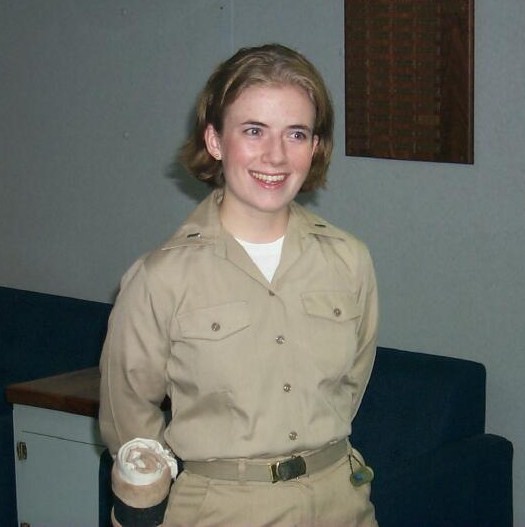
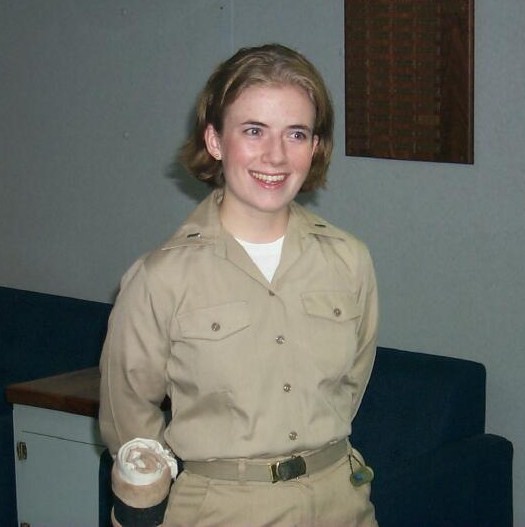
LTJG Nash (now Proff) on a better day than the one that changed the world.


From a speech to Cedarcrest High School Students at the Veteran’s Day Assembly, November 2004

The first article from the Armed Forces Code of Conduct states, “I am an American, fighting in the forces which guard my country and our way of life. I am prepared to give my life in their defense.”

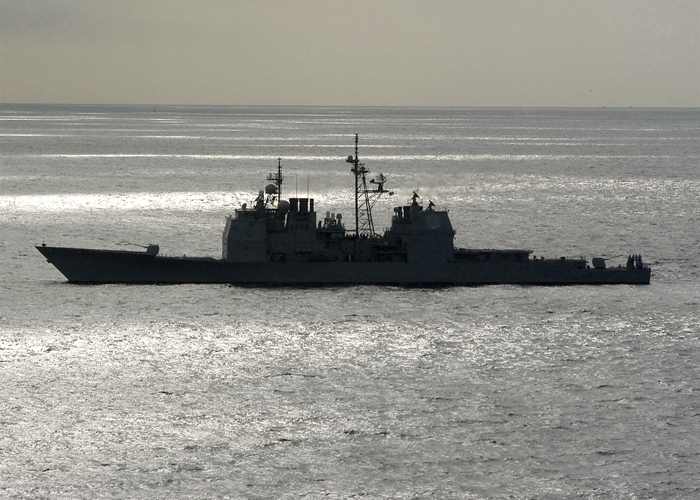
I am proud to be a veteran and served my country in times of need. When I graduated from the University of Washington Navy ROTC in August 2000, I knew that I would be guarding my country and protecting our way of life. I did not know that a little over a year after I checked onboard the USS VELLA GULF (CG-72), a guided missile cruiser based out of Norfolk, Virginia, I would be off the coast of New York in response to a terrorist attack. Our ship’s mission was monitoring all air traffic over the eastern seaboard. Air traffic which, I might mention, only consisted of military flights and absolutely no
commercial flights.

I remember that day clearly. We were preparing for a routine 6-month deployment, scheduled to leave on September 21st. It was a typical Tuesday morning and I was showing newly checked on personnel around the ship when people started saying, “turn on the TV!” The first World Trade Center tower had just been hit and we watched in horror as the second tower and the pentagon also came under attack. Then came the call. We were to get underway as soon as possible and head to the coast off New York.

The following two hours were the most organized chaos I’ve ever experienced. Parents were making desperate phone calls to have family and friends pick up their children at school or daycare. Car keys and last-minute instructions were left with a ship’s representative on shore. Sailors on shore at doctors and dentists appointments were trying to get back to the ship through locked-down security. Engineers brought the ship’s engines online. All hands made ready for getting underway.

All in all we spent about a week on station. Some of us had only the clothes we had been wearing that day. When we returned to Norfolk, we spent one more week getting ready to go on deployment. With a sense of purpose, we headed to the Middle East and Arabian Sea.

In those six months, we guided aircraft on their missions in Afghanistan. We captured a terrorist oil tanker that had previously eluded other ships and their teams. I was conning our ship when she almost succeeded in ramming us. However, we were able to capture her because the attempt to cut through the welded pilothouse set their pilothouse on fire and the smugglers had to surrender in order to get fresh air. The few moments of excitement and adrenaline were rare, however, compared to the many days of routine.

The Navy is a tough life. In a 24 hour period, you’re lucky to get an average of 4-5 hours of sleep. You’re even luckier if those 4-5 hours happen all at the same time. Think about where you were six months ago. Think about everything you’ve done since then. Now imagine spending that same amount of time locked in a space 567 feet long, 55 feet wide with 350 of your closest (and not so closest) friends. The strict discipline, the rules and regulations, the attitude in which you approach life is something that is hard to explain to people outside the military. This lifestyle is not for everyone but as a country we should be proud that we have had people willing to sacrifice, sometimes to sacrifice all, to defend our freedom and liberty.

It is indeed an honor to be here today on Veteran’s Day to mark a date set in history, a day to give thanks for the sacrifices made for us in the past, to celebrate our progress from those efforts, and to
rededicate ourselves for peace in our future.

As I started my remarks with the first article from the Armed Forces Code of Conduct, I would like to end with the sixth and last article. “I will never forget that I am an American, fighting for freedom, responsible for my actions, and dedicated to the principles which made my country free. I will trust in my God and in the United States of America.”

Thank you.

Posted in So There I Was | Tagged , , , , , , , , , , , , , , , | 2 Comments

The Silence of the Lion

By: Peter Sessum

Eleven years ago there was a suicide attack that would have a major impact on world events. It was ordered by Osama Bin Laden and carried out by al-Qaeda operatives. It was Sept. 9, 2001 and took place in Afghanistan.

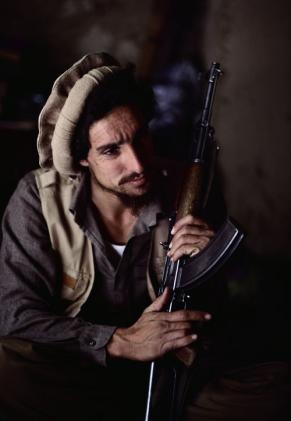
Two days before the attacks on the Twin Towers, three men posing as journalists finally got to meet Ahmed Shah Massoud. They detonated a bomb hidden in their video camera. Massoud’s assassination two days before Sept 11 was not a coincidence. It was not a separate event; it was part of the attack on the Twin Towers. An attack Massoud himself had predicted.

In the spring of 2001, Ahmed Shah Massoud addressed the European Parliament in Brussels and warned of an imminent large scale attack on U.S. soil. He tried to warn U.S. intelligence agencies, but didn’t have enough information to give specifics.

Massoud had been an ally to the U.S. during the pre-9/11 hunt for Bin Laden. He laughed at the CIA when they tried to give him rules of engagement on capturing the terrorist leader. Not wanting to seem like assassins, then President Clinton didn’t want anyone to use US intelligence to kill Bin Laden. First, every attempt should be made to capture him. That an attacking force should only fire when fired upon. Massoud laughed and said, “That is not how things work in Afghanistan.” Anyone that has deployed and performed HVT mission knows that he is right. If the US had the guts back then, Bin Laden might have been removed years earlier. Instead, he slipped away and was able to plan the attack on the World Trade Center, and Massoud’s assassination as well.

When Massoud was assassinated, members of the intelligence community saw it as an indicator of something big was coming. On Sept 9, 2001 counter-terrorism expert and former assistant director of the FBI John O’Neill said to friends, “We’re due. And we’re due for something big.” O’Neill had accepted a job as director of security at the World Trade Center just 17 days earlier. He died when the south tower collapsed.

An ethnic Tajik, he was beloved by all Afghans. Had he lived, Massoud would most likely have beaten the Pashtun Hamid Karzai in a run for President. An impressive achievement for the mostly Pashtun country who are very loyal along tribal lines. As a Muslim, he was progressive. An engineering student when the Russians invaded, Massoud was against terrorism tactics. Believing that such actions would be detrimental to the Afghan people.

Even though it was believed that every Afghan should engage in fighting the Russian invaders, Massoud would not allow the family’s sole breadwinner to fight. He knew that after the Russians were driven out, there needed to be Afghans left in Afghanistan. Suicide bombers were not used against the Russians. Mujahedeen could fight the Russians, return to their family and go fight more Russians later.

Called the Lion of Panjshir, Massoud was an Afghan national hero. He successfully defended the Panjshir Valley from the Russians. Nine times the Russians tried to invade Massoud’s stronghold. They failed every time. The Taliban were not having any success either.

Knowing that America would retaliate after the Sept. 11 attack, Osama Bin Laden made a deal with Taliban leader Mullah Omar. Bin Laden would assassinate Massoud and Omar would allow him to hide in Afghanistan.

If the plot on Massoud had failed, he would have been a powerful ally to the Americans and Afghanistan would be a much different place today. A progressive, well loved and respected leader who inspired loyalty from all the tribes might be leading a forward thinking, unified Afghanistan today. Even the treatment of women would be different. Massoud was the first Afghan leader to have signed a petition calling for the emancipation of women.

Massoud could very well be considered the first casualty of the Global War on Terror. His death was the planned first stage of the terrorist attacks two days later. We need to remember the events of Sept. 11 to make sure that never happens again. The people who died that day should never be forgotten.

Today, Panjshir Valley is considered a sacred place. In Afghanistan, Sept. 9 is remembered as Massoud Day. They celebrate the life of a man they call “Our Martyred Commander” The Lion of Panjshir.

Posted in Commentary, Real Heroes | Tagged , , , , , , , , , , , , , , , , , , , , | 1 Comment

Cold War, Warm Hearts

By Sean Peters
Part I – Preparations

This story takes place in 1989. Internally, the Soviet Union was not in such great shape, but from the outside looking in, it was still quite formidable.

I was assigned to USS Brewton (FF 1086), a Knox-class frigate out of Pearl Harbor, Hawaii. We had returned from deployment, been through a yard period, and were doing our workups. Of course, we were also available for whatever tasking COMNAVSURFGRU MIDPAC (our local Admiral) decided he needed done.

We were a model ship, as evidenced by our berthing assignment. It was widely known that the Admiral wanted his best commands close to him, and his office looked out over the higher-numbered end of the Bravo piers. These started at B-20, down by Pearl Harbor Naval Shipyard (aka “the Navy’s No Ka Oi [number 1] Shipyard”). This part of the Bravo piers was known as the “penalty box”, because it was far from Pearl’s amenities – if you were berthed on that end, you were in dutch with the Admiral. They ran up to B-26, but the best spot was B-25… right outside his window. This was routinely where we were berthed… on the occasions when we were in port.

However, being the Admiral’s pet had its downside. It meant that we got picked for all those little missions – helo deck landing quals (DLQs), submarine tracking services, SAR, you name it. But after months of out on Monday, back on Friday… or maybe the next Friday… we finally pulled in with the idea that we were finally going to get some in port time. We scheduled an availability (meaning, the ship was going to be “available” to the intermediate maintenance activity to do repairs). Many, many schools were scheduled. Leave was planned. Etc. But, ominously, as we were preparing to enter port, we received a message: USS Brewton: assume duties as ready destroyer as of (Monday).

We emitted a collective groan. We had been ready destroyer on and off since the beginning of the year, and this status had precipitated most of these continual underway periods. We all took comfort in the idea that we kept getting tagged with it because we were good. We pulled in, passed the lines over, and duly ran up the “Romeo” flag from the yardarm.

Monday rolled around. Sandcrabs swarmed over the ship, working on the massive maintenance package we had developed. Sailors went off to leave and their schools. I was bound for Boilerwater/Feedwater Chemistry (Basic), on Ford Island, as part of my preparation to get qualified as Engineer Officer of the Watch (EOOW). The first day went by uneventfully. I was enjoying the class and looking forward to finishing.

Fast forward to Tuesday. I hop on the boat to Ford Island (there was no bridge in those days), and report to day two. The morning class goes by. I hop a ride back to the main part of base for lunch, eat, go back. I’m in class that afternoon when it happens. BTI is going on about hydrazine/morpholine layup when a petty officer comes into the room and whispers something in his ear.
BT1: “Mr. Peters, can you come up here, please.” Dumbfounded, I go to the front of the room. The rest of the class is staring at me.
Me: “Yes?”
BT1: “Sir, you need to go pack your skivvies and report to your ship ASAP. You’re getting underway.”
Me: “What? Why?”
BT1: “Don’t know, sir. I’m just delivering the message.”

I gather up my stuff, hop the next boat back to the mainside, rush home, pack my shit. Rush back to the ship.

The sandcrabs are gone. But there’s a fueling barge alongside, and the crew is frantically taking on chow and other stores. No one seems to know what the hell we’re doing. I get my gear up to my stateroom, then track down LT Brown, my old boss.

Me: “OPS, what the hell is going on.”
OPS (stone-faced): “I can’t tell you. But you’re the OOD for sea & anchor detail, so be in the wardroom in an hour for the pre-underway brief.”
Me: (speechless)

An hour goes by, and I’m camped out in the wardroom, nervously drinking coffee. The sea & anchor team filters in, subdued. The CO shows up, brief gets underway. The navigator gives the standard brief – this is the track, this is where there are shoals, we should get to PH (a nav point near the mouth of the harbor) at such and such time, etc. Any questions?

I stick up my hand. “Yeah. Where are we going?”

The Captain gives me a look. There’s an uncomfortable silence. “You’ll know soon enough,” he says.

The brief breaks up. Not long thereafter, over the 1MC: “All hands man your sea & anchor stations.” I report to the bridge, and begin running the checklist. Rudders are functional, radars up, engine order telegraph functioning normally, radio circuits up, boilers/engines functioning normally, etc. We’re ready. The tugs arrive and are made up. The harbor pilot arrives. We pull in the lines, pull away from the pier. The tugs get us headed fair down the channel, and we’re off. In an hour we’ll be in the open sea.

Soon enough, we’re leaving Pearl behind us. The CO directs me to bring the second boiler online. Interesting. Wherever we’re going, we’re going there fast. I get on the horn with main control to make this happen. Then he gets on the 1MC. I don’t remember his exact words, but it was to this effect:

Gentlemen: I’m sure you’re all curious about why we had to get underway so suddenly, and why there was so much secrecy. In fact, we have been tasked with Operation ____ _____ (using a code word I can’t reproduce here) – we’re to intercept and follow a Soviet task group that is conducting an ICBM tracking exercise. Our mission is to gather as much Intel as we can regarding this new ICBM. I know this is unexpected, but I need all of you to provide your best efforts to make this mission a success.

I was floored. Now that we were cut off from the world, the details could come out without fear of information leaks. The Soviet group was coming out of Vladivostok and included a missile tracking ship, their equivalent of the USNS Observation Island – a huge platform with multiple radomes meant for missile tracking. This was fortunate, as even with both boilers we weren’t very fast, but the missile tracker wasn’t either, so the intercept was going to be a doable thing. Our intercept point was somewhere in the vicinity of Midway, which was something like a thousand miles to the west-northwest of Oahu. With luck, we could be there in a few days. We began speeding in that direction.

Elaborate plans were drawn. “Snoopy” (surveillance) teams were to be manned 24/7. In the event of a close ICBM landing, any loose bits and pieces were to be retrieved for analysis, and a system of buckets on ropes was to be used to gather water samples (the XO’s brainchild, this was viewed as being of dubious practicality and usefulness by most of us). Rule of engagement were reviewed. Details of the ship types expected were studied. We were ready in all respects.

The next day, I had just been relieved and was standing around on the bridge wing, enjoying the day for a minute before I went down, when I heard, over the 21MC:

“Bridge, combat.”
“Bridge aye.”
“Sir, EW is picking up a Don series radar, bearing 010.”

So, I thought. The party’s fixing to start. We were radiating the AN/SPS-10, so no doubt they knew we were here as well. And then:

“Bridge, combat.”
“Bridge aye.”
“Sir, three contacts, designated skunk Alfa, Bravo, and Charlie, bearing 030, range 21 miles.”
“I see ’em, Chief. Obviously the Russians.”
“Yes, sir.”
“I need the course and speed and a recommendation to intercept, please.”
“Stand by, sir.”

In due time, recommendations were made and accepted, and we fell in with the Soviet group. They increased speed a bit at our approach, but the missile tracker did not appear to be able to go much faster than 20 knots, which we could have done with one boiler. She and her escorts continued to the southeast, with us in formation.

We ran to the southeast for days. We had been provided with an extensive list of “tippers” – behavior on the part of the missile tracker that something was about to happen. The Snoopy teams kept the ship under constant surveillance, looking for any signs of these. But nothing seemed to be happening – just an endless trip to the southeast, in the general direction of Kiribati. When would the launch happen?

Part II – A Line Is Crossed

This is where the Cold War began to get amusing. I wasn’t on watch when it happened, but we were all spending quite a bit of time topside, so I was up on the signal bridge when the Snoopy team made a report.

“Bridge, signal bridge.”
“Bridge, aye.”
“Sir, we’re seeing some activity on the missile tracker.”
“Well, what is it? “
“Sir, they’re… building something on deck?”
“What? Where?”
“Look amidships, sir. Between the two deck houses.”
“What… what the hell is that thing?”
“Sir, I have no idea. This isn’t anything they briefed us to expect.”
“Hold on, I need to call the Captain about this.”

We all spent the next several hours, taking turns looking through the big eyes at the structure being built on the deck of the missile tracker. Activity ceased around dinner time, and we were all scratching our heads. It was baffling. Whatever this structure was, it was looking pretty ramshackle. And it was far from clear what it could possibly have to do with the matter at hand.

The next morning, construction resumed. I was on watch when we finally realized what was going on. The Bo’s’ns mate of the watch and I were looking at it, when he said: sir… that thing looks like a throne. The realization struck us both at once: the Soviets were planning to cross the line! Crossing the equator is a big deal for all sailors, and it certainly appeared as if they were preparing for the arrival of King Neptune. The Captain came up to check it out for himself, and agreed: sure looks like that’s what they mean to do.

This meant a couple things: 1) we had at least a couple hundred more miles to go before anything happened, and 2) we were going to need to get our own crossing the line ceremony together, quick. We began to feel a certain kinship with our Soviet buddies.

So once again, we were scrambling, this time to put together an appropriate reception for King Neptune. Certain trusty shellbacks were, alas, unable to participate in the festivities because they were needed to keep up surveillance of the missile tracker, but there were enough of us to properly cleanse the wogs of their sliminess and indoctrinate them into the Ancient Mysteries of the Deep. I was an old hand at this by this time, having crossed the line twice already, but I mainly saw my role as preventing things from getting too out of hand. Back in the day, being a wog crossing the line meant you were definitely getting your ass beat, eating revolting “foods”, crawling through garbage, having greasy substances rubbed all over you, and/or participating in drag shows. It’s a kinder, gentler Navy now, but in those days some of the shellbacks could get a little too enthusiastic about their work, so it was important for someone to keep the whole business from getting out of control.

Meanwhile, much the same scene was playing out aboard the missile tracker and escorts. We collectively got all our wogs taken care of, cleaned ourselves up, and continued our southeasterly journey. So now what?

Part III – Glory to the International Worker!

We settled back into our journey. Right after we intercepted, one of the destroyers escorting the missile carrier had made a move as if to shoulder us off – maneuvering to interpose between us and the missile tracker in an attempt to force us away, but the Captain was having none of it. The Russian ship was evidently unwilling to risk a collision, so for the rest of the journey to date we settled in almost as if we were in formation: the missile tracker in the center, us just aft of her starboard beam, one of the destroyers off our port quarter, and another destroyer off the missile tracker’s port bow. Many jokes were made about our “Soviet-American task force” and how the flagship needed to be better about signaling what the formation was supposed to be, etc. Occasionally the destroyer astern of us would retrieve our garbage bags, evidently to pick through them for Intel. The next joke was that we ought to package up some old Playboys for them (although we never did it, to my knowledge).

But only half a day or so after we crossed the line, the situation changed. The Soviets slowed way down, and instead of going somewhere purposefully, began drilling holes in the ocean – in other words, steaming about in circles. Evidently we had finally reached the target area.

This initiated a period of boredom, somewhat mixed with concern. On one hand, nothing seemed to be happening. But on the other, we were getting low on fuel and beginning to bob like a cork. Also, we had already run through most of our supply of “FF&V” (fresh fruits and vegetables) and were beginning to rely on the canned stuff. Dairy was down to a couple days. The CO had been reporting our logistic status back to Pearl, and even before we arrived at the target area, USS Willamette (AO 180) had been dispatched to catch up with us for refueling and replenishment, but it was going to take nearly a week for her to get there. We began to make nervous jokes about scurvy, and although it was quite unlikely in that part of the Pacific in late April, began worrying about the possibility of a typhoon (which can be devastating if you have insufficient fuel for ballast or to run away).

Days passed. And once again we began asking ourselves: are they going to launch the goddamn thing or what? We ran completely out of FF&V. Began relying on powdered milk and eggs. And Willamette was still at least a couple days out. But finally: I was doing some work when the word got out. Something was happening on the deck of the missile tracker. I made my way topside, along with a bunch of the crew.

Something was going on, all right. The Soviet crew had a huge piece of what appeared to be cloth on deck, and were doing something with it. The CIC officer (LTJG Jim Mirabile) was up on deck as well, and I asked him if he had any idea what was going on. Damn if I know, he said. As usual, they never mentioned this as one of the tippers. We both made our way up to the bridge wing to see if we could gain any more information.

By the time we got there, it became clear what was going on. They were about to launch… a balloon? The cloth was rapidly filling with helium (hot air? Couldn’t tell), and beginning to lift up off the deck. The Captain had come up to the bridge, and was getting a little agitated – they were upwind of us, and this thing was going to blow down right over top of us. What the hell was it for?

Finally the thing rose into the air and launched… trailing Soviet and American flags below it. The Snoopy team reported that the Russian crew were waving. Some appeared to be saluting. We were… confused. Until Mirabile pointed out to the CO: sir, it’s 01 May. May Day. This must be some kind of holiday salute or something. We were all thinking: you’ve got to be fucking kidding me. Where the hell did they even GET an American flag that big (the flags were huge)?

The flag-festooned balloon passed over our bow as expected, as the CO said, well, what are we going to do as a gesture in return? Does anyone speak Russian?

The answer turned out to be no.

XO: Why don’t we spell out “Happy May Day” via flaghoist?

No one had a better idea, so the Captain told the COMMO to make it happen. Sigs manned up the flag bags right away, and within a minute or two, the signal was in the air. Then:

“Bridge, signal bridge.”
“Bridge, aye.”
“Sir, the Russians are getting ready to send a signal themselves.”
“Very well, let me know what it says.”
“It’ll be just a minute, sir. Looks like they’re still getting it ready.”

Then: flags run up the yardarm of the Soviet ship.

“Bridge, signal bridge.”
“Bridge, aye.”
“Sir, the message: TANK YOU VERY… in plaintext.”
“Uhhh, “TANK YOU VERY”?” (Laughing)
“Yes sir.”
“Thanks, SMC.”

We were all dying. The Captain, in a festive mood, said, let’s fire off a flare in celebration. A gunner’s mate was duly sent for a flare pistol, positioned himself about amidships… and fired the flare. There was one small problem. Instead of firing it up into the air, HE FIRED IT DIRECTLY AT THE MISSILE TRACKER. (moral: give your people clear instructions.)

We all emitted an audible gasp as the flare streaked toward our erstwhile friends… but thankfully, fell well short. If the Russians even saw it, they didn’t react in any noticeable way. We breathed a sigh of relief that World War III was not started that day. With both us and the Russians apparently out of ideas for further celebrating, we went back to our routine.

Part IV – Epilog

Another few days went by. By this time we were subsisting mostly on fresh baked bread and canned and dried goods, as we were out of just about everything else. The CO was becoming frantic about our fuel state – we literally were not going to be able to go on much longer if Willamette didn’t show up. But, finally, one midwatch, she did. The OOD was my buddy, LTJG Paul Bevans, the A&E (auxiliaries and electrical) division officer. Bevans was half Brazilian, and universally known as “the Mutant” – earlier in his shipboard career, he had served as midshipman coordinator. During this period, he referred to his charges as his “mutant warriors of death” (he was a very enthusiastic man). The name, however, stuck to him.

In any case, the Mutant was on deck when we made contact with Willamette – nice big blip coming from the north, right IFF, right EW emissions, etc. We got on the horn with them and began setting up an UNREP. But at that point, an accented voice crackled over the bridge to bridge radio (channel 16 VHF, the international hailing frequency):

“US Navy wessel on my starboard beam, this is Soviet Navy wessel on your port beam. Over.”
Mutant: “… this is US Navy vessel. Over.”
Soviets: “US Navy wessel. Who is that ship comink toward us?”

All they would have seen was an AN/SPS-10, which was the most common surveillance radar in the fleet at the time. As far as the Russians were concerned, this could have been anything. I guess they felt that since we were such great friends now, we’d be happy to spell out what was happening.

Mutant: “Uhhh, I’m afraid I can’t give you that information. Over.”
Soviets:
Soviets:
Soviets: “Roger, out.”

It became clear enough to them at first light, though, when we broke off from the formation to refuel. Willamette had stopped a little short of the formation, but the Soviets could likely identify her distinctive superstructure, and in any case, our radar blip essentially merging with hers would have made it clear beyond a shadow of a doubt what was going on. We went alongside and began taking on a big drink of badly needed fuel, plus every imaginable kind of chow via VERTREP and cargo STREAM (the Standard Tensioned Alongside Replenishment Method – the modern way to transfer stuff from a replenishment ship to the customer ship). While this operation was in progress, we and Willamette got a message from the homefront:

041832Z MAY 89
FM COMNAVSURFGRU MIDPAC

TO USS BREWTON
USS WILLAMETTE

INFO COMDESRON TWO SIX

BT

SUBJ: TURNOVER OF OPERATION __ ___ SURVEILLANCE DUTIES

1. FOR BTN: UPON RDVZ W WMT, CONDUCT UNREP, THEN CONDUCT TURNOVER BRIEF FOR WMT CREW. UPON COMPLETION, RTHP [return to homeport].

2. FOR WMT: REMAIN IN COMPANY OF SOVIET VESSELS AND MONITOR FOR MISSILE TEST RESULTS PER BRIEFING. REPORT RESULTS PER INSTRUCTIONS PROVIDED BY BTN.

BT

[Note: Paraphrase of the actual message. The real thing would have been classified SECRET and contained considerably more detail, but this gives you the flavor of what was said]

So we were done. We completed our UNREP, broke away, provided Willamette with the details of what we had seen and what to do, and headed home, leaving the Russians in her care. We found out later via the grapevine that the ICBM test never did come off – Willamette followed them around for a couple of weeks, nothing ever happened, the Russians started heading north again, and Willamette was ordered home too.

So, a little anticlimactic after all that. But it was a very interesting Cold War encounter – plenty of ships had experiences with the Soviet Navy where they were very aggressive and confrontational. But our experience showed they could be nice guys, too.
Posted in So There I Was | Tagged , , , , , , , , , , , , , | Leave a comment

Not All Wounds Are Visible

By Allie Proff

During my time in the service, I experienced an attitude that “If you’re not bleeding, you’re not hurt.” As much as we know that’s not the case, it’s still hard for some people to admit they need help. They either struggle along broken or finally snap and hurt those around them.

One of the most powerful tools we have at our disposal is awareness and advocacy, if not for ourselves then for others. Getting help for yourself or your shipmate is not a sign of weakness, even if there are no physical wounds.

Before I reported to my ship, I knew life had been easy. Sure, there had been super-stressful times in college balancing my schoolwork, ROTC duties, and social life. I had pulled all-nighters before. But nothing compared to the lack of sleep and irregular sleep that was the way of life for weeks or months on end anytime we were out to sea.

For starters, there was the watch schedule. We were divided into three sections, meaning you stood every third watch. Our watch shifts were what was called “nickel and dime”, and went from 0700-1200, 1200-1800, 1800-2000, 2000-0200, and 0200-0700. So a typical scenario would be stand watch from 7am to noon, then again from 10pm to 2am, then noon to 6pm, next 2am to 7am, then from 6pm to 10pm. Rinse and repeat.

As a junior officer or JO, when you’re not standing watch, you have to do your job, take care of your division, put out any “fires” that happened to pop up, and work on your basic qualifications. You finally think you’re going to get a little sleep when there’s some sort of special event like a man overboard maneuver or a general quarters drill that interferes.

In a 24 hour period, we only got about 4-5 hours of sleep. And you were lucky if that was all at one time. Usually it was 45 minutes here, 2 hours there, kind of sleep. Lack of sleep (and food) became bragging rights and a source of one-upmanship. “In the last three days, I’ve only gotten 10 hours of sleep,” one sailor would say. “Oh yeah,” another would respond, “my life is worse…I only got eight.”

At first, it was funny stuff like hallucinating sights and voices. You think you heard or saw something but then you realize you didn’t. Tempers frayed, mistakes were made, but we kept on doing it because no one wanted to be seen as lazy or a quitter. Some people broke early, and instead of helping them we prided ourselves on how strong we were and how weak they were.

Note: Not all ships are like this. Our ship just happened to have a full-bird captain going for his admiral’s star and Norfolk’s proximity to Washington D.C. made everyone a little more likely to turn coal into diamonds than people on ships in other places. This made the atmosphere more cutthroat . We got a new Commanding Officer (CO) halfway through the deployment and what a difference it made!!!!!!

For me, I started to feel overwhelming thoughts of failure and feelings that things were horrible and would never get better. It got eventually where even though a small rational part of me could stand aside and realize how irrational those thoughts and feelings were, the negative feelings overpowered everything else. The only thing preventing me from committing suicide with the loaded weapon I had on watch in port was the fact that I’d be scarring some poor young petty officer for life and he or she would have to clean up the mess. I cared more about others than I did for myself. That was the only thing that kept me going.

The day I got help was when I had a moment alone in the crypto vault (no one was allowed in there except me, my chief, and our first class petty officer) and started crying and couldn’t stop. Or even make it to a chair. Two hours later, I made it to the phone and called my chief to come in the vault. His wife was an RP (Religious Personnel, assisting Chaplains) and got me hooked up with counseling through Family Services. Although I resisted at first, I eventually went on anti-depressants. It helped, but I’d still have fits of crying where I’d have to pull over if I was driving, or turn off the stove if I was cooking because the fit would overwhelm everything I was doing at that moment and I would be unable to make it even to the closest chair.

After watch, after regular work, there is training and drills. When are sailors supposed to sleep?

I managed to get through the rest of my service commitment and then got out. One of the basic things I did for myself was get regular sleep. I used the anti-depressants for a year, and then took two more years weaning off of them. Even now, I’m very careful to give sleep a priority. When my baby was born, I napped when he napped just as advised; housework and all else fell to the wayside. My husband is an awesome guy who picked up the slack. Once or twice, I tried not napping (OMG dishes and vacuuming and laundry and baby announcements!) but I noticed when the irrational feelings started coming, knew why they were there, and fixed it before it could become a problem again.

Did you know sleep deprivation is one of the ways we use to break prisoners? A sleep doctor a family member recently saw for apnea told us that medicine still don’t understand exactly what happens during sleep or why it’s biologically necessary but going without sleep at all can kill a person just as surely as going without oxygen, food, or water. For me, the lack of sleep and irregular sleep created an imbalance of chemicals in my brain that affected the way I thought and felt. No more lack of sleep, no more problems. Case closed.

Back to the point, though, of why I’m telling you this in the first place. PTSD is real. Suicides in the military are high. Stress, concussions and head injuries, in addition to lack of sleep, can also cause brain imbalances, which can affect professional performance as well as personal relationships. The macho culture that disregards mental injuries and illnesses because they can’t be seen or measured are doing a disservice to all of us.

There’s a difference between people who are lazy, complain about everything, and generally lack self-control, and those who legitimately cannot overcome overwhelming feelings of terror, paranoia, depression, anxiety, etc. If this is you, you deserve help and are not weak for getting it. If it is not you, look out for your shipmates. Getting help for them could save their life just as much as deflecting a bullet from an enemy’s rifle.

Have you known anyone who suffered from a mental injury? What happened?

Posted in Commentary | Tagged , , , , , , , , , , , , , , , , , | Leave a comment

No Justice For Danny Chen

By: Peter Sessum

It is sad that we can’t be bothered to give his family a little justice and his soul a little peace.

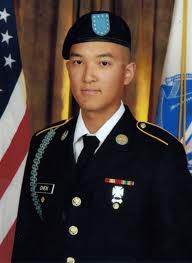
The first court martial for the soldiers that harassed and abused Pvt. Danny Chin which led to him taking his own life in a guard tower in Afghanistan has ended. The military system, the civilian sector’s lack of understanding of the military and even the timing of the trial will ensure that Chen and his family will never know justice.

Monday, Sgt. Adam Holcomb was found guilty of maltreatment and assault. He was found not guilty of negligent homicide, reckless endangerment, communicating a threat and hazing. Instead of getting up to 14 years in jail, he got 30 days, docked one month’s pay and a demotion to Specialist. That is all he gets for having a soldier kill himself on his watch.

One problem is the court martial process. By taking on each case one at a time the defense gets to pass the blame around and so far it has been landing on Chin. Anthony Osborne, Holcomb’s attorney agrees that Chin’s death is a tragedy, but it is not the fault of Holcomb. Each defense attorney can apply the same strategy saying that it is someone’s fault, just not THEIR client. It is playing hot potato with the blame and the one that will get stuck with it is Chen himself.

Chen is being portrayed as a screw up. In the military, corrective action can take many forms. Some are physical, others are meant to make the soldier feel stupid so they won’t repeat the action. Are a lot of them stupid? Absolutely, but the military is not an organization where everyone gets a trophy for participating. Especially in combat. Everyone has to be at their best or mistakes happen. In a combat zone, mistake can more easily be fatal.

Since the court martial panel is comprised of soldiers, many will know the dangers of having a screwed up soldier on your team. If they believe that Chen was a liability they might not be sympathetic to his plight. The trial took place at Fort Bragg, home of some of the Army’s most elite soldiers, a messed up soldier will not be in their favor.

Even the media’s misuse of the term “hazing” might have actually contributed to the perceptions of the panel into thinking that Chen was weak. In the military, hazing does not have the negative connotations. Hazing is something that was done to welcome a soldier into the unit. It is more of a practical joke than intentionally doing harm. When framed as “hazing” the panel may believe that Chen was being welcomed into the platoon rather than being singled out. Ask anyone that has ever been told to find “soft spots” in tank armor, a can of squelch for the radio or sent to supply to get Bravo Alpha eleven hundred Novembers (BA1100N, or balloons). That was hazing. It is silly, but not harmful. Some members on the panel might remember hazing when it was seen as harmless and not see a problem with the allegation.

What we need to do is make a distinction between hazing and harassment. It is the difference between consensual sex and rape. When accusing Holcomb of hazing, military members, myself included, think of harmless acts that bring a unit together, say harassment and something else comes to mind. When talking to military members, hazing and harassment are not interchangeable.

What Chen endured was not hazing. It was harassment, it was abuse, it was assault and the case could be made for torture. His tormentors, however, will not face serious charges because no one is paying attention. Or more accurately, no one cares.

Right now the national attention is caught up in the Olympics. For recent tragedies there is the shooter at the Batman movie and the Sikh temple. No one cares about a soldier suicide in Afghanistan a year ago.

Now is the time that the spotlight needs to be back on the issue, while the soldiers are finally facing trial. The only way the men will be held accountable is if attention is brought to the situation. Before the decisions sent to the general are final, we need to let him know that 30 days in exchange for a young life is not enough. But why should the general care if we don’t?

Posted in Commentary | Tagged , , , , , , , , , , , , , , , , , , | Leave a comment

Why I Joined: From a Young Naval Officer

By Allie Proff

LTJG Nash


When I was young, I loved stories about heroes. Greek demigods, shining knights, or caped crusaders, it didn’t matter to me. I loved how strong they were; not always physically but definitely courageous in standing up and defending others even when the cause seemed lost. Some of my favorite heroes in particular were my dad, my grandpa, and my uncles. All had served in various branches of the military. My dad (an anti-submarine helicopter aircrewman during the VietNam conflict) and my grandpa (my mom’s dad and a WWII submarine mustang officer) especially enjoyed trading sea-stories.

My reasons for joining were mostly idealistic: I wanted to defend my fellow Americans, our freedoms, and protect those overseas whose rights were being trampled. I had also read the book Starship Troopers by Robert Heinlein (totally different than the movie) and thought that it made sense to earn my civil rights through service to others. I won’t lie; military people in the media (movies, video games, etc.) were pretty cool, tough, and disciplined. And the ass-kicking women were even cooler. As a girl, I’d much rather be GI Jane or Vasquez from Aliens than some primpy mall-girl (although a combination of the two would be best). It also helped that I got an NROTC scholarship to help pay for college. Finally, as part of growing up, I wanted to test myself. How strong was I? How fast could I run? Just how far could my mind and body be pushed? What were my limits?

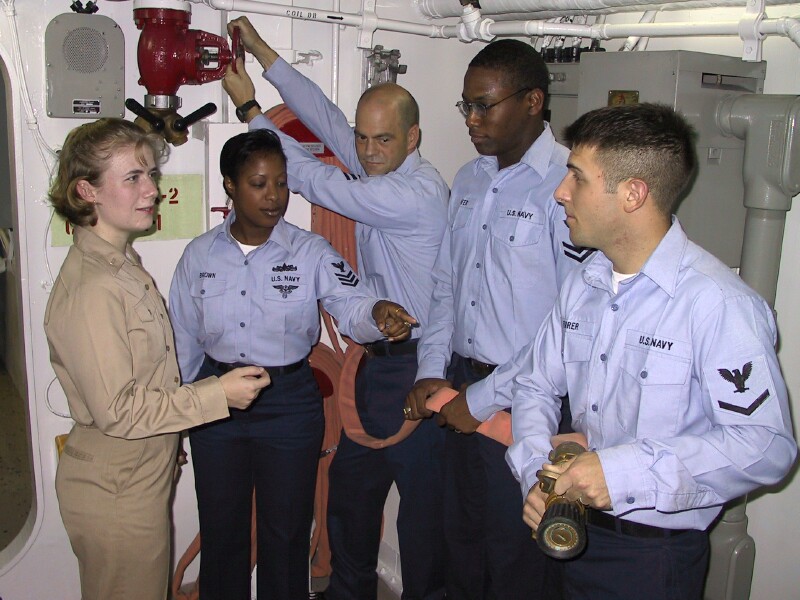
I learned I could run 3 miles in a little over 7 minutes a mile and could even run 10ish miles around Lake Union all at once without stopping. I learned how to shoot various weapons, the nautical rules of the road, and how to fight fires (every sailor is a fire-fighter; if there’s a fire at sea, there’s nowhere to run and no reinforcements). I reaffirmed that I’m pretty stubborn and self-sufficient and can keep going even when I think I can’t. I also learned what happens to me physically and emotionally when I’m exposed to long-term sleep deprivation (it’s not pretty, but that’s another story).

At one point, I realized I had become a little bit too backstabbing and political because that was the culture of the wardroom on my ship. I let myself be brainwashed into thinking that’s what I had to do in order to stay competitive. There came a point where I didn’t like who I was. I sat down and made a list of what was important to me and who I really wanted to be.

Unfortunately, I also learned I’m not so great at being in the military (or maybe I should’ve been enlisted instead of an officer). I’m a great support person, but not so great (or happy) at being the person out in front leading. When I left, I felt like a failure. During this journey, though, I discovered as much about my strengths as much as I did my weaknesses. My current job as a technical writer totally suits my personality and skills: I love what I do, and I’m good at it. It was a process, though, getting here.

As I was in the military, I looked around and listened to others and their reasons for joining. Some, like me, were idealistic. Others were mercenaries (or at least just more realistic), just doing a job for the benefits (GI Bill, technical training) and then getting out to live a “real” life. Some wanted to travel or were just trying to get out of the parent’s house and anywhere but their hometown. Others had no direction and just thought it would be something to do while they figured out what they wanted to do in life. Everyone’s reasons were different, and pretty much everyone had more than one reason (even if they didn’t admit it out loud).

For those of you thinking of joining, some of you will do well. Some, like me, will realize it’s a bad fit. However, we will all have been through a crucible and found out more about ourselves in a shorter amount of time than almost anywhere in the civilian sector. We will always get to stand and be remembered for our service as veterans of the armed forces.

I’d love to hear from other veterans. What motivated you to join? How was it the same as or different from what you expected? If you aren’t in anymore, why did you get out? What did you learn from your experience and how has it affected you today?

Posted in Commentary | Tagged , , , , , , , , , , , , , , | Leave a comment

Education Advice for People Thinking of Joining the Military and New Recruits

By Peter Sessum
I initially wrote this for tumblr, but thought it could be useful information to be shared on the website. After seeing a few questions being asked about education benefits in the military, I thought I would throw my two cents in. Here is what I posted. There is an update at the bottom for those that read this on tumblr.

First, always ask your recruiter about education benefits. If it isn’t in your contract, you don’t have it. The GI Bill is something they offer one time in basic, you have one shot to get it so take it! If you don’t you are a complete idiot and please never speak to me.

Here is how the GI Bill works (or at least worked) They take out $100 a month for a year. That turns into money for four years of college. The new GI Bill fucking rocks if you are active. (It is still good, but not as good if you are reserve or NG) But let me cover that in a second.

So try and get college loan repayment if you have current loans or money for college for when you get out. Go talk to a recruiter in a more affluent area because they know they have to work harder to get people. As much as it sucks, in a low income area they figure people are happy to get out of there and don’t offer as much.

Okay, so now you joined and are at your first duty station. First thing, hit the military education center. Trust me on this. Sign up for military correspondence courses that are for your MOS. It is free, they send you a couple books, you take the test and send it in. Then they send you a new book for every completed test you send it.

Here is why you do that. First, you don’t know what your training schedule is like and if you can handle taking classes. Second, it will reflect well upon you because so few people do it. Your chain of command will think you are a hard working soldier right out the gate. Third, it gives you time to practice study habits when you aren’t wasting any money. And most importantly, it is promotion points. In a couple years while everyone else is scrambling for promotion points, you will be maxed out on military education. 50 promotion points might be the difference between making rank and not.

Now that you have good study habits and know how much off duty time you have. Go to the civilian education center and check out the classes there. They have the University of Maryland and something else, I can’t remember offhand. Take what classes you can. Get all your knucklehead stuff out the way so your time at college will be easier. Since you have shown that you are a hard charger, your chain of command might be a little flexible on your schedule to let you take the classes.

When you get out, man that time flew by, check out GI Jobs list of military friendly schools. Some states, like Illinois, give free tuition to vets for state school. Some colleges give tuition breaks for vets. University of Washington (UW) gives 50 percent off for either your bachelors or Masters but not both. With the education you have from your time in, hopefully you will speed through school.

Get your ATARS, it is a military transcript. It will give you college credit for your time in the military. Basic training will cover all PE credits. You MOS school might cover some electives or more. I know a guy that got 35 credits for his military training because it was kind of in the field he was going. He had the GI Bill, kicker and college fund. He was making $3,500 a month going to school.

You should also join the national guard or reserves when you get out. It will keep you connected with military people so there won’t be the culture shock getting out. Also, the Tuition Assistance (TA) will help pay for school. “But I have the GI Bill, it pays for school” you say. That might be true, but you can get that money in your pocket if you are smart. I went to UW and they gave me half off tuition, TA covered the rest. The GI Bill tuition money went into my pocket at the start of each quarter.

So there is the lesson. Take whatever education benefits you can get. Even if you don’t feel like doing college now, you have 10 years after you get out to use them. Take military and civilian education if you can fit it in. Then go to town on college when you get out. Now go spread the word.
Update: Keep in mind, as for as the military is concerned, you are joining to become a Soldier, Sailor, Airman or Marine. You can join the military to go to college later but you cannot join to be a college student. If you only want to be a college student, then go to college.

Because the military will put your job above all else, there is no promise that you will get the chance to take college classes. Someone that reads this will have a jerk squad leader that will give him or her duty on the night of classes just to be a jerk. Sure, he will say it is because the military comes first, but really he is just being a dick.

On the flip side, there are also great NCOs that will fight for their Soldier/Sailor/Airman/Marine to go to school. The Navy brings college professors on floats with them to teach classes out at sea. From what I gather, the Navy is pretty big on continuing education. Of course there is little else to do on a boat for six months and idle hands and all that.

Also, anyone that goes to the Defense Language Institute (DLI) will leave not just with a new language but enough credits to get an associate’s degree in that country/region that the language is spoken in. For example, leaning Russian will give an AA in Russian studies.

In the end it is great to go in with a plan. People that join with a plan and those that improve themselves while in have a better time in the military. A military career really is what you make it. However, be flexible. Some people might find out that their job takes up too much time to want to try and do college while serving. That is fine too. Priorities change after a while so the best thing is to have a pan, but be open to change. No matter what, good luck. And seriously, if you don’t do the GI Bill after I have told you, we can never speak again.

Posted in Kicking Some Knowledge | Tagged , , , , , , , , , , , , , , , , , | Leave a comment