Nicholas Aaron Madrazo, USMC, Rest In Peace

nic12Nic Madrazo was (is still) one of the best people I have ever known. He was funny, kind to those that could do nothing for him, a man of faith, a lover of life, the best wingman, and had a mean cross over on the basketball court. We were friends for 12 years before a massive IED detonated under his Humvee during operations in Afghanistan, killing the young Marine lieutenant and everyone else in his truck.

Nic wasn’t just a light in our dark world, he was The Light in most of the spaces he entered. Stories from in-theater have trickled back since his death that served to reinforce the high regard those of us that grew up with him felt (and still feel). Some of those stories involved him playing soccer with the local Afghan youths before leaving the wire to lead operations, for example. Or from his French military liaisons, who commented on his ability to brighten any situation, regardless of how terribly sh***y it was.

One year after my six year commitment to the US Navy ended, Nic was called away, and I will never forgive myself for not being able to do something more. With that guilt has come a passion and drive to do all that I can for this world, and those we share this precious space with.

Truth be told, Nic is still brightening the world through the friends and family he touched during his short 25 years on this planet. Every good thing I’ve done these past six years has been a reflection of my flawed attempts to honor his memory.

I loved (still love) Nic like a brother, I miss knowing he’s on the other end of a phone call, and I hope and pray to God that our United States will honor his ultimate sacrifice.

Being our best, day in and day out, and helping this nation to realize its potential, is the only thing that will ever be enough to honor his life and sacrifice.


Posted in Commentary, Never Forget, Real Heroes | Tagged , , , , , , | Leave a comment

Profile in Service: Harry Miller

Harry MillerBy: Fred Apgar

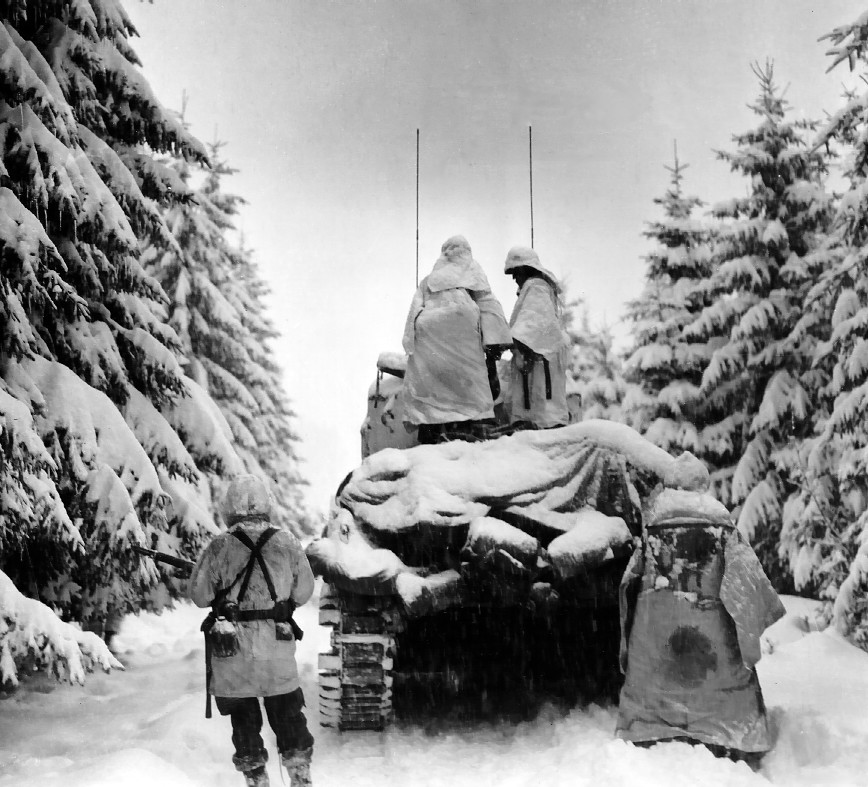
With a career that spanned two branches of service and three wars, Harry Miller exemplifies the value of service to our nation. Miller grew up in Columbus, Ohio, the youngest of six children. To help support his family, he worked halftime while going to school. In 1944, he dropped out high school to enlist in the Army. Miller completed Basic Training at Fort Knox, Kentucky and was assigned to an armored unit. He arrived in Europe in November 1944 and was assigned to the 1st Army, 740th Tank Battalion. Miller joined his unit at New Chateau in the Ardennes and saw immediate combat during the Battle of the Bulge. He was a member of a five-man tank crew assigned to an assault platoon. When the Allies successfully forced the Germans to retreat, Miller was then attached to the 82nd Airborne and fought the Germans across the Siegfried Line, having to overcome numerous tank traps, sniper teams and hardened positions.

Upon crossing the Rhine River, his unit captured thousands of German soldiers who knew the war was about to end. According to some of the captured troops, they preferred to be captured by American forces rather than surrendering to the Russians.

Tanks and Infantrymen of the 82nd Airborne Division, Company G, 740th Tank Battalion, 504th Regiment, push through the snow toward their objective in Belgium.

Tanks and Infantrymen of the 82nd Airborne Division, Company G, 740th Tank Battalion, 504th Regiment, push through the snow toward their objective in Belgium.

Once hostilities ended in May 1945, Miller’s job became that of occupation duty. For the next three years, Miller served as an MP in the 2nd Constabulary Regiment. After a brief visit with family in the United States, Miller continued to serve in occupation duty, but this time it was in Japan. He was assigned to the forward communications center of MacArthur’s Headquarters, a unit in which he would continue to serve for the next five years. When the Korean War started, the communications center, of which Miller was now in charge, was transferred to Korea. After a year of duty in Korea, Miller was reassigned to the Army Security Agency and sent to German, once again. When the Army refused to honor his request to return to Korea, Miller left the Army after 10 years of service. In hopes of being assigned to Korea, he immediately joined the Air Force with no loss in rank.

Miller was assigned to the Air Defense Command, and after serving a two year tour at Stewart Air Force Base in Newburg, New York, Miller then served a remote tour at a radar site in Alaska. This tour of duty was on the DEW (Distance Early Warning) Line, was a system of radar stations in the far northern Arctic regions of Canada, with additional stations along the North Coast and Aleutian Islands of Alaska. The DEW Line was established to detect incoming Soviet bombers during the Cold War and provide early warning of any sea-land-air invasion.

After subsequent assignments back in the states and Germany, Miller was transferred to the Strategic Air Command. During the Vietnam War, Miller was a member of the Joint Targeting Task Force for B-52 operations and was responsible for generating the “Go-Codes” for all B-52 missions. Miller retired from the Air Force in 1966 at the rank of Senior Master Sergeant. After leaving the Air Force, Miller worked as a private investigator for Burns International and then served as Director of Security and Safety at a hospital in Albuquerque, N.M. For many years, Miller was the drummer in a local band that played weekly at the Edmonds Senior Center and at various parties and local events.

In 2012, Miller’s wife of 37 years, Helen, died suddenly. Miller has two sons and resides in a military retirement community in Washington, D.C.


Posted in Profiles of Service | Tagged , , , , , , , , , , , , , , , , , , , , , , | Leave a comment

Stop Contributing to Post Traumatic Stress: Vets are not all crazy

The PTS awareness ribbon.

The PTS awareness ribbon.

By: Peter Sessum

Every veteran has heard this in some way, shape or form. Usually by some uninformed individual that is in no way qualified to make that diagnosis. One reason why it is one of the more powerful ways it contributes to Post Traumatic Stress (PTS) is that is that it hits other PTS triggers like bringing in the million dollar question and diminishes service. There are a few reasons to call a vet crazy, to bully the vet, to try and win an argument and just plain ignorance.

Don’t bully vets

Our anti-bully culture has taken things too far. It seems that we consider anyone big and strong, either literally or metaphorically, to be the bully and anyone smaller to be the victim. It totally skips over psychological attacks and what we call “Little brother bullying.” Anyone that has siblings will know what little brother bullying is. It is when he puts his finger in front of your face and says, “Not touching you, can’t say nothing” over and over. It is any kind of repeated annoyance with the intent of angering the other person.

No amount of talking or asking the person to stop will work. The only way to get it to stop is to physically push the person away. Then what happens? The little brother goes and tells the parents “I wasn’t touching him and he hit me for no reason at all!”

That is what many people do to vets. They harass the vets hoping to invoke a response. Of course they are not prepared for that response to be physical, they just want an outburst or maybe be pushed so they can justify their harassment but if they were right and the vet really was a psychopath, they are not prepared to respond to a real physical threat.

In our culture you can’t make fun of someone’s race, it is a hate crime to harass someone about their sexual orientation and sexist to harass a woman for what she is wearing but it is perfectly acceptable to harass a vet. Many veteran supports will say that we shouldn’t harass someone that defended our freedom but I say we shouldn’t harass anyone for any reason based on race, sexual orientation, gender or veteran status.

Wining an argument

This is the same as telling someone that is yelling at you that swearing or yelling is the mark of someone low class. The intent is to throw the person off by making them think that they are coming off as stupid. The best response, in the Army anyway, is to yell “FUCK YOU” and carry on. The person is trying to use a psychological trick to throw the other person off.

In the case of calling a vet crazy, it is usually because the other person is losing the argument and wants to make it personal. If the discussion is heated, it is meant to make the vet think that he or she is looking crazy and so contributing to the negative perception of veterans. I have experienced this first hand by a person that had called all military service members baby killers in front of our college class. When I engaged him in debate he tried to make it personal and eventually said, “You are just getting upset because you were in the military and have PTSD.”

I understand that my response was supposed to be a feeling of shame but instead I turned it back on him. I told him I wasn’t mad at the world, I was mad at him specifically because he was a douchebag. He was saying things that were making me specifically mad at him and him alone. Needless to say this didn’t fit his idea of what was supposed to happen and after losing every point of his argument he never engaged me again. The lesson is to never let people manipulate veterans with such underhanded manipulation.

Plain ignorance

Unfortunately, this is not as rare as one might think. Unfortunately, even on a college campus where people are supposed to be expanding their minds, many still don’t know anything about the military experience. Most college students know more Airsoft “Operators” than actual vets. The military experience is so far outside their realm of understanding that they can only go by what they hear. The news never talks about the millions of service members or veterans that live completely normal lives, but they do hear about the ones that go crazy. More civilians know about Bowe Bergdahl than Chris Kyle and they might only know who Kyle is because of Jesse Ventura.

It is sad but many people do not understand. Senator Diane Feinstein thought that PTS was a recent thing only because she hadn’t heard about it in the news before. She didn’t know it was what was called shell shock in WWI and it was the Vietnam Vets that really brought PTS as it is understood today out of the shadows.

I think that the connection of veterans to PTS isn’t just ignorance but is a reaction by civilians to put it in terms they are comfortable with. They have to believe that there is something wrong with a person to want to fight for their country. And if there isn’t something wrong with them there will be by the time they are done. There is also a gross ignorance of what happens overseas. The news only covers the worst of what happens. Even when reporting on heroic acts, the situation is the worst possible situation a person can be in.

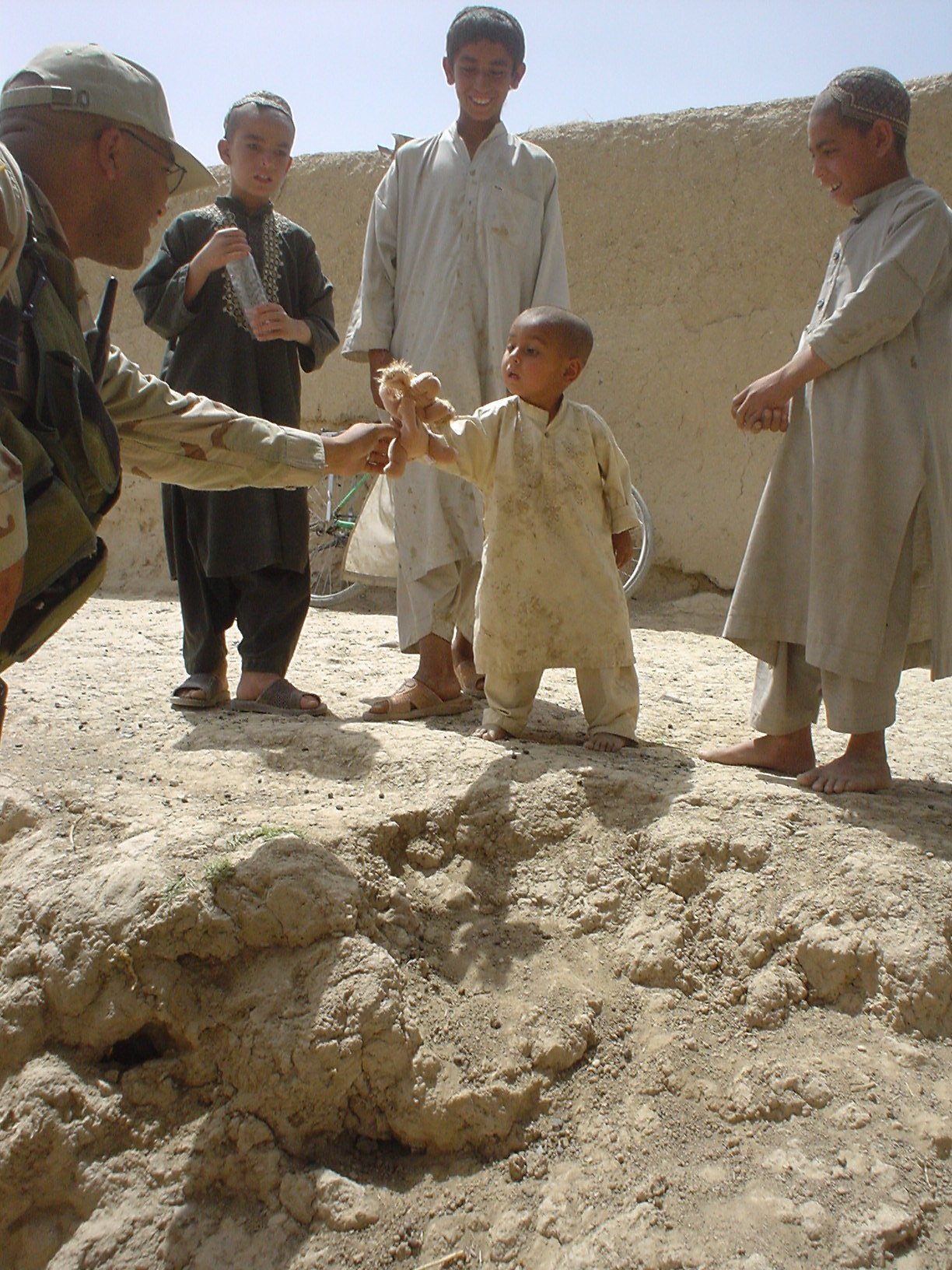
Afghan kids were targeted for kindness. Contrary to what some believe, passing out stuffed animals was routine, hurting kids was not.

Afghan kids were targeted for kindness. Contrary to what some believe, passing out stuffed animals was routine, hurting kids was not.

So most civilians don’t know about the reconstruction efforts or all the positive things that the military does. Even when media crews accompanied a unit as they set up a medical clinic for the day in a needy Afghan village, they ignored the positive mission and looked for something sensational to report. The man that accused me of being a baby killer had no idea that I had personally handed out about 1,000 stuffed animals to Afghan kids. He had no idea that without me, an Afghan orphanage without power would not have received the blankets they so desperately needed before winter hit or that I was one of the people that selected which village would get a medical clinic that week and every Thursday I would accompany that unit on the mission of mercy. It was easier for him to believe that I had received special training to shoot kids than I helped them out.

Treating veterans like they are all powder kegs about to explode will only further alienate them. It teaches us to hide who we are and suppress the feelings that we really should vent out. I started this piece prior to the death of Robin Williams. He made multiple trips overseas to entertain troops and it is sad that his death will also be his final act of kindness for military service members and veterans. A week ago, if we talked about our feelings we would be suspected of being on the verge of a killing spree. Now if all we have to say is, “When I think about my service I feel sad” and we will get attention. It is tragic that the death of a good man is what it took for civilians to care about those that sacrificed so much for them. Unfortunately, like many, I have seen this before and know it will be short lived.

So remember, we are not all crazy and treating us like we are will make you look stupid, it won’t help you win an argument and it just a form of bullying. Don’t be that guy. We have enough things to deal with without having to put up with your bullshit.

Posted in Commentary, Kicking Some Knowledge | Tagged , , , , , , , , , , , , , , , , , , , , | Leave a comment

Iraq and Back – One year later

This post was written by an outside author and posted for him by a DTC editor. The post has been deleted due to evidence that the original author does not live up to the standards that we have here at the Dogtag Chronicles and anyone not living by a creed cannot be allowed to poison the website, or the readers. We require honorable service and men and women with integrity. The same code warriors agree to live by.

As the founder of the Dogtag Chronicles I would like to apologize to those that read his post before it could be removed. I try to give all veterans the benefit of the doubt and some are not worthy. I am leaving this as a placeholder because I am not afraid to admit when I am wrong and I won’t cover up mistakes. I appreciate your understanding. We lived by a standard and that does not end when we hang up our uniforms.

Respectfully
Peter Sessum

Posted in Commentary | Tagged , , , , , , , , , , , , , , , , , , , , , , | Leave a comment

Stop Contributing to Post Traumatic Stress: Diminishing Service

The PTS awareness ribbon.

The PTS awareness ribbon.

By Peter Sessum

June was Post Traumatic Stress (PTS) awareness month and even though it is passed we should still time to look at another way that people contribute to PTS in veterans. Diminishing the service of another is something that military members and veterans are unfortunately as guilty of as civilians are. It is bad enough when a person that doesn’t understand the military experience diminishes us but it is much worse when one of our own does it.

It starts out innocently enough, a person says they are a vet and a civilian asks them what they did in the military. If he says a job that isn’t in Call of Duty he is dismissed for not having a “tough” job. It is worse when someone sees dogtags on a woman and she is asked what her boyfriend does in the military. In both cases, several years of honorable, and possibly difficult, service was dismissed. Someone is being told that a part of their identity isn’t important and people wonder why there are so many soldiers guilty of Stolen Valor.

At a journalism convention a woman heard I had been in the military and asked if I was a “Pee Oh Gee” meaning POG. Sounding it out immediately told me that she didn’t know what she was talking about and was already not qualified to ask the question. She looked confused when I laughed in her face. I told her it was because my grunt cred was well established but the ridiculousness of her question was funny. She didn’t know anything about me or what I had experienced but felt that as a 21-year-old college student she could make judgment about my military service.

Until you get to know a person you really can’t know what they went through. By 2004, a female with the 82nd Airborne or 10th Mountain Division would have deployed more in the Global War on Terror (GWOT) than all the male Infantrymen of the 25th Infantry Division. Long before then, women were regularly going outside the wire so there is no reason to question that women had been put in harm’s way. Even staying on base was dangerous with rocket and mortar attacks.

SPC Crisma Albarran, a BlackHawk door gunner on her second tour in Iraq. The same mechanic that never left a major airbase wouldn’t consider her a "real" vet because she was a girl.

SPC Crisma Albarran, a BlackHawk door gunner on her second tour in Iraq. The same mechanic that never left a major airbase wouldn’t consider her a “real” vet because she was a girl.

Recently, I was talking to a vet in a bar about PTS and a woman’s name came up. He was a former Infantryman and immediately dismissed the possibility that a woman could have PTS. He questioned what she could have seen or experienced to negatively impact her. To his credit, he did acknowledge that Military Sexual Trauma (MST) was an acceptable reason to have PTS but it shouldn’t have taken that.

The saying “You’ll never understand a person until you walk a mile in their shoes” definitely applies and that doesn’t mean only walk a mile, it means share their experiences. Some grunts feel that because they have marched more miles than most soldiers that they understand the experiences of those that march less. PTS is a very individual experience and one hardship will not impact a person less because it is not as extreme a hardship as the next person experienced.

Even if someone was in a “POG” MOS, he or she could have seen the horrors of war. Some men in combat arms that ran missions outside the wire never came under hostile fire while some POGs were subjected to the worst war has to offer. When a rocket hit a chowhall in Kandahar everyone inside was affected. A finance clerk, someone that usually never sees the effects of combat, might have seen his friend die in front of him.

Command Sergeant Major Klein, a legend in the Ranger Battalion who was drafted for Vietnam and stayed in the Army into the 2000s, would remind soldiers that medics and nurses had the highest incidents of PTS in Vietnam. Medics see the worst effects of war but they have no outlet. A grunt sees his buddy get hit and he can let loose in the next firefight. Nurses would see a seemingly never-ending wave of young men come in and that would take an enormous toll.

Even outside of combat, MST and death there are other aspects of the military life that can contribute to PTS. Fear, isolation, the distance from family, all have an impact on a person deployed. Danny Chen didn’t die in combat, he died because he didn’t see an end to the torture from his own unit and he took his own life. Even if he had made it back, the mistreatment could have had long lasting effects. If the same things happened to someone that wasn’t Infantry, telling him that he had it easy overseas would be diminishing his experiences.

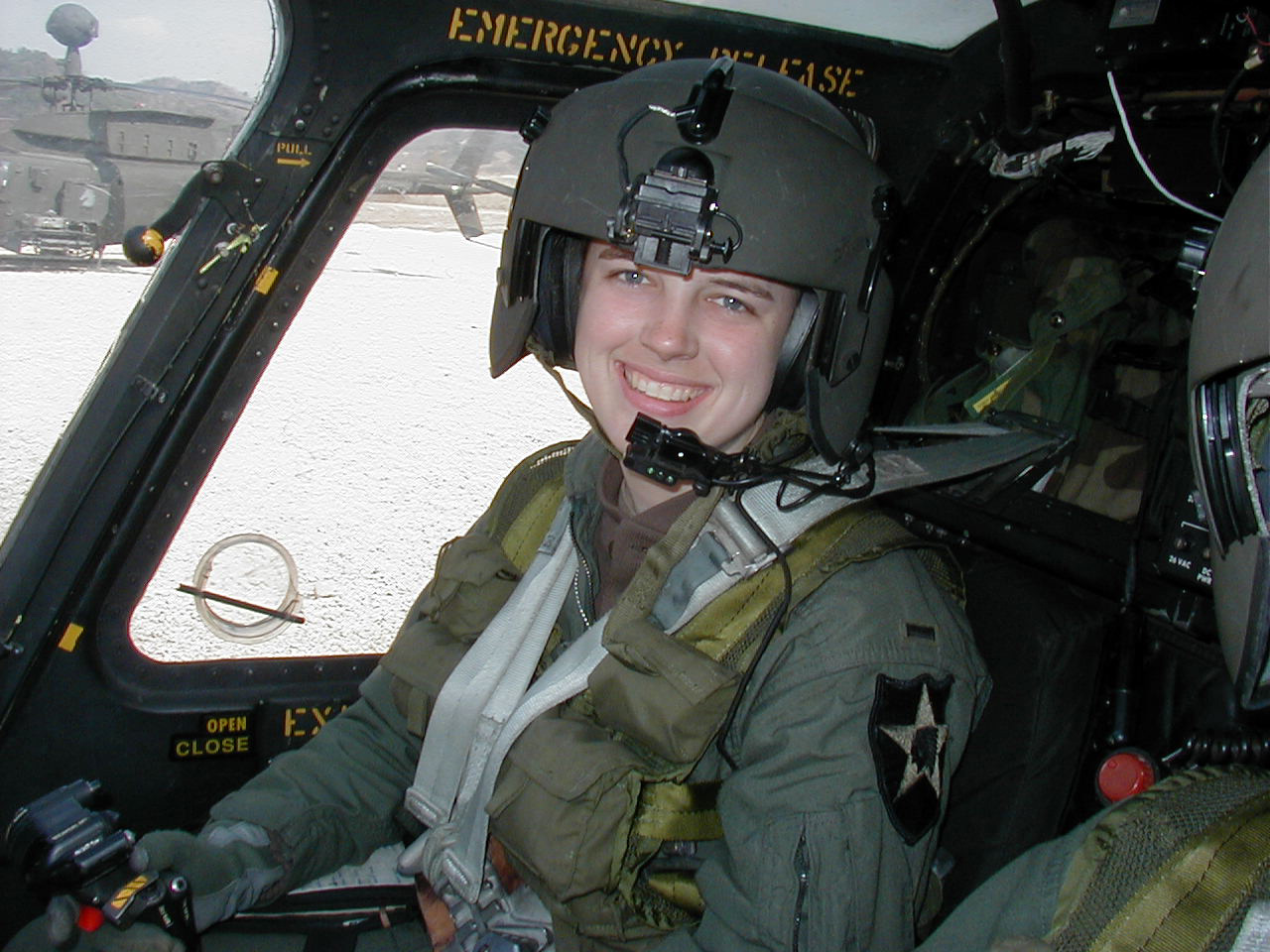
Capt. Kimberly Hampton, first female US pilot shot down and killed in combat. Pictured in her OH-58 Kiowa Warrior helicopter. her gender does not diminish the loss to her family or her country.

Capt. Kimberly Hampton, first female US pilot shot down and killed in combat. Pictured in her OH-58 Kiowa Warrior helicopter. her gender does not diminish the loss to her family or her country.

Veteran status and MOS is not an indicator of type of service. There is no way to determine if someone had an easy or hard time based solely on MOS. Anyone that has never worn dogtags should expect a service member or veteran to be polite when talking about their service. The “My dad/boyfriend/best friend is in the military/a veteran” doesn’t give someone the cred to be able to talk trash to someone that has served. The “you have to do shit to talk shit” is in full effect here. Being related to a Marine doesn’t give someone the right to talk trash to a Navy vet. No one can claim to be a Marine once removed and not expect to be thought of as a dumbass.

Military members that question or diminish the service or another military member are not cool or hardcore, they are d-bags. We are supposed to take care of our own, not make them feel worse. Deploying to Iraq doesn’t make someone more hardcore than then the troops that deployed to Afghanistan. Being in combat arms doesn’t make someone more hard than someone in a POG MOS. The Marine mechanic that tried to get everyone to think he was Infantry and looked down on women saying they weren’t “real” vets wasn’t fooling anyone. The more someone does the less they talk about it so everyone knew he was a blowhard. It ended up costing him more respect than if he had treated fellow vets with the respect they deserved.

If you meet a vet, whether you have served or not, just say “Thank you for your service.” If you haven’t walked in his or her boots you don’t know what he or she has been through. But is he or she has had honorable service they have earned your respect. Don’t be the person that questions or diminishes a veteran’s service. It will cause you to lose their respect that once lost will be hard to recover. And that is just the best case scenario, you might have just diminished the suffering of another person and if they are in pain already, you just made it worse. Don’t contribute to those feelings.

If someone tries to diminish your service, just walk away. No amount of explaining will make them understand and they have lost the right to the details.

Posted in Commentary, Kicking Some Knowledge | Tagged , , , , , , , , , , , , , , , , , , , , , , | Leave a comment

Profiles of Service: Buck Weaver

scan0001By: Fred Apgar

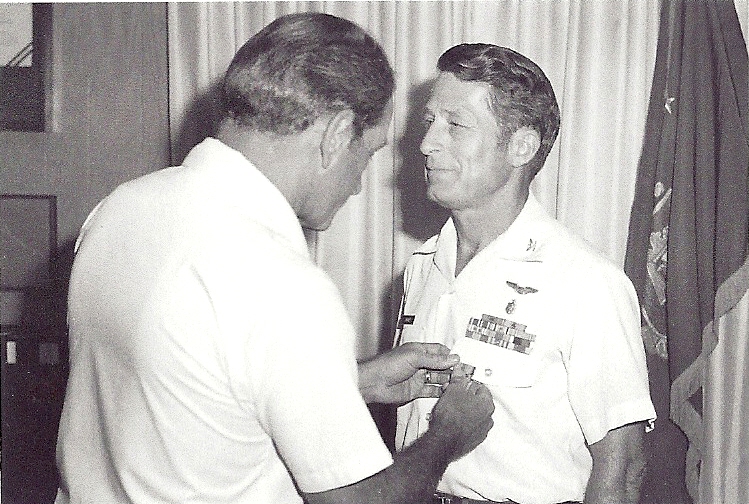
Robert “Buck” Weaver was born in 1918 in Cincinnati, Ohio. He was the fourth child in a family of two brothers and a sister, who spoiled “little Buck” as they grew older. Buck’s father, John P., was a popular dentist in town with a growing practice. Buck was active in sports in high school and graduated in 1936. In those days, jobs were scarce so in October 1938 Buck enlisted in the Ohio National Guard Cavalry as a no-striper. His three years as a mounted horseman later proved very profitable during Buck’s Air Force career. A World War I veteran interested Buck in acquiring dental laboratory skills and, with the help of his father, he earned enough money to attend college in a pre-dental program. Buck pursued a pre-dental program at the University of Cincinnati for two years.

Buck’s plans to become a dentist were placed on hold when it appeared that hostilities in Europe and the Pacific would result in the United States entering the war. As a child, Buck had an interest in flying “building” planes with orange crates and broomsticks as well as accumulating flight time in an instructional program. With this already established passion for flying, the Army Air Corps recruiter made an offer to Buck that he couldn’t resist. In September 1941, he was sworn into the Corps and reported for primary training at Grider Field in Pine Bluff, Arkansas. A month later, Buck soloed in the PT-19A trainer. Upon completion of the primary phase of his pilot training he was assigned to Goodfellow Field to continue his training. It was while he was in transit to his new assignment that Pearl Harbor was hit and pilot training now took on a new sense of urgency. Buck successfully completed the pilot training program in April, 1942. The newly commissioned Second Lieutenant had earned his wings.

Buck’s first duty assignment was at Salinas, California flying anti-submarine missions off the west coast. He flew the O-47, which was a very old fixed wing aircraft, designed as an observation plane. It had a crew of three, and Buck flew these missions for six months. It was while Buck was stationed at Salinas that he married the love of his life, Bettina.

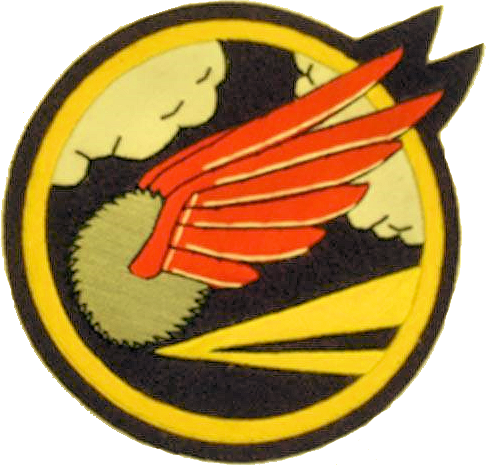
The 41st Fighter Squadron patch.

The 41st Fighter Squadron patch.

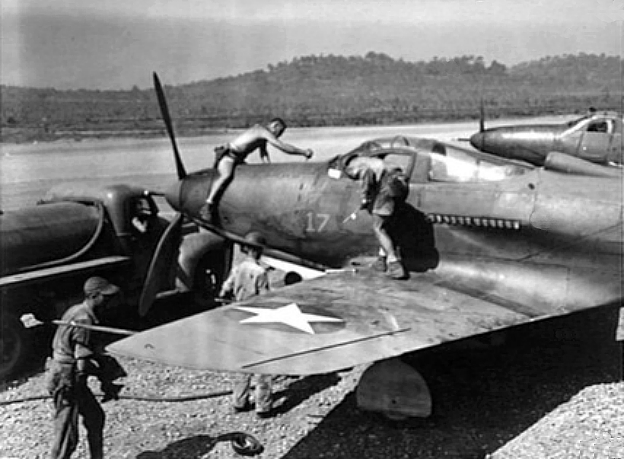
In January 1943, Buck was transferred to Esler Field in Louisiana to transition into the P-39. The “Airacobra” was one of the principal fighter aircraft in service when the United States entered WW II. Buck also trained in the P-40 Warhawk. Training in these two planes also took place in the Mojave Desert, Mississippi and on the East Coast. Like the P-39, the Warhawk was a single seat fighter suitable for ground attack missions. Upon completion of the program in September 1943, Buck found himself on a troop ship on his way to New Guinea. It would take 19 days for the ship to arrive at Port Moresby, headquarters for the 5th Air Force. Buck and the other members of the 41st Fighter Squadron would be flying bomber escort, dive bombing and combat air patrol missions in the South Pacific in support of the “island hopping campaign.” Often times, Buck and his fellow pilots would land their planes on hastily constructed landing strips even before the islands were totally under U.S. control. Their planes had to be refueled and rearmed for the next day’s island hopping mission. For the next year, Buck flew 137 combat missions in his beloved P-39 and the P-40. The conditions in which they lived were harsh and they were always subjected to diseases such as malaria and dengue fever. Conditions were so bad that when they were able to obtain C rations, they celebrated that as a great meal.

U.S. Army Air Corps crewmen service Bell P-39D Airacobra at Seven Mile airfield, near Port Moresby, New Guinea, in July 1942.

U.S. Army Air Corps crewmen service Bell P-39D Airacobra at Seven Mile airfield, near Port Moresby, New Guinea, in July 1942.

By the time Buck left the South Pacific in October 1944, he had been promoted to the rank of Captain. His next assignment was as the Base Operations Officer at Brooks Field. A little over a year later, Buck left the Army Air Corps to return to his pre-dental studies, which were completed that spring. In the fall of 1946, he began Dental School at the Ohio State University from which he graduated four years later. Once again, the Air Force made an offer that Buck couldn’t refuse, and he returned to active duty status, gave up his flying status, to serve in the Dental Corps. His first assignment was as a dentist at Keesler Air Force Base in Mississippi. Buck was no stranger to the base, during his pilot training he had taken air-to-air gunnery training at Keesler.

For the next 25 years, Buck would serve in a variety of leadership positions as a Dental Officer and instructor at Air Force bases in the United States, Germany, Japan, as well at the Air Force Academy rising to the rank of Colonel. In 1975, after serving on active duty for nearly 30 years, Buck retired from the Air Force. For the next 20 years, Buck and his wife, Bettina, lived in Horseshoe Bay, Texas. In addition to pursuing one of his passions, golf, Buck frequently lectured on various dental topics and was actively involved with the Confederate Air Force. They moved to Edmonds, Wash. in 1996 to be near their four children and enjoy their grandchildren and grandchildren. Buck continues to play active roles in Kiwanis and VFW Post # 8870.

Posted in Commentary, Profiles of Service, Real Heroes | Tagged , , , , , , , , , , , , , , , , , , , , , , , | Leave a comment

The Big Trade

By: Matt Archibald

With all the press reports surrounding the release of Bowe Bergdahl, we haven’t seen a lot concerning the 5 detainees that we “traded” for this young man.   There have been a few reports here and there, but nothing substantial that has explained their contextual significance.

Mullah Mohammad Fazl was the deputy defense minister for the Taliban and Chief of Staff of the Taliban regime’s military.  He was the de facto military commander in the northern part of Afghanistan as well, where a great deal of atrocities took place.  When the Taliban took over Mazar-e Sharif, the fighters massacred over 8,000 Shi’ite men, women, and children, most of them in their homes.  Container trucks were seen leaving the Mazar-e Sharif prison, filled with corpses.  They then turned their attention to the Hazara, publically stating their desire to remove the minority from the planet.  It’s certainly no analytic leap to assume that he was intimately involved with these campaigns, in fact, given his position, it’s likely that he may have ordered them and most likely personally participated.

Khairullah Khairkhwa was not only the Taliban’s interior minister, but also their primary liaison to Al Qaeda and Usama Bin Laden personally.  He also reportedly held meetings with the Iranians after 9/11 in order to draw them into the fight against coalition forces in Afghanistan.  Also a narcotics trafficker with personal ties to Hamas and the late Mr. Zarqawi.  Oh yeah, and he’s a personal friend of Karzai as well.  Go figure.

Mullah Noorullah Noori was the military commander of Mazar-e Sharif during the ethnic cleansing campaign which killed thousands of Shi’ites.  He is wanted by the UN for war crimes in connection with these massacres.

Mohammed Nabi Omari is an associate of the Haqqani network and  helped supply weapons and led attacks against coalition forces in Khowst.

Abdul Haq Wasiq was the deputy minister of intelligence – responsible for a department which routinely and systematically tortured and killed Afghans.

This is just a snapshot of some of the deeds committed by these men.  Having studied the Taliban for many years, I can comfortably say that these probably understate the amount of evil that these men have directed (and most likely personally participated) in the name of their Amir ul-Momineen Mullah Omar.  We also have to remember that there’s been a recidivist movement amongst released detainee’s.  One only has to look at Abdul Qayoum Zakir to fully understand the danger of this trend.

So we have to ask ourselves – were they worth it?  I vote no.  It’s easy to think that these men will go back to a peaceful life in Afghanistan – and that with our combat operations seemingly ending – they’ll be no threat to us.  But I’d like to remind us that, for Pashtuns, the concept of revenge is a little different.  Revenge is not a choice for them, revenge is an obligation, and directly reflects on their honor.  And for the President to claim that we’ll be able to track these men effectively is complete hogwash.  I spent many years as an analyst searching for exactly these type of men in exactly the same area.  For the President to insinuate that this would be an easy task, is as ludicrous as it is insulting.  Truth be told – once these men slip into the wind, we’ll likely never be able to find them again.  And they’ll be free to plan their inevitable revenge.

Posted in Commentary | Tagged , , , , , , , , , , , , , , , , , , , | Leave a comment

Bergdahl Deserves a Trial not a Another Promotion

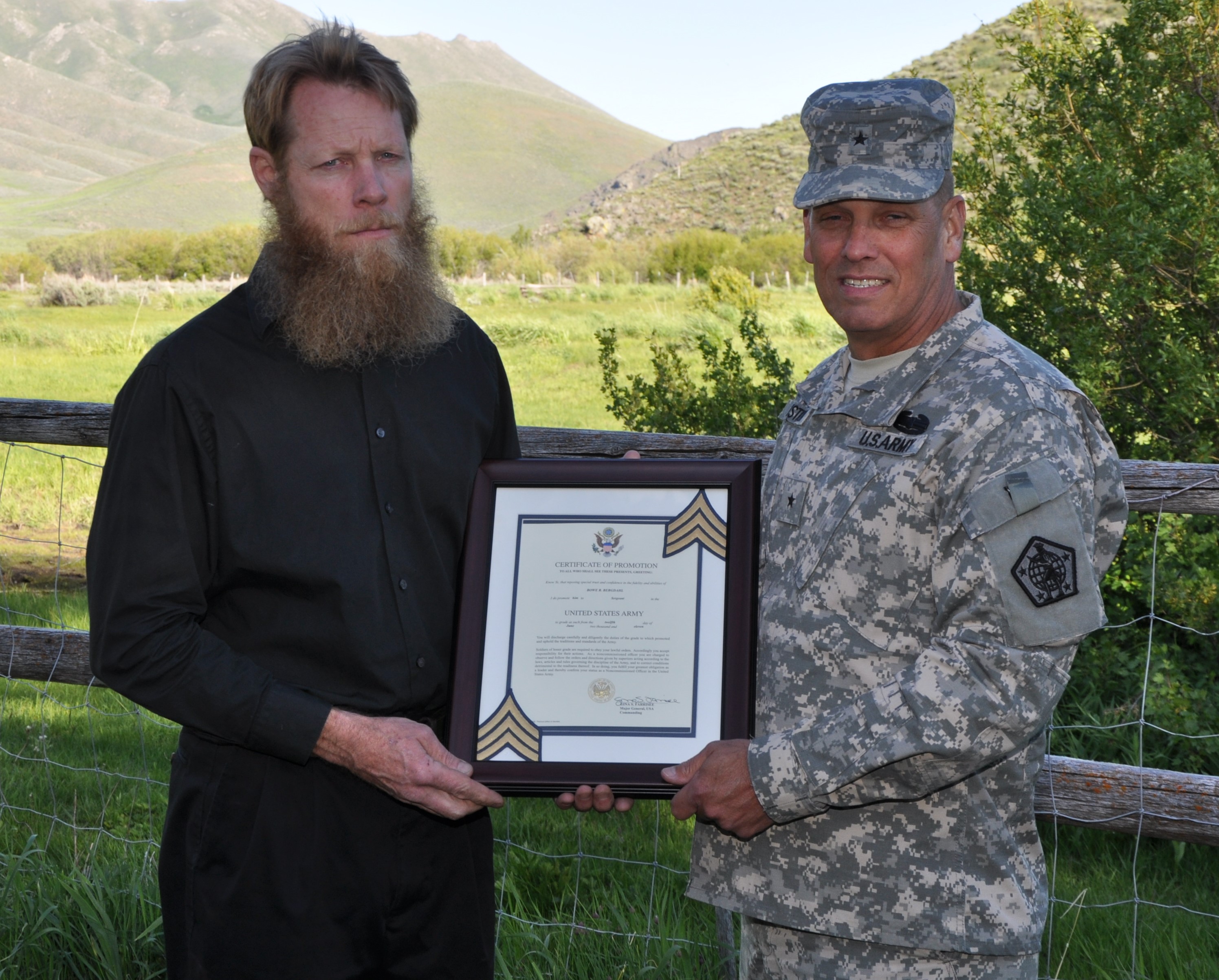
Brig. Gen. Rick Mustion, the adjutant general of the U.S. Army, presents Sgt. Bowe Bergdahl's promotion certificate Bergdahl's father but if he was a POW and out of the DoD system is it legal?

Brig. Gen. Rick Mustion, the adjutant general of the U.S. Army, presents Sgt. Bowe Bergdahl’s promotion certificate Bergdahl’s father but if he was a POW and out of the DoD system is it legal?

By: Peter Sessum

There are a lot of unknowns surrounding the disappearance, capture and finally the release of Bowe Bergdahl but one thing that isn’t in question is his rank. It is a minor issue but now that there are rumors that he has a promotion waiting for him I think it is worth addressing. If nothing else this will help civilians better understand why it is so wrong.

How promotions work

Advancements from E-1 – E-4 are considered automatic. They are determined by Time in Service (TIS) or Time in Grade (TIR). These “automatic” promotions must still be reviewed and approved by the Soldier’s Chain of Command (CoC). If a Solider is not performing or the CoC has reservations about that solider they can hold off on the advancement. I have seen this happen where a Solider had a profile for an injury and the First Sergeant wanted to make sure he wasn’t milking the profile and would be a decent troop. That Solider was given E-3 only a month or two behind his peers.

Most Soldiers enter the Army as an E-1 Private. There are a few exceptions. If someone has college credits, ROTC or Blue Falcon someone (get a friend to sign up with them) they can enter at a higher rank. E-1 is considered “recruit” rank because most Soldiers will meet the Time in Grade (TIG) requirement to be advancedd in training. Infantry, which Bergdahl was, has a short overall training time.

The TIG to be advanced from Recruit (E-1) to Private (E-2) is six months. After four months TIG and 12 months TIS a Soldier will be moved to E-3, Private First Class (PFC). After six months TIG as an E-3 and 24 months TIS a Soldier can be avanced to Specialist (E-4).

After Specialist the promotion system changes. There it has to do with how many slots the Army has at each rank and promotion points. A promotion packet is sent to the promotion board and there are criteria that must be made. There has to be a slot granted by Big Army and then a Soldier has to survive a promotion board of First Sergeants and headed by the Command Sergeant Major and have the promotion points to make rank. There are points awarded by the board, commander’s recommendation points, awards and military education. An enlisted Soldier with a college degree or some ROTC time can get points for civilian education. A solider also need and up to date PT test and weapons qualification.

rank tilt

Promotions are earned, not given. There is no evidence that Bergdahl is deserving of the rank of Sergeant.

The biggest hurdle is getting the recommendation from the unit. No matter how high speed a Soldier is his or her CoC still has to allow him or her to put in a promotion packet. A stellar Soldier might have the promotion points but if the commander doesn’t grant any that will send a message to the board that this Soldier doesn’t deserve to be promoted and that Soldier’s packet will not be recommended for promotion.

In the active duty system Soldiers must prove themselves everyday to be able to be considered to be put in for promotion to Sergeant. A board date can be taken away if the platoon sergeant doesn’t like that soldier. Promotions aren’t something that are just given away. A Soldier must prove that he or she is mature enough and is ready for the responsibility of leadership. Or at least that is how it is supposed to work.

How did he get promoted?

If Bergdahl’s status was officially moved to Prisoner of War (POW) his benefits and entitlements would be moved to the Secretary of the Treasury. This would take him outside of the Department of Defense (DoD) system. This explains how he got promoted. The regulations state:

“POW personnel continue to be considered for promotion along with their contemporaries. Policy provides for each missing or captured officer/enlisted member to be considered for promotion to the next higher grade when they are eligible. The eligibility for officers is based on the date of rank in their current grade. For enlisted members, eligibility is based on time in grade and time in service.”

Now that Bergdahl is back in the DoD system the next promotion should be stopped. Especially since a Solider can’t be promoted to E-6 without first attending the Warrior Leader Course. Bergdahl’s attitude and actions make him not a warrior and without a doubt he is not a leader.

Of course there is a loophole in the regulation that Bergdahl slipped though. When he left the DoD system, clearly his records did not make it to the treasury. If they did, he would not have been promoted because of one very specific word, “contemporaries.” The Soldiers that are the contemporaries of that dirtbag are no longer in the Army.

All reports prior to his deployment and desertion paints a picture of Bergdahl as an overly hardcore soldier with a crappy attitude because he thought that he would single handedly save the people of Afghanistan. While we will have to wait for the whole story to come out if he fits the definition of traitor, it can be determined that Bergdahl voluntarily walked off his fire base and therefore deserted his unit. AWOL means Absent Without Leave and that only counts when in garrison. On deployment it is desertion. If he gets a court-martial and is found guilty he should have the rank of Sergeant stripped and lose all that extra pay back dated to the time of his desertion. His captivity sucked enough and as long as he wasn’t turned by the Taliban and therefore a threat to the country, he should be discharged and not jailed.

It is an injustice that someone can do what Bergdahl did and get promoted past the men that died looking for him, past a real hero like Pat Tillman or be promoted to the same rank as Medal of Honor recipient Ty Carter. All of whom had to work for their rank. Bergdahl needs a trial not another undeserved promotion.


*Editor’s note: Corrections have been made after being reminded that the correct term for making rank for enlisted is “advanced” not “promoted.” A Soldier is promoted to NCO ranks. The changes were made in the post but the correcting comment has been retained so he can have the credit.

Posted in Commentary | Tagged , , , , , , , , , , , , , | 1 Comment

Deserter Returns to Undeserved Hero’s Welcome

Not a hero and not because he doesn;t have jump wings. Six men died looking for him after he deserted his unit in a warzone.

Six men died looking for him after he deserted his unit in a war zone. That alone means he is not a hero.

By: Peter Sessum

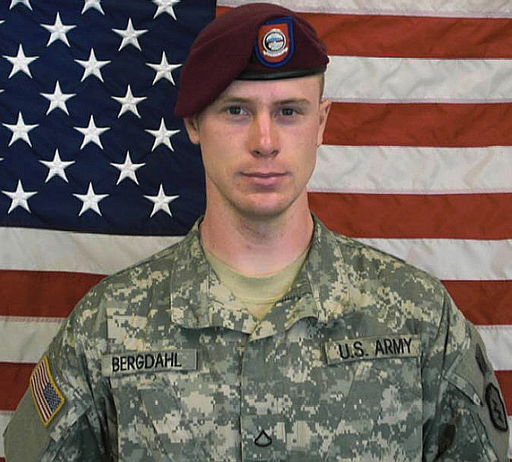
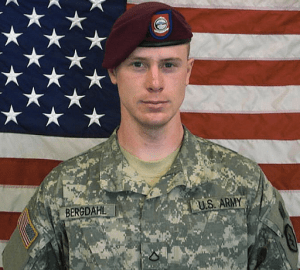
Five years ago this month Army Private First Class (PFC) Bowe Bergdahl walked off his firebase in Afghanistan and was promptly captured by the Taliban. Last week his release was secured by trading five high ranking Taliban members from Guantanamo. The only Afghanistan Prisoner of War (POW) is on his way home but is it is a good thing and what should happen next?

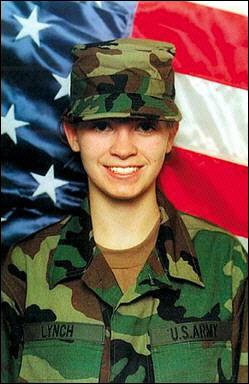
Like the Jessica Lynch story, the government and the military want a positive spin on the story in the media, but military members and veterans, myself included, are questioning his status as a returning hero or Taliban victim. The issue is clouded because of the idea of “No soldier left behind” is shared by everyone in the military, but because he was captured after leaving his post it feels like this is a unique case and that there should be some punishment.
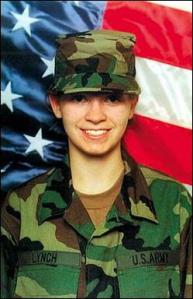
Jessica Lynch, like Bergdahl, was used by the military and administration to put a positive spin on things but is almost universally panned by military members as an example of a substandard soldier.

Jessica Lynch, like Bergdahl, was used by the military and administration to put a positive spin on things but is almost universally panned by military members as an example of a substandard soldier.

From all reports, Bergdahl was a substandard solider to begin with. He was one of those people that was too Hooah for their own good and had dreams of doing grand heroic things with his life. There was no way this young man was going to be happy in the military and the signs were all there.

He apparently tried to join the French Foreign Legion (FFL) when he was about 20. He studied French and was prepared to sign up and start some sort of mercenary fantasy when he was rejected. That is a red flag. The FFL takes pretty much everyone, even criminals. They also take people from crappy Third World countries who sign up for an extremely difficult six years in exchange for French citizenship and a better life. For them to reject Bergdahl says a lot about the kind of person he is.

He later decided to join the U.S. Army and wanted to go to Afghanistan to help with the reconstruction and fight the enemy with the Counter Insurgency (COIN) tactic of winning the hearts and minds. He studied Pashto and Dari in his free time leading up to the deployment.

This is where young Bergdahl screwed up. With that information right there he would have been a better fit to be Civil Affairs (CA) not Infantry. Had he joined a CA unit he would have deployed and been  given thousands of dollars a month to spend on rebuilding school, digging wells and other reconstruction projects. His talent for learning languages would have been an asset and if he could pass the test, he could be earning language pay. But of course he wanted to be hardcore and joined the Infantry. Speaking as a former Infantryman I can tell you that Infantry are not known for helping the local populace. There are exceptions, but generally they are selected for what they are trained for and that is combat operations. If you want to feed the hungry you work at a soup kitchen not the SWAT team.

Right out the gate Bergdahl set himself up for failure. He tried to say that he was tricked by his recruiter into thinking that he would have a greater role in reconstruction. That is his own fault for believing what his recruiter told him. If you believe what a military recruiter says that isn’t in writing you deserve what you get. Recruiters are like strippers, some are just trying to work through their shift there but most will tell you what they think you want to hear to get what they want out of you.

From all reports he was assigned to a substandard unit with some poor leaders and when he arrived in Afghanistan the duty sucked. All of those things are not unique to any one soldier. Deployments suck, and they suck for everyone. It is much worse when the leadership sucks or the firebase is bad but everyone has to find their own way of dealing with it.

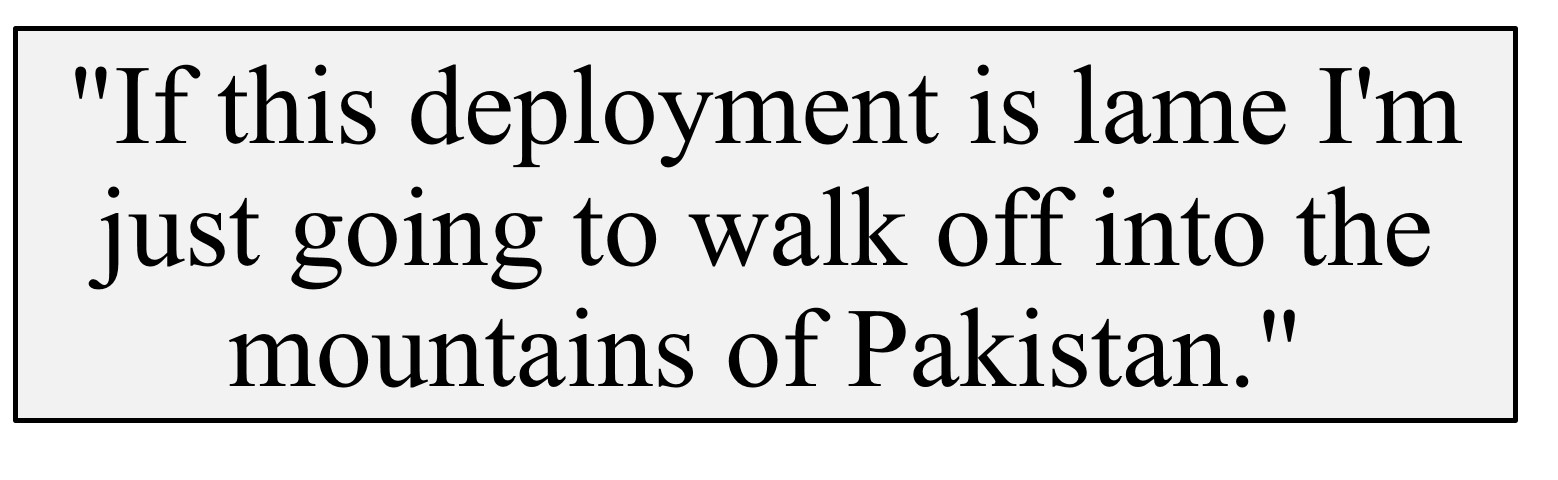
Bergdahl, however, already had a bad attitude and a plan to leave long before he deployed. During the train up prior to the deployment he told a fellow soldier, “If this deployment is lame I’m just going to walk off into the mountains of Pakistan.”Deserter quoteBecause he didn’t want to get in trouble, which is silly since he was leaving in the middle of a deployment anyway, he left his weapon and night vision behind and left the firebase early one morning with a plan to walk to Pakistan and join up with some group and fight a real war.
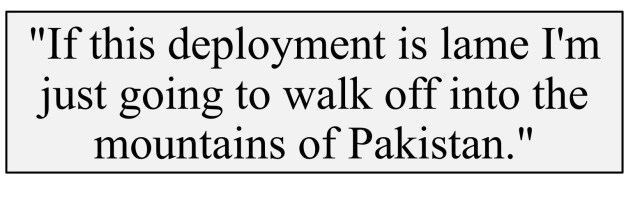
A gringo, unarmed, in uniform, wandering around Afghanistan with only a plan to get to another country and not much after that. It was really only a matter of time before someone scooped him up and put him in an orange jumpsuit. Even if he had made it to Pakistan it is more likely than not that someone would have grabbed him and turned him over to the Taliban.

He claims that he fell behind in a patrol and was captured. This is being categorically disputed by sources online that say they knew him as well as by a WikiLeaks document of reports surrounding the area and timeline of his capture.

I very much doubt that Bergdahl was a traitor when he joined the Army. He might have become a disillusioned young man while in, but I wouldn’t believe that he had any intention of betraying his country. He was a young man with a romanticized view of war and what the military is like. He had some bad luck with units which unfortunately happens and he wanted to go off on his grand adventure.

After that long in captivity, he most likely has Stockholm Syndrome and he has a long recovery ahead of him. There is a very good chance that there will be problems with him in the future and his mental state can’t be trusted. While he might not be a traitor as some people claim he is not a hero either. He willingly and purposefully planned to leave the Army during a combat deployment and that can’t be forgotten.

The good news about his return is that he can no longer be used as a propaganda tool for the Taliban. For them they could afford to lose on a tactical level because they could always say that the greatest military in the world couldn’t stop them from taking one guy. For almost five years they held him and the U.S. never had an idea where.

The bad news is that they now have five of their leaders back. There is no way that those men did not have discussion with other prisoners in Gitmo and they will get the hero’s welcome in addition to knowing of other terrorist networks. It would be very disappointing if a drone didn’t follow the new releases and call in an airstrike while the Western media is focused on the release of the American.

There could not be a worst time to release high ranking Taliban into Afghanistan. We are talking about pulling out and the Taliban are getting ready for when the Coalition moves out so they can move in unchallenged. Young Bergdahl wanted to help Afghanistan but his actions directly contributed to making it worse.

His return also sends the message that the U.S. doesn’t negotiate with terrorists unless the terrorists have something we really, really want. Insurgents in Iraq must be kicking themselves right now for shooting downed pilots or cutting off heads of those they captured and posting in on the Internet. They might have secured the release of some of their comrades had they been patient enough.

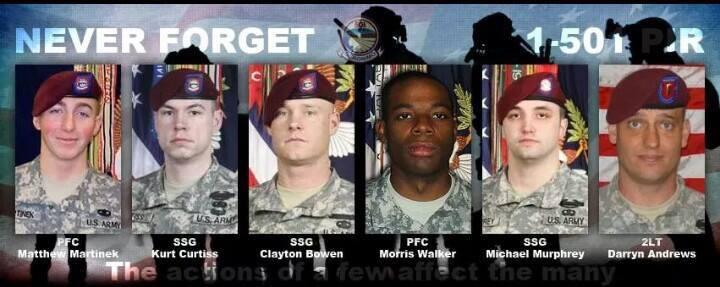
Bergdahl might not be a traitor but he is not a hero either. Because of the no man left behind ideal we should have brought him home. But we can’t let that cloud the issue that he deserted on his own. He made the decision of his own free will and soldiers died while looking for him. To label him a hero and forgetting about the people that upheld their oath and lost their lives to find him diminishes their sacrifice and the loss for their families.
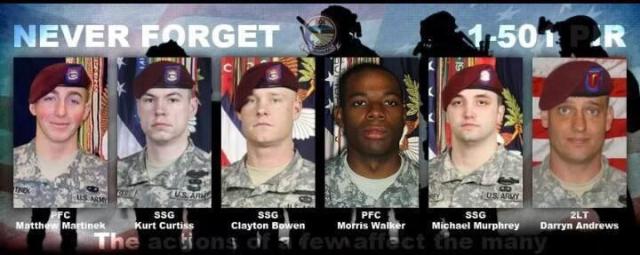
six fallen trying to find deserterNo one has addressed how he continued to get promoted while he was missing. A promotion from PFC to Specialist is considered automatic but it still has to be approved by his command. Who made that decision? And how did he get promoted to Sergeant without attending a promotion board or putting in a packet? It is clear that someone has been manipulating this situation for some time possibly in preparation for his release and that should not be overlooked in the media.

The punishment for being a deserter in wartime is a firing squad but in this case that might be a little excessive. If he checks out mentally his time, in captivity should be considered as time served and he should be discharged from the military. The truth in his case is an embarrassment to the military that they don’t have a vested interest in prosecuting him harshly. The administration will try to find a way to get a win out of it so we can expect a lot of “Leave no man behind” in speeches and no mention of the word “deserter.”

That is what he is. A deserter. He doesn’t deserve the positive attention he is getting. More and more military voices are speaking out against him including a Facebook group trying calling for legal action against him. One day the truth, the whole truth will come out but the question is does he have the courage and integrity to own up to it.
Posted in Commentary | Tagged , , , , , , , , , , , , , , | 3 Comments

Shinseki Resigns but Problems Remain

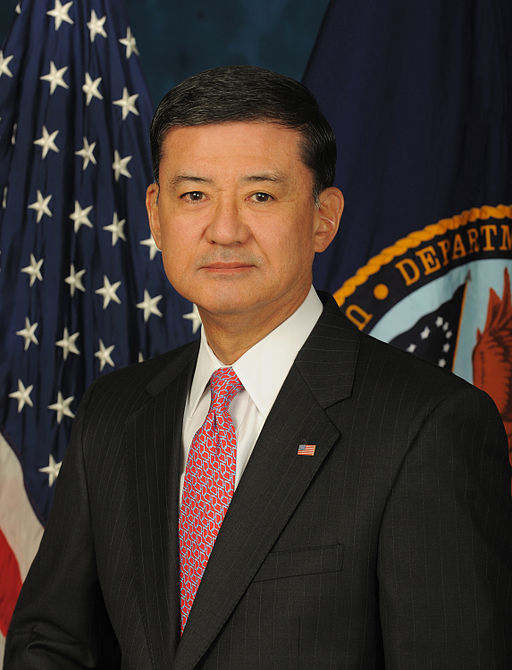
With any luck this will be the last official government photo of the man.

With any luck this will be the last official government photo of the man.

By: Peter Sessum

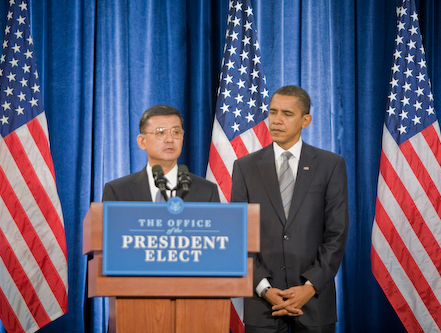
Veterans Affairs Secretary Eric Shinseki has resigned but veterans are not celebrating like the Munchkins singing Ding Dong the Witch is Dead. The resignation is isn’t bitter sweet it is just bitter. As much as his resignation should make us feel better, nothing has been fixed by his exit. If nothing else the chaos following his departure will create more problems. Unfortunately, no one is looking at the real issues which is how did he get the job in the first place?

Our political system is very polarizing but our leaders should be smart enough to look at the big picture. Maybe it is because democrats and republicans hate each other so much that President Obama dropped the ball on giving Shinseki the job. President Bush had cause to fire Shinseki and Obama should have taken that into account before appointing Shinseki to take care of such an important part of the government.

When he was Chief of Staff for the Army, Shinseki was responsible for the decision to get rid of the Patrol Cap (PC) and switch to black berets. The Rangers were angry because the black beret was kind of their thing and old school soldiers were pissed because the beret serves no function like the PC does. The only ones happy about it were new troops that thought it looked cool.

All of that was pretty minor compared to the biggest issue with the berets that might not have come to light had it not been for a Navy P-3 having to land in China because of a midair collision. The crew was held for 10 days in China and people in the U.S. were talking about boycotting Chinese made goods. In that time it came to light that the most of the berets for the Army were made in China. Many people thought that the headgear for American Soldiers should be made in America and the switch was made and due to the order changeover the deadline for everyone to be wearing berets had to be pushed back. That should have been a huge red flag. How can we trust a man to work with the broken system that is the VA when he can’t even get a hat order right?

His next big fiasco was the Stryker. He developed a bright idea to streamline the Army and get rid of the heavy and light units and make everyone medium with the Stryker fighting vehicles. It was pre-GWOT and seemed like a safe idea. Make a radical change, get a gold star on the OER and retire saying a major bureaucratic system was transformed under his leadership. But then someone opened a can of war and that spoiled his plans.

The U.S. invaded a country with wide-open spaces that would be harder on Infantry than the jungle and no serious armor threat so medium was perfect. A fast vehicle that could carry troops around seemed like the perfect tactical choice. Shinseki delayed the deployment claiming that all the kinks were not worked out in testing. Then the U.S. invaded Iraq with a heavy urban fighting where an armored vehicle was needed to minimize the exposure of troops getting to and from the fight. Again, Shinseki tried to stall. Finally, the president accepted his resignation and sent the Stryker to Iraq.

It did not take long for people to figure out that the Strykers were not equipped properly. It was discovered that the armor couldn’t stop a Rocket Propelled Grenade (RPG) which was what we could expect to be fired at them all the time. If the armor does not protect against the enemy munitions then it isn’t effective armor. This was Shinseki’s project for almost four years, how had that slipped through the cracks? Units in Kuwait were welding rebar cages around their armored vehicles to protect them from RPGs and Shinseki didn’t have to answer for his SNAFU.

Obama haters can call Shinseki's appointment one of his first mistakes becasue he really should have known better.

Obama haters can call Shinseki’s appointment one of his first mistakes.

That should have been another huge red flag the size of Texas. How can you trust a man to look out for veterans when he couldn’t even protect the soldiers that he was supposed to look out for? For some reason no one seems to remember that. Shinseki was underqualified for the job he was given and a lot of mistakes were made on his watch that cost some veterans their lives.

Now that he is gone the system is still broken and politicians are going to be playing pass the blame to fix it properly. What we need is a warrior not a politician. Instead of someone trying to play the political game we need someone that is going to kick down doors and stir up some trouble. We need an old school Command Sergeant Major or a Gen. Mattis type VA secretary that will make things happen. There are simple real world solutions to some of the issues that need to be fixed. Yearlong backlog? Create temp positions for vets going through school or out of work vets to help go through the backlog of claims. A two year temp or contract position could get claim times to a couple of months.

The problems still exist and Shinseki getting to retire isn’t going to fix any of them. Unfortunately, we will be too busy looking for blame and no one is asking how he got the job in the first place. If someone had done that a few years ago and a better person had been put in the position instead maybe those veterans would be alive today.

Posted in Commentary, Military Leadership | Tagged , , , , , , , , , , , , , , , , , , , , , , , | Leave a comment