Not Everything Bad Can be Compared to War

Minor Inconveniences in Your Life are not War

256px-Gwyneth_Paltrow_avp_Iron_Man_3_ParisWhen people make comparisons they look for something obvious to make their point. Often, someone looks for something that is universally recognized as bad and doing that diminishes the life and experiences of anyone that endured the subject of comparison. Actress Gwyneth Paltrow has become the latest celebrity casualty in comparing their life war.

She follows in the ill placed footsteps of Tom Cruise who compared his job as an actor to being deployed. Not surprisingly, he was universally criticized by vets. Even one of his own, Mark Wahlberg, got in on the criticism. While promoting the movie Lone Survivor where he worked close with former Navy SEALs, Wahlberg used colorful language to call Cruise out on his boneheaded comment. His management team later said that Cruise never said it and that it was a media mistake.

Paltrow however, is taking flak for her comment during an interview at a tech conference where she compares mean tweets to going to war. In the Interview she said, “You come across [online comments] about yourself and about your friends, and it’s a very dehumanizing thing. It’s almost like, how in war, you go through this bloody dehumanizing thing and then something is defined out of it.”

I am sure that sounded better in her head but no rational person thinks that someone saying something bad about you on Twitter or Facebook is the same as combat action in Afghanistan. I don’t know what kind of tweeting she is doing that it is “bloody” but I think she is doing it wrong. Anonymous Internet comments suck but they are not combat.

There is no aspect of Twitter that is like going to war. The only thing she said that is in the vicinity of anything comparable to the military is receiving deployment orders. Orders are impersonal in that the military is just filling a slot and any one will do. At best a nasty tweet is like a combination of receiving orders and an unjustified negative counseling statement at the same time.

If she would like to simulate the “real war” experience it is simple. Not send her to Afghanistan, there is a solution that she could do in America. Next mean tweet she gets she can kiss her children goodbye and head to any neighborhood that is in the top five of places with the worst crime in America. She is in the middle of a divorce? Tough, a Soldier would have to deploy, so can she.

She can take the celebrities that are publicly supporting her and they can set up a room in that neighborhood for a year. Not a posh hotel, but rent a room in a flop house. Sharing a room in a crappy place would better simulate living conditions on a fire base. They should only be able to go out and do things like food shopping at night with $100 bills sticking out of their pockets and only be allowed to carry pepper spray which would simulate the dangers of running routine convoy ops.

That level of danger would pretty well simulate a combat deployment. There might be a few thousand people in the square mile they are in but not everyone would want to hurt them. Just like Afghanistan where there are millions of people in the country and not every one of them wants to hurt soldiers. But if someone has the desire to do you harm, they are going to try.

Not everyone in a poor neighborhood would want to hurt a celebrity. In fact the actual number would be a very small percentage of the total population, but the few that wanted to would be motivated. Send some rich, white celebrities to a ghetto where no one looks like them and see how secure they feel. Let them be in an area where the people that would do them harm look exactly like the people that would never hurt a fly and see how progressive their thinking is after.

Paltrow’s family doesn’t dread a Twitter alert like a military family dreads a knock at the door. An Internet troll comment doesn’t take you away from your family for a year or more. The emotional toll that a deployment takes on a family, the danger and extreme mental and physical stress that service members go though should not be diminished. Social media messages can’t be compared to war because a person can always delete a social media account.

I am sure that despite the money there are many downsides to being famous. But with her Goop venture Paltrow is seeking the spotlight so she really has no one to blame but herself. I won’t get snarky because I think SFC Bryan Sikes said it best. Negative comments on Twitter or Facebook suck. War sucks. But the amount that war sucks and mean tweets suck are light years apart. If it is that bad keep your head low and stay off Twitter. Which she might want to do with all the heat the hashtag of her name is getting over this. If only war was that easy.

Posted in Commentary | Tagged , , , , , , , | Leave a comment

Stop Contributing to Post Traumatic Stress: The Million Dollar Question

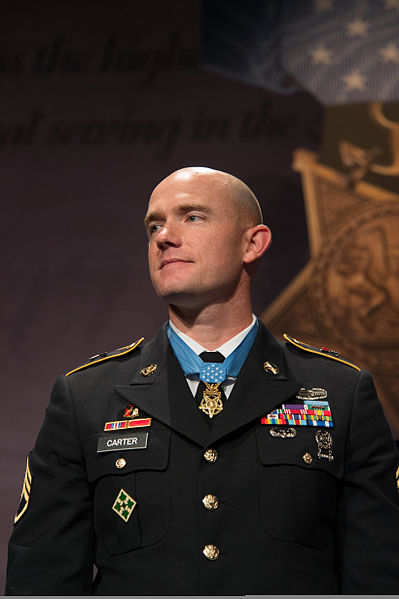
SSG Ty Carter has done great things to raise the awareness of PTS and remove the stigma. One of the things he is pushing for is to remove the "D" from the Post Traumatic Stress.

SSG Ty Carter has done great things to raise the awareness of PTS and remove the stigma. One of the things he is pushing for is to remove the “D” from the Post Traumatic Stress.

By: Peter Sessum

Recently, I had an opportunity to speak with Medal of Honor recipient SSG Ty Carter. I thanked him for how outspoken he is about Post-Traumatic Stress (PTS). One thing he said is that we, as a society, need to drop the “D” from the description because by not calling it a disorder we change our perception of the pain of so many. There are many contributing factors to PTS and one contributing factors is civilians.

They have no impact on what happens overseas but have a large impact on a service member after they return to the states and are trying to readjust. It would be nice if civilians would realize the part they play in veteran PST. One of the main civilian offenses is asking the “million dollar question.” Asking it can trigger bad memories or diminish the service of the person.

The base million dollar question is “How many people have you killed?” There are variations that ask what it is like to kill someone, what is combat like or how many dead bodies has the vet seen but they are all the same at the core.

The million dollar question is not about the veteran it is about the person asking the question. They have some morbid curiosity that compels them to ask but truth be told, most couldn’t handle the answer. It is usually a young man that played too much Call of Duty that asks the question with a smile. He has watched Band of Brothers and Blackhawk Down and has romanticized combat in his head. He is hoping for some story about the heroics of war straight out of the video game. His buddies brag about headshots and sticky grenades and think combat is just like that. He never has any intention of triggering a negative reaction and often doesn’t realize how messed up of a question it is in real life.

For some veterans it would be like asking a victim of human trafficking if the sex was good? The question is asking the veteran to separate everything else from that deployment and take out the few seconds that surrounded a trigger pull. Instead a lot of negative memories can come flooding back in an instant.

The million dollar question assumes that taking a human life is a positive experience. For a deeper look into that a person should read On Killing. Only 2 percent of the population, the sociopaths, want to kill. Everyone else is not a fan of taking a life. In addition, not all losses in a combat zone are due to enemy action. Vehicle accidents, negligent discharges and friendly fire still claim lives and no one will brag about that when asked if they killed anyone.

Pat Tillman was a hero to everyone in uniform. He gave up a lucrative football contract to join the Army. He wanted to be the best and didn’t want any special treatment. Instead of going the officer route which would have been cushy for him, he became a Ranger. He was an E-4 when he deployed to Afghanistan and was killed due to friendly fire. There is no one involved in that situation that is going to want to talk about killing Tillman. To break it down Sesame Street for civilians that would be like Agent Coulson killing Captain America? Do you think he would want to brag about it? Every time someone asked him about the people he killed he would think to that moment and not the numerous nameless Hydra bad guys he took out.

Asking a vet how many people he has killed instantly tells them combat is the only measure you care about. Truth be told, amongst themselves most veterans don’t talk about that. Most will talk about the lives they saved or the times they didn’t pull the trigger. The only times a firefight is talked about is when the situation, not the body count, is relevant to whatever is being discussed at the time. I have never trusted a person that talks about the number of kills they have especially to a stranger. In my experience if they are too eager to discuss the lives they have taken they are trying to get attention and are usually either crazy or lying.

The person that has never fired a shot in anger will sometimes feel bad when asked the million dollar question. It makes it seem like his service was not the same as those that got into firefights. Deployments suck, everything about them sucks and everyone suffers. Some are lucky enough to have air conditioned offices and don’t break the gate but everyone is far from home dealing and with the heat so there is no reason to diminish their service or sacrifice by putting only one criteria for success. Especially when there are a number of hardcore jobs that may not encounter hostile fire. Explosive Ordnance Disposal (EOD) or Air Force pararescue are two that come to mind.

Of course there is also the fact that the million dollar question is only asked of men. While women are still barred from combat jobs, women have been in combat for years. There are no more front lines and anyone is fair game in the firefight. By not acknowledging their service it diminishes what they went through but we will look into that more later.

The ultimate million dollar question, and people should be ashamed that this has to be stated, the worst question to ask a veteran is “Do you have PTSD?” There is nothing positive that will come from asking that question. The person asking it will be perceived as thinking all veterans are crazy. Because people are becoming so familiar with the term and it is so attached to veterans that people now seem to think that it is OK to talk to veterans about it. Asking someone about their mental health would be incredibly insensitive and that applies to veterans too.

In the end the million dollar question and the lack of understanding of its effect is one of the ways that civilians, often unwittingly, contribute to the PTS of military members and veterans. It can instantly trigger bad memories or feelings. It is also something intimate that is not discussed with strangers. Deployment is one part of the military experience that civilians do not understand. Some think that having a husband that travels for work is the same thing as having a spouse deployed. There are so many part of the deployment experience that are so far outside the civilian understanding that many vets don’t like to discuss it with anyone that hasn’t served.

Hopefully civilians will stop asking the question that they really don’t want the answer to and veterans can avoid the uncomfortable situation of having to tell someone why they won’t answer the million dollar question.

Posted in Commentary, Kicking Some Knowledge | Tagged , , , , , , , , , , , , , , , , , , , , , | Leave a comment

POG is a Mentality not an MOS

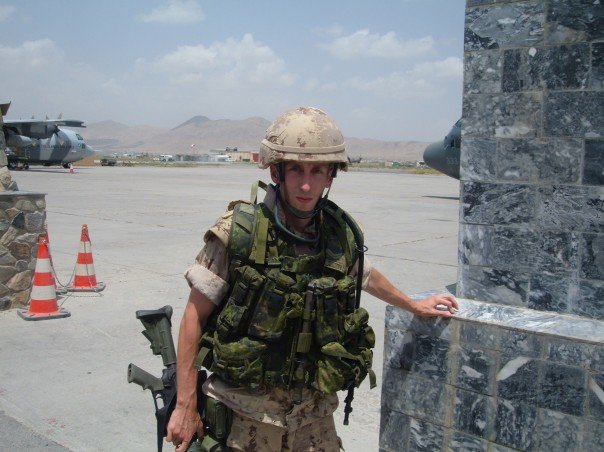
Earned blue cord but reclassed to PSYOP. Here he is on a mission with SF waiting on the Chinooks in 120 degree heat with 75 pounds of gear and bang. Grunt or POG?

Earned blue cord but reclassed to PSYOP. Here he is on a mission with SF waiting on the Chinooks in 120 degree heat with 75 pounds of gear and bang. Grunt or POG?

By: Peter Sessum

Even though it was a couple of years ago, the Why Grunts Hate POGs post is still getting hits so it must resonate with a lot of people. Maybe it is time for a follow-up or an update. The article was a stand-alone piece about one specific issue, literally why grunts hate POGs, but there is much more to the overall topic. Most importantly, just because someone isn’t a grunt doesn’t necessarily make them a POG. It was stated in the article, but many glossed over it.

While POG literally means Person Other than Grunt, calling someone a POG has become an insult that is more of a reflection on the person than their job. It is kind of like jocks v. nerds in high school. Not every 11-series self identifies as a grunt and not every student athlete calls himself a jock. Like the term grunt, jock has a particular connotation. Just because someone isn’t a student athlete doesn’t mean he or she isn’t athletic. A student that boxes or practices MMA off campus might be in better shape than most football players but because it isn’t a school sport he or she might not be considered a jock. Students don’t get letterman’s jackets for sports outside the school but does that make that student a nerd. In the same way that Special Forces soldiers are technically POGs but I wouldn’t call one that to his face.

Being a grunt means embracing the grunt mentality and way of life. Many soldiers that have graduated Infantry School might not call himself a grunt because he doesn’t see himself as the stereotypical grunt. I know a lot of very smart men in the Infantry, but most of the men I know that identify as Infantry do not call themselves grunts and that might be because of the negative image.

Being a POG is more of a mentality than a MOS. There are even Infantrymen that exhibit POG behavior. Someone that is a POG is a soldier that doesn’t do their job to be part of military team. It is the mechanic that makes a driver do work that mechanics are supposed to do because they are lazy. It is the supply guy that makes people beg for items they are free to issue. The quintessential POG is the armorer that rejects every weapon for the tiniest speck of dust but will accept everything without a cursory glance after 1600.

Anyone that looks for reasons not to do their job that impacts another soldier is a POG. A soldier that takes a nap in his vehicle instead of doing his Monday morning garrison PMCS is just trying to get over, the S1 trooper that turns away a soldier to out-process at 1050 so he can take a long lunch is a POG. Another easy way to spot a POG is with his large wings of a bluish hue. Yes, the infamous Blue Falcon is almost exclusively a POG. The Blue Falcon, or buddy fucker for the uninitiated, is the lowest form of life in the military.

So how can someone not be a grunt but also not a POG? By doing their job and acting like a part of the military team. Honestly, there are many of them out there. The supply guy that hooks up others in the Spec-4 Mafia to make sure that everyone can get their missions accomplished, the PAC kid that will take your paperwork when everyone else in the office wants to take an early lunch, the commo guy that will take the time to explain something and most importantly, the armorer that won’t reject any legitimately clean weapon the first time. Those are not POGs.

When the Army stole 20 days of leave from a soldier and the S1 wouldn’t lift a finger to help, those guys were POGs. When a soldier returns from 10 days of emergency leave after burying his grandmother and the S1 soldier quietly round files the leave form that S1 trooper is not a POG. It might have been breaking the rules, but you can bet that grunt would remember that. And that is what being in the military is all about, taking care of one another.

While one Internet post won’t change the military mentality it is important to state that just because someone is not a grunt does not mean that POG as a derogatory term should apply to them. Especially since some are pretty hardcore. Medics in the Ranger Battalion are pretty hard and shouldn’t be called POGs. Someone thing goes for commo troops and forward observers that roll out with SF.

When you break it down, POG has become a derogatory term used by Infantry to describe those that don’t have the same attitude of loyalty and teamwork as is found in the Infantry world. An Infantryman can’t tell someone that is in need of his skills to come back later. No mortarman is going to reject a call for fire because he is on a lunch break. While it is true that many jobs in the military are not life and death, if the person takes it seriously and does their job they are not a POG. That term should be saved for those that show true POG behavior. But what do I know, I’m just a grunt.

Posted in Commentary | Tagged , , , , , , , , , | 13 Comments

Military leadership: Lessons in Military Leadership for Civilians

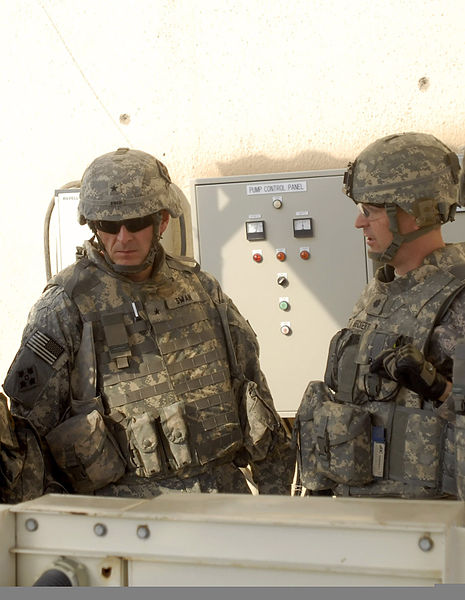
BG Swan in Iraq doing what he does best, leading.

BG Swan in Iraq doing what he does best, leading.

By: Peter Sessum

Many techniques of military leadership that translate into the civilian world. It is why many corporations like to hire vets. Even though the day-to-day activities are different, anyone that can lead a team into combat can lead a department in a civilian job. Unfortunately, not every person with rank and position in the military is a good leader. As we like to say in the Army, “The rank doesn’t make the man, the man makes the rank.” Here are a few examples of good military leadership for the civilian world.

Know what you don’t know and trust those that know

Not surprisingly, admitting to not knowing everything is difficult for many people. It might sound counter intuitive but the person that admits he or she is not all knowing gets more respect than the person that tries to fake it. Knowledge is one of those things you can’t fake it till you make it.

Before all the maneuver units were removed from Fort Knox it was a dumping ground for some of the soldiers as the bases in Panama were shutting down. A Specialist arrived to one of the two mortar platoons on base and since he had the promotion points, was promoted to Sergeant in short order. He was immediately given his own gun squad.

A month earlier he had been in a light Airborne unit and was now in the home of armor and was mechanized. One of the first things he did was tell his squad that he was going to lean on them to teach him everything he needed to know about mechanized Infantry. Instead of his soldiers thinking he was stupid, they bragged about how they had the best squad leader. There was no doubt who was in charge but the fact that he trusted them and didn’t try to pretend to be perfect made them respect him and work harder for their leader.

This is in stark contrast to the sergeant in Germany on his second time physically being on a mechanized vehicle in his life tried to direct experienced mech soldiers how to do things despite them trying to advise otherwise. Instantly, he lost the respect of the soldiers that barely knew him. His new ideas made him stand out during a walk-through by the Battalion XO and he was quickly singled out in the bad way. Instead of taking accountability he tried to throw the soldier not in attendance under the bus, a classic blue falcon move. That too came to light and he was a considered a POS soldier from then on.

The takeaway is that no one looks bad saying, “I don’t know.” In fact, any time someone says that the other person will fill them in and now they know. It is literally that simple. Trying to pretend to know and make decisions or give directions off misunderstanding will only reflect poorly. Do the right thing and your subordinate will tell everyone and respect will build, half step and that will also be spread among the troops and it will reflect poorly.

Use your resources for team success rather than personal glory

There are two kinds of officers when it is time to take the metaphorical “hill” in the military. The first is the blood and guts commander that wants to storm the hill and take it by force fighting for every inch of dirt so he can climb over dead bodies and be the one to plant a flag on the summit. The second one throws every bit of ordnance to soften the enemy, uses superior tactics and calmly walks up the hill with all his men in tow to see an American flag proudly swaying in the breeze.

Lieutenant Colonel, now Brigadier General retired, Swan was the second type. For some reason the geniuses at the training center in Hohenfels Germany decided that a four deuce (107 mm) mortar was about as powerful as a .22 pistol. It was determined that it would take six rounds to kill a dismount. Which is outrageous for a weapon system with a 50 meter kill radius. To take out a fire team a mortar platoon would have to simulate dropping 30 rounds. To top it off, the mounted .50 cals couldn’t take out the simulated T-72s the OPFOR used so a valuable resource in the mortar platoon was basically useless. Fortunately, Swan is smarter than your average bear and engaged his mortars on every operation.

He ordered the platoon to load up and drop only smoke rounds. He would send out both mortar sections each with a five ton truck in tow to firing positions and obscure the battalion’s movement from the enemy. In a simulated environment it was pretty silly. The truck was to provide an additional 350 rounds for the section but since it was all simulated it was just an ammo can with 175 pieces of paper with “Two mortar rounds” written on it. To simulate the rounds downrange the observer controllers would light smoke pots in the impact area.

Each mission the mortar platoon would roll out at 0-stupid-30 and be rounds complete by noon. Then they just had to stay out of the way (read: nap) until the assault was over. He understood how to utilize his assets and that is why LTC Swan was successful.

By not employing the same tactics, his light Infantry counterpart during a Fort Polk rotation had his ass handed to him by OPFOR. This CO had 120mm mortars with a tactical situation far more favorable. The damage of his 120s were set at more realistic levels. In a flash of brilliance he would send his mortars out in front of the main element unprotected or forget about them all together. Had Swan had them, they would have been dropping rounds all day long. This mortar platoon “fired” four rounds for the entire rotation.

The civilian takeaway is to use the resources you have to the best of their ability, not the way you want them to work. Put the task and team ahead of the idea of personal glory. While Swan was taking what seemed like a more cautious approach, he did more damage to the enemy and had more success than the ones that want to storm the beach when there is a better way just to say that they stormed the beach. In this situation, the subordinates will know when they are being used poorly and it is a reflection on the person in the leadership position. In the Army, like in the civilian world, the success of the team is the leader’s success. Help the team succeed and everyone wins.

Know who works for whom

During his change of command ceremony, Captain Colb shared his leadership philosophy, “The more rank and position you have, the more people you work for.” As an Infantry company commander he believed that it was the Soldier’s duty to do his job, it was the commander’s job to take care of the soldiers.

The commander has a driver and it is the driver’s job to make sure that the vehicle is in good working order. If the vehicles is good, the Soldier’s job is done. It is the job of everyone senior to that Soldier to make sure that Soldier is getting paid, leave, awards and promotions if they are deserved and punishment if it is warranted.

When supervisors “work” for their subordinates they develop more trust and respect in the work environment. That may not mean a lot in the civilian workplace, but it means that men will follow you into the gates of hell without a second thought. When an officer said that he worked for the men and women in his command and not the other way around you would be hard pressed to find someone that wouldn’t follow that man anywhere. That statement made such an impact it is still being talked about more than 15 years later and has shaped the leadership styles of many NCOs and officers since.

Anyone that doesn’t think these work should just look to the head coach for the Seattle Seahawks Pete Carroll. He put his people in positions that they were good at rather than what they were slated for. He trusted in his team (or subordinates) and considered it his job to make the work environment positive. In other words, he worked for his players rather than the other way around. It was a novel concept, a positive work environment that included meditation instead of constant yelling, but at the end everyone was wearing Super Bowl rings so you can bet that other teams will be trying it this year.

Having subordinates follow because they are paid to makes someone a manager, having people follow because they want to makes someone a leader. By knowing what you don’t know (and asking for help), using the strengths of the resources and people for team success instead of personal glory and by working for your team instead of the other way around is a good start to positive leadership. If someone needs any other motivation needs to realize that in the military a person can’t quit because of poor leadership, but they can in the civilian world.

A successful happy team reflects well on a leader, having people quit like rats fleeing a sinking ship reflects poorly on the manager to the higher ups and sooner or later, it catches up to them. The last thing any smart CEO will want is to hemorrhage talent to the competition because of a bad manager and in an industry where everyone knows each other, being a bad manager will hurt future opportunities while being an excellent leader will open doors. In the military, being a good leader will result in fewer soldier issues and that is what saves lives in the combat zone.

Posted in Commentary, Military Leadership | Tagged , , , , , , , , , , , , , , , , , , , | 2 Comments

My Experience with “Toxic Leadership”

Archie at KAFBy: Matt Archibald

Recently the media has been paying attention to the issue of “Toxic Leadership” within the military.   An article in the Washington Post cited several examples involving verbally-abusive generals, DoD Senior Executives, and various other examples.  However, I was struck by this article in the Daily Mail about a triple amputee soldier from the Parachute Regiment, an elite Airborne unit in the British Army, and the primary feeder unit for the fabled SAS Regiment.

The soldier in question, Corporal Neathway lost his legs and his left arm in a bomb blast in Helmand province.  Afterwards, he was assigned to the Parachute Training Support Unit, helping train new paratroopers.  Whilst there, he was subjected to bullying and abuse at the hands of his Regimental Sergeant Major (U.S. Command Sgt Major equivalent) which included phone calls at all hours and insisting he wear attire that was not practical and embarrassing, given his physical condition.  If this wasn’t enough – the part of the article that bothers me the most is that this man was investigated for such behavior before, and investigators found that he isolated and singled-out this soldier.  And nothing seemingly happened.  The most frustrating thing is that this man was allowed to remain in not only a senior leadership position, but in fact, the position responsible for maintaining discipline and looking out for the welfare of all troops under his command.

A lot of this incident resonated with me.  As I’m a new poster to this site, I should give a bit of background.  I served in the Canadian Army for 13 years, including time in Afghanistan, and four years as an integer with the US military and intelligence community.  I worked for a multitude of leaders throughout my career, some good, some bad, but one in particular that I would define as “toxic”.  I spent 3 years working for this supervisor while in an isolated unit – where he was the commander and had no form of supervision above him.  I had heard about him before I started at this unit, and was warned.  I was lucky enough to be part of a relatively close-knit community, so reputations, especially bad ones, tended to be well-known.  However, being a relatively new NCO at the time, I went into the assignment with a blank slate, giving him the benefit of the doubt.

The next three years turned out to be the hardest and worst period of my career.  Despite having a great operational position, it became relatively clear, relatively quickly that this man would not make this posting be a pleasant one.   I performed well, but it always seemed like this man was waiting to jump on me.  He finally got his chance a year in.  I made a bad decision, and got into trouble, as I now know, junior personnel do.  After trying to cover my six, I came clean and admitted my issue.  I overcame it and it never happened again.  However, this man never let me get over it.  It effectively held me back for years of my career, while colleagues whom he liked more, but did little to no operational work, were promoted in record time.

This was very frustrating to me – because, up until this point, my career had been stellar, with promotions ahead of most of my peers and a solid reputation for my operational effectiveness.  Then I suffered a relatively bad end to a personal relationship.  I felt I couldn’t go to my chain of command for obvious reasons, and eventually the stress built to the point that I ended up passing out at my desk, and taken by ambulance to the base hospital.  I was diagnosed with severe stress and anxiety, and given some stress leave to unwind.  On the second day of this leave, I was awakened early in the morning by my doorbell.  Standing there, was this supervisor, supposedly checking in on my well-being.  After inviting himself into my home, he proceeded to threaten to send me back to my old unit and never once asked how he could help.  At that point in time, I remember seriously questioning whether the military was right for me.

This was just one incident over those three years.  There were other incidents undoubtedly, nor was I the only target of his toxic attention.  I also don’t intend to implicate that this was as bad as the young Cpl’s treatment at the hands of his RSM.  I actually ended up leaving the Army three years later, for personal reasons.  But I’d be lying if I said those three years hadn’t had some impact on that decision.  Of note, he walked out of that particular unit, with yet another promotion.

I also suspect that almost every soldier has had a similar experience. When in those situations, we all undoubtedly thought “How can people who are such horrible leaders make it into senior leadership positions?”  or “How doe this type of behavior get tolerated?”.  And I think those are both very valid questions – and questions that military leadership needs to answer sooner rather than later.  Otherwise these toxic leaders will continue to affect morale, reflect badly on the multitude of good leaders, and cause soldiers to leave.

Toxic leaders need to be held accountable, and either adapt or perish.  One of the most important principles of leadership is to promote the welfare of your troops.  As a 4th generation soldier, this was something I was taught at a very young age.  The military should have no place for leaders that abuse that sacred authority that has been granted to them.  And when they fail to meet these standards, they need to move on to another profession.  One thing I’ve learned is that toxic leadership is a not phenomenon that is unique to military service.  However, I don’t think anyone can argue that a toxic military leader can make your life infinitely more miserable than his or her civilian toxic brethren ever could.

Posted in Commentary, Military Leadership | Tagged , , , , , , , , , , , , , , , , , , , , , , , , | 1 Comment

Goethe: An Unlikely Inspiration for Today’s Veterans

I don’t remember exactly when it was that I saw the quote on a random AFN filler between terrible shows, but I was mildly tipsy and watching the Government-Property television in my dorm’s dayroom while on my first overseas tour in Japan. They had one of these series of 30-second spots between PSA’s where they would drop a quote from someone famous, and I happened to see this one by Johann Wolfgang Goethe (yes, THAT Goethe):

“What, then, is your duty? What the day demands!”

Now, I’d been a philosophy enthusiast since taking an ethics course in community college just prior to enlisting. This was something akin to red meat for your garden-variety Stoic, and I could see the obvious angle that would make one of the wizards at AFN pick this for use to the military community at large. After all, we’re a subculture that orbits around the binary star system of “Duty” and “Sacrifice.” These two words can blind, burn, sear and scar an individual in the blink of an eye; the military stares at them every day and holds on with both hands because the labor must fall to someone. This quote became a personal exhortation over the last decade every time I came across a situation or challenge that brought the tremors and cold sweat to my hands. It reminded me that things need doing, no matter how tough, and not only had I volunteered to do them when I raised my hand for The Oath, but (even more unnerving) other people expected things to get done. And those who knew me personally looked directly to me to rise to occasion.

It’s fitting that the mind that created the character Dr. Faust would also be the author of this quote. The lesson of Faust after all, is that pursuit of power, in whatever form one defines it, for personal gain alone will lead ultimately to an untimely fate. Veterans from years of service past, those newly-discharged and those just now finishing training and entering “The REAL Army/Navy/Marine Corps/Coast Guard/Air Force” will be constantly reminded of duty. The flipside of that coin is sacrifice; there will be times in every person’s life when the obligations they hold will be called to account, and the individual will then be required to sacrifice according to the magnitude of a particular duty.

Some are asked to sacrifice everything. All are asked to sacrifice a minimum of personal freedoms and precious, precious time.

It makes me look at a lot of things very differently than many of my peers on campus, and even among the brothers & sisters I know who wear a uniform with their family name and our national family’s names on it. A sense of duty is not something that is routinely encountered anymore in American life, and that is one of the things that sets it apart and makes people take a pause when they come across it.

What is demanded of you today?

Posted in Commentary | Leave a comment

Hiring a Vet part 3: Leading Veterans in the Workplace

By: Peter Sessum
Military HandshakeMany companies like the good press that comes from saying they like to hire veterans. Some companies even follow through with that. Unfortunately, many civilian supervisors do not understand how to lead veterans. Mostly it is due to the differences between the military and civilian cultures. Understanding that veterans have a different value system and adapting management styles will be a rewarding experience and help get the most out of the newly employed vet.

Don’t talk about the military in the beginning

This one can be difficult because anyone that specifically hires vets might be interested in the military experience. Unless you have military experience yourself, it is usually not good to talk too much about the military to the veteran. While swapping stories is commonplace in the military, vets usually don’t feel comfortable talking about some experiences to people that won’t understand or be able to relate.

This goes back to that favorite interview question, “What is your most stressful day on the job?” After multiple deployments it is difficult to relate to someone that has a meltdown when the copier breaks. Vets usually feel most comfortable telling stories to people they know. Expect for the people trying to get attention and those people should not be trusted. Remember, there is a reason a veteran is not in the military anymore and except for retirement it might be a touchy subject.

In fact, being too eager to talk about military experiences could be a red flag. A veteran relating a story from time in the military that is relevant to the situation at hand is normal. A veteran that wants to talk about firefights and crazy missions right off the bat is a red flag. Even if he isn’t lying this is going to be an employee that is going to be constantly desperate for attention and will be a drain on time and resources and disruptive to team dynamic especially if he sees someone that can call him out or has better stories.

Let it go

Once a mistake is pointed out, drop it. If there is some corrective action that must be done the incident should be dropped right after that. Unless it is a habitual problem it should be set aside. In the military soldiers make mistakes, they might get yelled t or have to do some pushups and then move on. It is the poor leader that keeps bringing up a mistake over and over. Especially if there is a long time between mistakes or they are unrelated.

Mistakes can be learning experiences and the lesson should not be to never make mistakes. The only way to never make mistakes is to never try and that is not what any employer should want from his employees. High performing employees should earn some slack when it comes to verbal correction. It is far better to have subordinates work hard so they can afford to make mistakes than to have them work just hard enough to not get fired.

Be careful of the precedent you set

This is one that people in both civilian and military leadership positions screw up. If a subordinate is late 10 minutes one day and then six months later is late again a supervisor should look at the big picture before saying anything.  If that vet is the top producer and doubles quotas every month but is told he has a “history of tardiness” the message he will receive is that punctuality is what the job is based on. From that moment on he will never be late again, but he will also never deliver more than is required.

Military members have to navigate a very delicate system and the last thing any employer would want to do is shoot himself in the foot by sending the message not to work hard. A good leader will see that 10 minutes late every six months is a small price to pay for greater productivity. If it is clear that the supervisor doesn’t respect the hard work the vet is putting out it may cause the vet to lose respect in the boss.

Respect is earned, not given

Leaders inspire respect, managers demand it. No one joins the military for the money. If your authority is based on the fact that you sign the paychecks and remind your subordinates of that fact you will be seen as a poor manager. A paycheck is compensation for work completed, not a favor bestowed by the company.

Lives are literally on the line in the military and a poor leader will get people killed. Military members are constantly asked to do uncomfortable and unpleasant things and for the right leader they will do those things willingly. Every veteran can name a leader that they would follow into the depths of hell without question because they trust that leader’s ability to get them out. Or, and this is even more important, they trust that they wouldn’t be led into hell without a good reason. Every employer should strive to be that kind of leader. The loyalty of a true warrior is something that doesn’t come easy, but when you have it you can accomplish great things. When you don’t have it, your success is limited.

Attitude reflects leadership, not the other way around

One of Murphy’s Laws of Combat is “Inept leaders always say they have inept soldiers.” It is not a coincidence that the best leaders always have the best soldiers and that the worst NCOs have the dirtbags. If a soldier, or an employee, performs poorly no matter the supervisor it is him. If he performs well under a different supervisor then it is you.

I have seen soldiers that were considered dirtbags with bad attitudes by one squad leader do a 180 and be one of the best soldiers with great attitudes in another squad. Every poor performing employee is just a poorly motivated employee and that is the fault of the leadership. If a manager can’t figure out a way to get the most productivity out of each individual, maybe he shouldn’t be a manager anymore.

Recognition goes down credit goes up

This is a very military thing. Each supervisor should give credit to subordinates when the task is complete but take credit for the team when talking to their supervisor. When a team performs well, the team leader should give credit to the people that worked hard. Then, he can say to his boss, “Look what my team accomplished.” She can congratulate him on a job well done, gather up what the other teams completed and then tell her boss, “Look what my division did.”

While it seems like grabbing credit, there is no reason for the CEO to know what each team member did unless it was one individual that did something great. It is important to recognize good performance, but there is an understanding that the team leader will get credit from higher up for the success of the team.

Break the communication barrier

This is one that civilian employers have a difficult time with. My friends and I didn’t even understand where the difficulty was for a long time. The communication barrier is more than just veterans using military speak that is chocked full of acronyms. There are simple sentences that mean something completely different to civilians.

When a mistake was pointed out I was taught to say, “No excuse.”

To the military mind that means, “I see the mistake I have made, I take full responsibility, I will correct the error and it won’t happen again.”

To the civilian boss it means, “I don’t care, I have a crappy attitude and I am too lazy to come up with a suitable bullcrap excuse.”

While the veteran might be taking full accountability the perception is that he has a bad attitude. This can be especially troublesome when working on a group project. The veteran will take accountability for his or her own actions and everyone else will point fingers. This means that everyone is in agreement that one person screwed up. For the boss that likes to place blame, these situations can be hell for veterans. Service members are taught that it is the lowest form of life to throw a coworker under the bus, even when they deserve it. Even if it is known that the vet didn’t make a mistake, he shouldn’t be pushed to call out a coworker. Doing so would set the precedent that honor is not valued and that blame is more important than fixing the problem and moving on.

This can be a red flag moment. If a vet is all too willing to throw coworkers under the bus (be a Blue Falcon in military speak) then he is a man without a code and should not be trusted. It means you have a dud vet.

Another communication problem seems to be what civilians think of as a veteran poker face. It too is often misunderstood as attitude. From the military perspective, it is maintaining professionalism. Getting compliments or criticism both require maintaining composure.

All one has to do is Google “Medal of Honor Ceremony” and click on images. The Medal of Honor is the highest military honor and most recipients are posthumously awarded. To survive to be awarded is a pretty big deal. In every image the service member is straight faced when the medal is being placed around his neck by the president. It is only after he is no longer at the position of attention does he smile.

And that is the problem of perception. When getting yelled at or awarded, a soldier can find himself at the position of attention. Ramrod straight body with an expressionless face. Civilian supervisors can misinterpret this professionalism as disrespect, attitude or disinterest in the job. I had a boss call me “passive aggressive” which made everyone that knew me laugh. It took me a long time that the reason he thought that is because I didn’t visibly react when good things happened or when he went on one of his famous crazy tirades. He needed a very expressive reaction to make him feel like he was reaching me or that we were effectively communicating. Instead, it cost him respect.

Results v process

This can be another breakdown in communication between the civilian employer and the veteran. Military members are used to trying to attain favorable results rather than following a process. This comes from working in a fluid environment. While missions are planned in fine detail there is a lot left open for adjustments on the scene. One of Murphy’s Laws of Combat states, “No plan survives the first contact intact.” Meaning once the bullets start flying, the plan goes out the window until someone puts a cap on the can of firefight.

This is not unusual in the civilian world, a quarterback reads the defense and adjust his plans on the fly. A cab driver sees an accident and changes his route. The result is what is important. Unless there are reasons for strict adherence of the rules, like major government regulations, the results are what are important. I had a boss that hated me because I didn’t follow the steps of the process but loved my results. I skipped steps because they were not all needed and I knew that in a five step process that I would hit a roadblock at step three and not be able to complete the mission.

This is why vets usually just need to be told the end state and let them take it from there. This is not a blanket policy because some troops need constant supervision. Any manager that doesn’t know the difference should not be managing people.

Leading vets is easier than you think

All of this might seem daunting for an employer but there is some good news. It will be difficult to be the worst boss a veteran has ever had. Doing the math I have had over 25 first line supervisors in my military career. Of all the bosses I have had, my worst civilian boss wouldn’t break the top five. Maybe not even top ten. I wouldn’t advise taking that as a challenge. It means that putting everything in perspective, civilian bosses are easier to work for. Plus, we can quit at any moment.

The bad news is this also means that a civilian boss might not be the best boss a vet has ever had either. Some of us have worked with true heroes and those are some huge boots to fill. But don’t worry, no one would expect that of you.

Veterans bring all those values and intangibles that many companies are looking for. They can be trained and set free to accomplish tasks like no other. Vets understand a different team dynamic than most civilians, but they won’t get bogged down in cliques or gossip. Most will be able to work effectively with people they do not like which is rare in the civilian world.  Being a little understanding and trying to work through communication issues will help lead to one of the most successful employees. Be a good leader and there is nothing vets won’t do for you. Be a bad manager and you won’t reap any of the benefits. It all starts with the leader.

Posted in Commentary, Kicking Some Knowledge, Military Leadership | Tagged , , , , , , , , , , , , , , , , , , , , , , , , , | Leave a comment

The Freedom Run, a Run to Remember

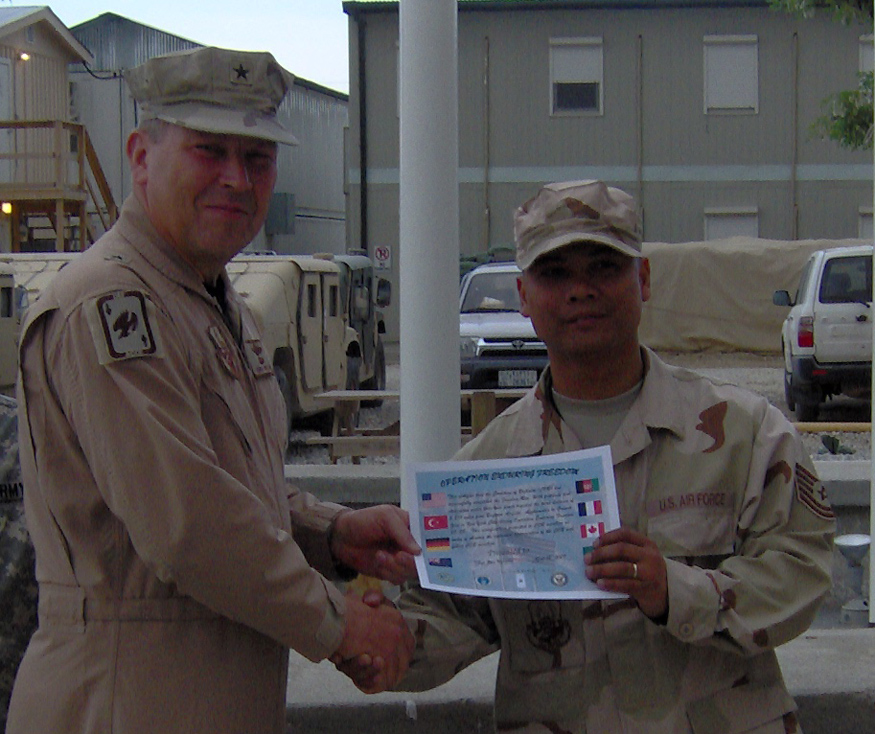
Air Force NCO getting his certificate for completing the 1st ever Freedom Run from the General in front of the BAF flagpoles. He had no idea we made it up.

Air Force NCO getting his certificate for completing the 1st ever Freedom Run from the General in front of the BAF flagpoles. He had no idea we made it up.

By: Peter Sessum
Veterans Day is coming up and that means it is time, once again, for the Freedom Run. Many people talk about remembering the fallen but how many actually do anything about it? The brainchild of an FDNY Captain while serving in Afghanistan, the Freedom Run started out as a way to remember the events of 9/11 and then became a way to remember the fallen. Instead of making a post on social media, form a team, lace up the shoes and do something about it.

So there I was, on Bagram Air Field, no shit. Every day, At 1200 ZULU we would meet in the ISAF LNO office for a coffee break. This was started by a couple of British officers, Ady and Feazier, and it caught on. It was an interesting mix of all services, military and civilian, officers and enlisted, Americans and internationals. “Dice” couldn’t look more like a firefighter or a fighter jock if he tried. At the time he was an FDNY Captain deployed as a Navy Commander. One day he was talking about how the diversity in this group of friends and how we were all brought together by the events of Sept. 11. Having witnessed the actions first hand and lost friends, he wanted to commemorate that day. His idea was for us to symbolically return to Ground Zero. One of the Air Force guys used Falcon View to measure the distance from where we were to Ground Zero. It was just over 6,800 miles.

As we trickled back to the states, some of us tried to keep it going. When I started attending college the run changed when I got the veterans club involved. Instead of running to New York, we decided to cover one mile for every casualty of the Global War on Terror (GWOT).

So here is how it works. Form a team. Tell your unit, friends, school club or coworkers and start your own team. If you can’t get many people, contribute to the DTC numbers. The rules are simple, log the miles by covering the distance under our own power. Running, walking, bike riding anything that you can do that measures distance. I know a guy that adds his miles kayaking. For any other physical activity count one mile for every 15 minutes of exercise. That includes whatever a person does for exercise to include cardio, weight lifting and even yoga. Meditation does not count and only full miles/time with no rounding up.

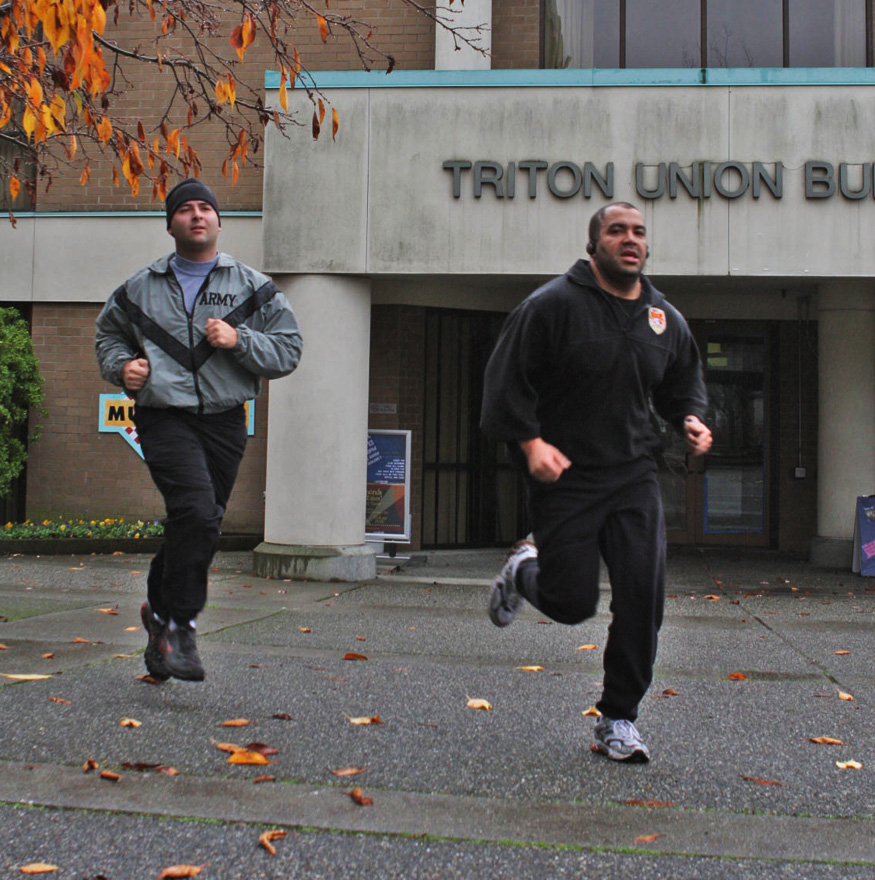
Club Vet ran the first mile together to kick off the Freedom Run at Edmonds Community College.

Club Vet ran the first mile together to kick off the Freedom Run at Edmonds Community College.

The point it to remember our fallen brothers and sisters. Doing a little bit of PT is nothing compared to what they have lost. I will admit that doing the Freedom Run is a good motivator to hit the gym. During the first Freedom Run, since I was one of the main proponents of the group, I felt a fair amount of pressure to log miles. Every day, at lunch, I would ride around the BAF perimeter and then hit the gym later. I took Sunday off and still caught crap for having one day with no miles.

We recognized people that logged substantial miles. About 20 people logged over 100 miles. If you logged enough miles you were in a “club” and got a patch. Patches started at 205 miles. We had four members of the 250 Mile club, I was a member of the 500 Mile Club and we had two members of the 750 Mile Club. They were beasts and highly competitive. Both were field grade officers, one male, one female and were PT monsters trying to make the rest of us look bad. They succeeded.

While some friendly competition is good, it is important not to detract from the goal of the Freedom Run. At last count, there were 6,758 American GWOT casualties. Dice’s group in New York logs a mile for every fallen service member since 9/11 including internationals that deployed in support of OIF and OEF, civilian contractors killed in Iraq and Afghanistan and every first responder that died on 9/11. That adds a couple thousand miles to his total. Your group should do whatever feels most comfortable.

I really hope you will join in on the Freedom Run. If you do, you should do something in tribute to the original group. Create a certificate and get someone with rank to present it. After logging all the miles in Afghanistan, one of the Air Force guys (Fista I think) convinced an Air Force General to present the certificates in front of the flagpole. It was awesome. He even commented that he wish he had known it was going on because he would have joined in. So you can win the Freedom Run by being the first group to complete it, getting the highest ranking person to join in or by logging the most miles.

So get out there and form your team. Time to do more than post a message over social media. This is a way to really remember the fallen. Get going Veterans Day and try to finish quickly because we start all over again on Memorial Day. I am going to start training hard. I would like to be a member of the 1,000 mile club.

Posted in Commentary, So There I Was | Tagged , , , , , , , , , , , , , , , , , , , , , , , , , | 1 Comment

The Marine Corps Equality Conspiracy

By: Peter Sessum
When this first hit the news last year I wanted to wait to see how it played out. The Marines have best tried to find out how to incorporate women into combat arms jobs. The lack of success by female volunteers has encouraged some who are against the idea of female grunts to be asshole, but make no mistake, women in the Infantry is inevitable. It is not just a matter of if but a matter of when.

The Marines have a reputation of being a bunch of knuckle draggers but the more I look at the command decisions from the highest levels the more I think that reputation might be a misinterpretation. They might have a deceptively simple solution to the complex problem of women in the Infantry. Let them earn their way in. The Marines have done this before, when it was not about gender but about race.

The Marine Corps was an all white organization until 1942. When Negros were allowed to join, they were restricted to jobs in the rear. Even though they were combat trained, they were not sent to the front lines in the Pacific theater.

There is a story during the island campaign of black Marines being stuck on the beach stacking ammunition. They wanted to get into the fight and do their part but were not allowed. After carrying enough wounded white men off the battlefield you run out of reasons for dark skinned Marines not to get their chance to get killed. So they picked up their rifles and joined the fight. As they were coming down the hill with their white counterparts, men walking up would make fun of them. The white Marines that fought side by side with the black Marines stepped up to say the men had earned their place on the field of battle.

If you look beneath the surface, it seems that the Marines are applying that same system for females. Women are being allowed to join Infantry training. If they meet the standard, they will graduate. Like Negro Marines in the ‘40s, women will not be placed in Infantry units but placed on other jobs.

This sounds limiting, but the Corps has established gender neutral standards for all USMC jobs. Honestly, they might need to wait a while before there are enough to place in field units. To give her the greatest chance at success, I wouldn’t assign a single female into an Infantry battalion. But I would send in 10. There is a historical precedent that will factor in. Life always sucks for the trailblazer. It is easier for the second and is smooth sailing for the 50th, but life sucks for the first. The first female enlisted should also be assigned to a unit with a female Infantry officer in that same unit.

Since last year, 10 women have volunteered for the Infantry Officer Course (IOC) and none have passed. In the latest IOC the four female volunteers failed to pass the initial physical endurance test. Along with those women, 12 men failed as well. These men had to know what they were getting into and were most likely in the shape of their lives. The fact that they did not pass the entrance exam should illustrate that the standards are high. If it was any other service I would think it was just 12 fat bodies that didn’t make it, but the Corps? They would have only selected men in good physical shape.

Currently, the Marines are taking the first class of enlisted women through Infantry training. Out of the 114 women that graduated bootcamp, only 42 passed the physical requirements to attend the Infantry Training Battalion (ITB). Of those, only 19 volunteered to go to ITB and as of last week only 15 remained.

I am cautiously optimistic about those numbers and hope that a female makes it through the course. The biggest problem women in the Infantry will face is getting the right women to volunteer. All you have to do is watch the Olympics and see women in peak physical condition. IOC is considered one of the toughest military school and from what I hear ITB is no joke either. Women can do it, just not your average women. That is not a sexist remark because your average man can’t pass Infantry training.

One thing that no one seems to be considering is that some women don’t want to be Infantry. Not every guy wants to be a grunt. Quite frankly, it sucks. There are far better jobs out there. So the pool we are pulling from is limited to women that are interested in becoming Infantry.

The solution is still there. Make a gender neutral standard so that no one can say a woman passed the course because it was made easy for her. After enough women pass ITB and are placed in a non-combat arms unit they will continue to train at the Infantry standard people will notice. I have faith that at some point they will be given the opportunity to work with male grunts in a training environment. When they kick ass they will get the recognition they deserve and like black Marines in WWII, they will have earned their slot.

I believe that within a decade, there will be a female in an Infantry unit. Within 15 years people will talk about the time when they were allowed to serve as grunts and history will look at us as close-minded misogynists. Women will one day serve in all aspects of the military but as a gender they have to go through the process but it will happen. And it will start with the Marines because they have done it before.

Posted in Commentary | Tagged , , , , , , , , , , , , , , , | 1 Comment

What it Feels Like to be a Veteran

By: Peter Sessum

A huge field of discarded military equipment. This is what being a veteran after ETS feels like.

A huge field of discarded military equipment. This is what being a veteran after ETS feels like.

Looking at pictures of a military airplane bone-yard I couldn’t help but think that is what it felt like to be a veteran. Made for a specific purpose and once the purpose is served, discarded and left to unceremoniously age. No longer wanted or cared about.

I joined in the early ‘90s at a time of relative peace. At the time, many soldiers I served with had never seen combat. The only ones with combat patches in the conventional side were troops from Desert Storm, a few from Somalia and the odd high ranking Vietnam Vet nearing retirement. We trained for a war that may never come during our enlistments. Not like the soldiers today that expects to deploy to Afghanistan as soon as they graduate bootcamp.

I never fit the stereotype of the Army Infantryman. I was raised in a very liberal family, I wasn’t allowed to play with toy guns and practiced a life of nonviolence. In middle school I deescalated a situation with the school bully by removing his desire to fight through dialogue. It is considered my first act of PSYOP against a hostile force. Needless to say my mother was not at all pleased with my decision to join the military.

I found myself a natural fit in the Infantry and later into Psychological Operations. I liked to push myself and test my limits. Somewhat competitive, I always pushed to be the best I could be. Despite how I was raised, I turned out to be good with weapons and tactics. Scoring expert with every weapon system I touched. I was skilled at land navigation and I was best at fighting at night in small teams. This isn’t bragging, with the caliber of people I served with it was pretty standard. Excluding some knuckleheads, most of the soldiers were good at their jobs.

Unfortunately, these skills do not translate into civilian life. When I left active duty service there wasn’t a large emphasis put on transitioning soldiers. As far as the Army was concerned, you were leaving so they didn’t care about you anymore. It is like breaking up with someone. Once you get your stuff out of their place, they don’t care what you do or where you do it as long as it isn’t around them anymore.

The lucky few exit the military with a marketable skill. Many have to figure out the next step on their own. Vets like me feel cast aside like the planes in the bone-yard. A lot of time and money was spent into training and molding me into a good soldier and as soon as my time was up I was left adrift in the world.

After years of meticulous care, a piece of military hardware is discarded like it never existed.

After years of meticulous care, a piece of military hardware is discarded like it never existed.

When I look at the aging planes I see aircraft built for a single purpose, to defend the nation in conflict or war. Once outdated they have no more purpose and are left to rust. Planes that flew missions over Germany and liberated Europe from tyranny now sit neglected in dust. That is what I see when I look in the eyes of old vets in the VA hospital. They had a grand purpose at one time and all those skills that were called upon all those years ago are left to degrade from reflex to faded memory. Each year, we lose a step and get a little bit slower as those skills no longer put into practice wither away.

Attending college is like being one of those old planes while surrounded by mopeds. Everything else is moving around while your skills lay dormant. And I would have to listen to the scooters prattle on about how dangerous this old plane is. Like if the engines sputter and crank over one last time they would talk about how dangerous it is. When really the plane is safest when it is on the ground. They are only dangerous at altitude, when they are in their element that they operate in.

Anyone that has ever been overseas understand Rules of Engagement (ROE) and while veterans have a particular set of skills, we only use them under very specific circumstances. If you are not a direct, physical threat to me, my family, or innocent people around me no harm will come to you. It is as simple as that.

So while some look at the airplane bone-yard (or veterans) and see the potential for mass destruction, I see equipment created for a single purpose and cast aside by the very organization that spent so much time and energy creating them. This is why some vets feel lost. For so long we had a role, a mission, a purpose and then suddenly, nothing.

I don’t want to speak for other veterans, but that is how it feels to me to be a vet. Service members and young veterans should treat the older vets with respect. They were in your shoes at one time and you will be in their shoes someday. It would be nice if civilians would have some respect for vets because since the formation of our country, men and women have been willing to shoulder the burden of freedom so that others wouldn’t have to. If nothing else cut a vet some slack because they have earned it.

Posted in Commentary | Tagged , , , , , , , , , , , , , , , , , , , , | 2 Comments