Is the Infantry Ready for Females?

By: Peter Sessum

Is it time to upgrade women from POG to Grunt?

Don’t ever put the words “women” and “can’t” in the same sentence around my mother unless you want to start a fight. So I do not make this argument lightly. I have no doubt that someday women will be fully integrated in all military jobs, but the way the Marine Corps is going about it isn’t the way to make that happen.

The decision to put women in Infantry officer training is a political one; it is not done for the advancement of women. The Marines plan does not dispel the arguments against women in combat arms, it does not let women properly prove themselves and does not let the culture call for the change.

Arguments against women in combat
The main argument against women in the Infantry is physical prowess. Infantrymen have to be able to carry heavy weight a long way. Most opponents also question how many women could drag a 200 pound injured man to safety. Grunts have to be able to carry up to 100 pounds for 20 miles. If a fellow soldier is injured, one soldier needs to be able to pick up that soldier and get him to safety. When I would train for this scenario, we were not allowed to drop our packs to carry the “injured” man.

With the Marine Corps looking at a “gender neutral” physical fitness test, they are not addressing the arguments against women in the Infantry. The perception is that the standards will be lowered to allow for women in the Infantry. Regardless of intent, the Marines need to fight that perception.

Letting women prove they have the right to fight
There are tough women in the military and women in the Marines are famously hardcore. If the standards are not changed a woman could prove that she belongs in the Infantry. Respect is earned, not given. A woman that can ruck the same weight, the same distance has a better chance of earning the respect of her peers. And yes, as the first women in the infantry, they will have to work twice as hard to prove they are half as good.

Putting the new female Infantry officers in training positions will not give them the opportunity to prove themselves. They will not be able to prove that they can lead in a training battalion. It is like making a secretary a nonvoting member of the board of directors and claiming that you have women running the company. When that first female Infantry lieutenant becomes promoted to a company command, what do you think her battle hardened troops are going to think of her? As an Infantry officer with no combat experience, she will not be competitive for promotion against males with combat experience.

Culture change can’t be forced
I have heard people compare integrating women in the Infantry to integrating blacks into the military in WWII. This really is an apples and oranges argument. The culture was vastly different in the 1940s. The physical argument is immediately dispelled when you compare men to other men. This situation has more in common with allowing gays to serve in the military.

The process from Don’t Ask Don’t Tell (DADT) to the current policy took much longer than it needed to, but the important thing is that it was a process. Gays and lesbians were able to prove themselves and it allowed for the military culture to come around to the idea of gays openly serving. In case you haven’t noticed, gays have been serving in the military and the world hasn’t ended.

As a political move, if there is initial resistance to the change, it will be forced. No one is going to back down once the ball gets rolling. Currently, in war, there are no more front lines. There are examples of women proving themselves in combat situations. Instead of jumping to the end, if we took one more step towards women in combat arms, the culture would come around to accepting women in the Infantry.

The solution
There is a solution to getting women into more combat roles. I say more because women are already in some combat roles. The media likes to say that women are limited to noncombat jobs like logistics and quartermaster. That isn’t exactly true. Women are fighter pilots. There are also female Military Police officers. I knew a female air defense artillery officer. I also know a female Army aviation officer. Last I heard, she was commander of an aviation battalion. She flew Apaches, combat attack helicopters.

Women are slowing getting into more combat oriented roles. The next step should be to put females in the cavalry. Sorry to all you DATs, but putting women in tanks would remove the physical arguments. Tankers don’t carry anything, they ride in tanks everywhere. Train a couple females to be tanker officers and let them lead tank platoons overseas.

There is one more big step that can be done. Without changing the standard, have a trial cycle of sniper school. Women in the military have proven that they can excel at technical jobs. Few things are more technical than being a sniper. While men are accepted as being generally stronger and faster than women, females are more patient. If athletic volunteers are found, I think they would do well in sniper school. During the stalk test, most men fail for rushing. I would be interested in seeing how well women would do.

Female sniper teams would be perceived as kickass by deployed men. Have them take out some long range targets and they will earn respect of grunts. There are some people that say women will not be able to kill. History disagrees. The most successful sniper in history is a Russian female. She has the most confirmed kills on record. While you can argue that some men might have more unconfirmed kills, confirmed is what counts. Not that it matters, the point is made, women can pull the trigger.

I have served alongside women in the military, and there are women I would trust with my life without question. I know that someday, women will be fully integrated in the military. The question is should it be done right or done right now? By addressing the arguments against women in combat and giving them a chance to prove themselves the military culture will come around and grunts will accept females into their ranks. If they really wanted to advance women into more combat roles, they would do it smarter. Instead, someone is just trying to advance their own agenda and that isn’t doing women any favors.

Posted in Commentary | Tagged , , , , , , , , | 6 Comments

How Big is Your Family?

By: Peter Sessum

I have siblings I am stuck with, but this is the brother I chose.

Your siblings are the family you are born with, your platoon mates are the family you are issued, but your brothers are the family you choose. Those in the military will agree, you are closer to the people you shed blood with than the people you share blood with.

Siblings, you are stuck with. If you are lucky, you get along with them. If not, what choice do you have? Your issued family is only temporary. They are out of your life as soon as one of you leaves. But your true brothers, they are always with you.

Birth family

The family you are born into is one that, like it or not, you have a tie to for life. This means that there are a lot of obligation interactions. Each year, you have to buy presents and get together for the expressed purpose of exchanging said presents. They are the people you have to invite to your wedding and they show up to help you move. You have to listen to them complain about how they helped you move or bring up old stories to new friends of stupid stuff you did as a kid.

The family you are born into has the most power to hurt you, and often do. They might help you out of a jam, but you will never hear the end of it. You are fortunate indeed if the people you consider closest to you are also the people you are closest related to.

The issued family

The issued family is part of the military family you are assigned to. It is a weird dynamic that many civilians can’t wrap their head around. It is the same dynamic as firefighters and police. There are people you work with, that you do not interact with for one reason or another. After work, the married soldiers go home to their families. They don’t hang out with the single guys. Some of them you might not like or get along with. But when you need them, there have your back.

I did not like Smitty. I thought he was kind of a douche. But when he was talking about his relationship with his wife, we all gave honest advice. Personal feelings were put aside because a guy in the platoon was hurting. That conversation is off limits to mockery. A soldier in the platoon can have a vulnerable moment and then move past. We wouldn’t bring it up again, unless he wanted to talk about it. You let him save face.

Later, there was an incident when Smitty moved back into the barracks. His wife wanted to hurt him more and the MPs were called. She was screaming that I would lie to protect him because we were in the same platoon. I told the MPs, “I don’t like this guy, if I could screw with him, I would.” They smiled and took my statement.

Because I didn’t like him there was no way I was going to lie to protect him. However, since we were in the same platoon, I wouldn’t hurt him either. If he was in the wrong, I would have declined to give a statement. The reason I stepped out into the hall is because she was being psycho and I knew he would need a witness. Even though I didn’t like the guy, I have his back as a platoon member.

That is what is great about the military family. You will risk you life, even for the guy you hate. A soldier will run out, under fire to drag an injured comrade to safety. He might even be pissed at the guy for getting injured so that he would have to be saved. But you still do it. Platoon mates aren’t there for gift giving or the little stuff, only the things that matter.

The family you choose

If you were ever in trouble, who would you call? Now think, if you were ever really in trouble, how many people of those people would already be there next to you? It is ince to get a comment on a Facebook status, but true friends will knock on your door and say, “I heard about (insert tragedy here) and thought you might need more beer.

Siblings and friends will ask you what is wrong and want you to spill your guts. Your true brothers will sit there and quietly drink with you. If you want to talk, they are there, if not, they are there. If you don’t have someone you can totally break down in front of then you don’t have a true friend.

My brothers might be half a world away, but they are still my brothers. We won’t see each other for years, but it is like we just hung out last week. I know I can call on them and they would be there for me. And those fuckers damn well better know the same about me.

Agree to disagree really means, “You are wrong and are too stupid to understand my points and see I am right.” You do not need to agree to disagree with those you choose to be family. I have had discussions where I let them know that they are stupid to hold a certain belief and then we move on with our day. You don’t have time to squabble about the little things with your brothers.

This is why they are the best of all family to have. It is the best part of family with none of the drama. When I need to move I call a guy to bring “our” truck. Because it isn’t your truck, to your close friends it is our truck. You can count on them for the big stuff too. Maybe not to bail you out of jail since they will be there with you. But if they did, they wouldn’t hold it over you for the rest of their lives. Your chosen family doesn’t tell embarrassing stories about you, they tell other people stories that make you look good.

Why this matters
Military people already know all this so why bring it up? This is so that civilians know how to be friends with veterans. Here are some tips:

#1 Don’t judge based on the superficial. If you actually shape your opinion of someone based on the music they listen to, you are most likely 13 or not worth knowing. All that matters is do you do your best and can I count on you when the chips are down.

#2 Trust and respect are earned, not given. Of course you think you are a great person, but I don’t know that. Be yourself, if you are the kind of person I can trust with my life, I will know soon enough.

#3 There is responsibility, not obligation with family. You never violate a trust and you take care of your own. This doesn’t mean you protect them no matter what. It does mean you will know when they have to be stopped. It feels good to know that if I ever go crazy in an dangerous/violent way that it will be one of my brothers who will take me down. Better to be ended by a friend than a stranger.

This is the kind of people you want to be friends with. The kind that will accept you for who you are, the kind that will not judge you and the kind that will always have your back. You can get in a fight and still be friends the next day.

I have not talked to my siblings in a long time. But I am not missing out on anything. I have plenty of family. It is nice to spend time with people you share blood with, but they will never be as close as people you shed blood, sweat and tears with.

Posted in Commentary, Kicking Some Knowledge | Tagged , , , , , , , , | Leave a comment

We Swear, Get Over it

By: Peter Sessum

What did you think it means?

Actor/rapper Will Smith does not swear in his music, but he does in his movies. He wanted to show that someone could rap without using profanity. It made his music open to a wider audience since kids could buy it. But he does swear in his movies. In an interview he said that there are ideas that cannot be expressed better than using the f-bomb. Military people swear and have inappropriate humor for a few different reasons. As a coping mechanism, to vent and like Smith said, there are times when a cuss word gets a point across like no other.

Coping mechanism
Of course this is not limited to military members. People with extreme jobs in both the military and civilian world share some attributes and attitudes. An FDNY captain once told me about an industrial accident where a person had his arm severed at the wrist. He told his crew, “We are going to have to give this guy a hand.” Funny, yes, inappropriate, without a doubt.

Military, cops, doctors, firefighters and even journalists need to have some mechanism to cope. Yes, I said journalists. A reporter may cover a tragic story. He or she will be interviewing someone on the worst day of their life. Tomorrow, that reporter will be covering pandas at the zoo. Once a story ends, reporters have to move on to the next story.

Once, in a professional newsroom I heard a reporter make an inappropriate comment. Taken out of context, it was pretty racist. Knowing the environment, I didn’t flinch. He was joking with his peers in a safe area. I was the only outsider. That is how the military works too. You know your mates well enough to know when they are joking. Had he meant what he said those people would have chastised him, but as a joke, it was laughed at. Despite our PC culture, inappropriate jokes are funny.

Venting
When you see a lot of ugliness, you have to find a way to deal with it. For many, that is inappropriate jokes. The need to vent is greater when you need to get back on task quickly. After a long day of putting out houses, a firefighter might say, “Fuck this, if another one catches on fire I am going to let it burn.” For a minute, you might believe him. But then the bell rings and he back on the job.

On the show Bomb Patrol: Afghanistan, a vehicle is hit with an IED. Everyone in the vehicle survive, but none are happy. One soldier says, “I am going to kick his ass!” Of course he has no idea who the bomber is, but he is still pissed. Sometimes the first reaction has profanity in it.

So there I was, on FOB Salerno, no shit. I was blissfully playing some HALO when I hear the explosion. It landed in an open area on post, but close enough that I could feel the concussion wave. My first reaction? I threw the controller down and said, “Fuck this. Assholes!”

I was pissed that I would have to pause the game and head for the bunker. I don’t mind the crap that happens when I am outside the wire, but this is cutting into my “me” time. The Taliban are inconsiderate fuckers like that. Don’t they know I have better things to do than sit in a bunker while I wait for the all clear?

When no other word will do
When you need something done, ask politely and say “please.” If you are in a serious situation and need everyone to act immediately, take out the please and throw in an f-bomb and you get an immediate, serious response.

It is also effective when scolding a soldier. Of course, this also adds to the venting if the soldier’s screw up displeases you. There are times when it is difficult to get soldiers to take your message seriously if you sit in a circle and discuss your feelings. Sometimes you have to yell.

My favorite correction, “You are fucking up. You need to unfuck yourself… time now… or I will unfuck you for you!” This must be saved only for extreme situations. But if someone is screwing up in a way that will get people killed, it gets the message across.

The military is filled with all types of people. I have known soldiers that never swear. They are good guys, and can find success in the military. And then there are the ones who abuse the freedom to swear. There are times when it can get quite excessive.

I had a drill sergeant that swore to an excessive degree. Once you noticed it, it was funny. It was comical how many variations of the word “fuck” into a sentence. It was more than just a verb, it was a an adjective, an adverb, a comma, it was pretty much everywhere.

And it was every single sentence. Take an innocent statement, “I was talking to my friend the other day.” It is simple and gets a clear message across. He would say, “I was fucking talking to my fucking friend the other fucking day.” There is no need for anyone to swear that much. But it kept us cracking up.

The idea that military members swear should not be a surprise to anyone. At this site continues to grow and more people add content, you might hear more and more swear words. It is the price you pay for hearing what veterans think when they are being unedited.

It isn’t about being offensive or inappropriate on purpose. It is about being unedited. Everyone is the United States has the Freedom of Speech. It is an entitlement, a priceless gift. Everyone has that right, along with the Freedom of religion and of the press. We are all free to express ourselves. Speaking for myself, I believe that the culture of political correctness has extended past its usefulness and become something oppressive. Now you don’t know what people are thinking because it would be politically incorrect. Well I say fuck that.

We all have the freedom of expression, but there is a difference. I earned mine. I have risked life and limb in service to my country. I do it because, despite its faults, I think it is the best country in the world. I am fortunate to have been born an American and I have given back to the nation and people that have given me so much. This does not detract from the rights of others. I am just saying that I have paid my dues and I get to freely express myself. And if someone doesn’t like it, they can talk away, or click to close the window.

For everyone else, stick around. This shit is going to be fun.

Posted in Kicking Some Knowledge | Tagged , , , , , , , , , | Leave a comment

What is a Veteran and Other Definitions

By: Peter Sessum

If you have ever worn these, you are a vet.

This is going to be pretty knucklehead for most people, but there are a few terms that people still get mixed up. Especially in the media. Here is a brief rundown on what is a veteran, how to refer to members of the different armed forces and what constitutes a “combat” unit.

Most people know what a veteran is. Anyone who honorably served in the Army, Air Force, Navy, Marine Corps or Coast Guard. Note that is served, as in past tense. Someone still serving is considered a service member. It is important to note that combat service has nothing to do with being a veteran. Not being deployed does not diminish the terms of service. Anyone who says otherwise is a douchebag. Being deployed does not make you a “real” veteran. If you served honorable and never got called up, that means you are lucky, not less than anyone else.

The Army, Navy, Air Force and Marines are all part of the Department of Defense (DoD) and the Coast Guard is Department of Homeland Security (DHS) but anyone who receives a DD 214, the military discharge form and receives an honorable discharge is considered a veteran. Some people will debate if someone with a dishonorable discharge is still considered a veteran. This is when veteran becomes less of a dictionary definition and more of a title bestowed on the worthy.

It can also depend on the character of service and reason for the discharge. If you save your entire platoon, but end up punching a general for sending your men on a suicide mission for no reason, you might still get jail time, but have still earned enough respect for your mates to call you a vet. Those with a general discharge are considered vets who made a poor decision somewhere.

At times, even the “Big Chicken Dinner” or Bad Conduct Discharge, can be tough to put into the dirtbag category. There was a soldier in my company in Germany who took his fuel truck to see his girl in another city. He was drunk (obviously) and it was late. Unfortunately, he rolled it on the autobahn. He made a majorly bad decision and got a BCD, is he still a vet? You decide.

When referencing someone in the military, the terms are very specific. I see this happen in the media a lot. Here is a short breakdown.

Members of the Army are called “soldiers”
Those in the Navy are “Sailors”
Anyone in the Marine Corps is a “Marine”
“Airmen” are people in the Air Force
And we all just call people in the Coast Guard “Coasties”

Kids in ROTC are “Cadets” they are neither military members or veterans. Once they get their commission, they will be officers in their respective branches, but until then, they are college students.

Do not call a Marine a soldier, they might be offended. Also, only a dishonorably discharged Marine is an “ex” Marine. Once a Marine, always a Marine. Depending on the person, you might be able to get away with calling him or her a “former” Marine. This is important to Marines.

There are other little things like don’t call a Sergeant “Sir” it will not go over well. You will hear something like, “Don’t call me sir, I work for a living.” Or “I am a warrior not a politician.”

If you want to look like you don’t know what you are talking about, call someone in Special Forces a “Green Beret.” The beret is what they wear, Special Forces is what they do. When talking about Special Forces (SF), there is a difference between being in the SF Group (SFG) and being SF tabbed. There are cooks, mechanics and finance people in the group, but only those with the SF tab are Special Forces. Also called the “Long Tab” because it is the longest tab worn on the duty uniform. There might be a lot of people in SFG, but only a few who are SF tabbed and they wear the green beret. (Do you see how I brought you full circle?)

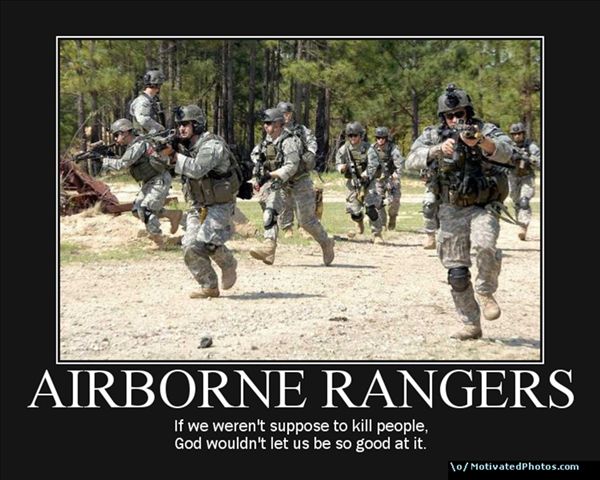
Rangers are technically the soldiers in Ranger Battalion. A guy with a Ranger tab is just a guy with a Ranger tab if he has never been part of the Ranger Regiment. It might seem a little unfair that a man who went through Ranger school still isn’t a Ranger, but a private that hasn’t been to the school is called a Ranger because he is in battalion. If it makes you feel better, that kid will be called an “untabbed bitch” until he leaves or goes to Ranger school. And you can always say “Tab Check” and anyone without the tab has to do pushups.


No matter how you break it down, you don’t change the character of the soldier with a title. Changing the name also does nothing to change what a unit actually does. You can take a Ranger company and call them the Snuggle Time Happy Fun Bear Hug Team and it won’t change the fact that they are still good at kicking down doors and breaking shit. Unfortunately, when the U.S. government said that there would be no more combat troops in Iraq and just advisers, far too many people were fooled into believing what that meant. There have been two different occasion when the last combat units left Iraq.

The military did not pull out the combat units and put in advisers, they just changed the names on paper. The Stryker Brigade Combat Team became the Stryker Advisory Team or some other such nonsense. Some units went through a name change, the ones redeploying got to leave as the last “combat” troops in Iraq. This means the troops doing missions with Iraqi Army soldiers were one day told that they were now advisers. They would have run the same exact missions just as advisers rather than combat partners.

A year later, when the government really started pulling units out of Iraq, we got to watch again on the news how the last combat troops left Iraq. Only vets were asking, “Didn’t the combat troops leave last year, weren’t those supposed to be advisers?” Now, the only soldiers in Iraq are there for logistics and support. Logistics and support soldiers support combat operations, if they is no more combat, why are they there? Why not just have the combat, or adviser, units break down the camps as they left so everyone could go home?

If you fell for the combat/adviser trick, don’t feel bad. President Clinton did it in the mid ‘90s and it worked out well. He promised that the force he was sending into Bosnia would be out in a year. I was in Bosnia when the year expired and asked my platoon sergeant if we were leaving he laughed and told me to get back to work. It is true that the Implementation Force (IFOR) was not in Bosnia but the Stabilization Force was. I painted over the “I” in IFOR and made it an “S” and just like that, there was no more IFOR in country and I was SFOR.

I know the trolls that only skim will give me crap about attacking the President or government. But really this is about paying attention to what is being reported. This is just the tip of the iceberg and represent some of the major mistakes civilians make when referencing those who have served. Reporters lose credibility when they call someone in the Marine Corps a “soldier.” It means they really don’t know what they are talking about. If someone gets this minor thing wrong, how can we trust that they did their due diligence on the rest of the story?

Using the right terms will show that you respect military members enough to know how to talk to them. Depending on how bad you screw it up, you might get a mild correction or you could be ignored all together. So don’t screw it up.

Posted in Kicking Some Knowledge | Tagged , , , , , , , , , , , , , , , , , , , | 10 Comments

Why Grunts Hate POGs

By: Peter Sessum

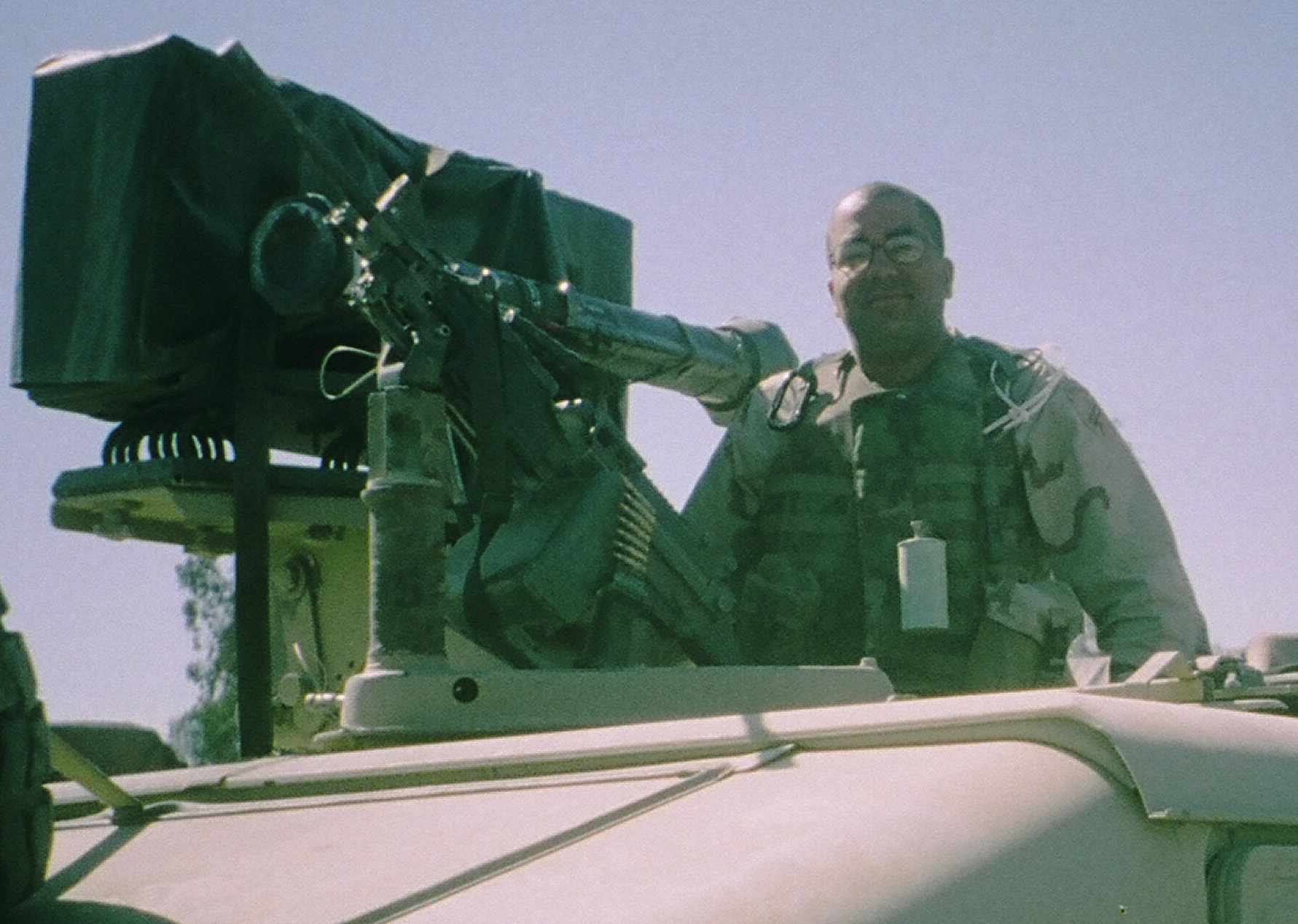
A put together M249 mount. How it should have been in the first place.

So there I was, in Afghanistan, no shit. I was in Khost Province on FOB Salerno and about to go on a mission. There was a part missing from my machine gun mount so I went into the supply room to see if they had what I needed. The week before the supply sergeant had told me that the extra gear in the box was not accountable so I could grab what I wanted anytime. That is why I didn’t think it would be a big deal.

So I was surprised when the supply sergeant kicked me out of the supply hut. He said that they were doing their morning PT and so I had to leave. Despite the fact that I was on the far said of the hut and not anywhere near them, I couldn’t be in the same building while they did pushups. Even though I was going on a mission in less than 10 minutes and the mount would help me be more combat effective, the guy who never left the wire kicked me out not because it made tactical sense, but because he can. And that is why grunts hate POGs.

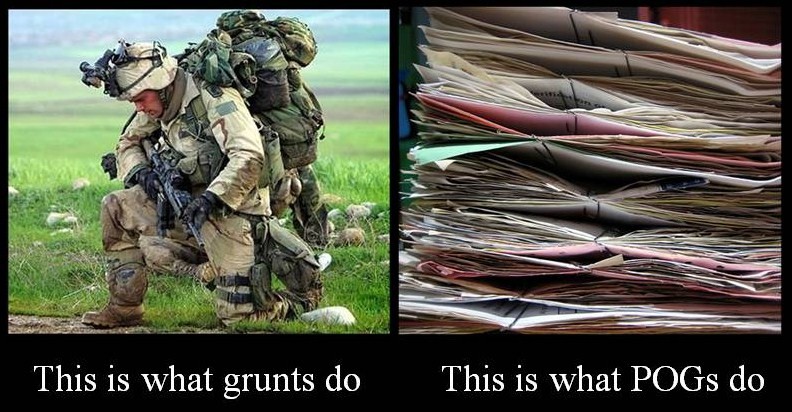
The term grunt used to refer to just Infantry and later to combat arms soldiers in the Army. A POG (Person Other than Grunt) is everyone else. With the Global War on Terror (GWOT) there were no more front lines. With soldiers of all jobs in the Army coming in contact with the enemy it really became about the grunt v. POG mentality.

It all starts in basic training. Drill sergeants tell new recruits that THEIR job is the most important job in the Army. Cooks are told that without them, no one would eat. Without finance, no one would get paid. In the end, it gives the POGs an attitude and they act like the Army revolves around them.

Infantry are taught the same thing. I was told that the Infantry makes up 10 percent of the Army and the other 90 percent support the war fighters. We took pride in the idea of what we do and that everyone else supports us. But that doesn’t mean that they are less, just another part of the team.

The problem is, most POGs don’t see it that way. They look down on “dumb grunts” that don’t bring anything to the table. A finance soldier will think that grunts need him to get paid, but the grunt doesn’t do anything for finance. Cooks feed grunts, but the existence of grunts doesn’t enrich the cook’s life.

If a soldier isn’t getting paid and goes to the finance people, they will act like they are doing the soldier a favor for fixing the problem even though that is exactly what they are paid to do. Because of a screw up at the Personnel Action Center (PAC) the Army took 20 days of leave from me. I spent three days running all over post trying to get all the right paperwork together to get it taken care of. Something a PAC person could have done in about 30 minutes.

If you give PAC attitude, nothing will ever get done. The smart grunt makes friends with as many POGs as possible in the unit. It is the only way to get things done. Otherwise you have to use other tactics. I once entered a PAC office at 10:45 and they were already closing for lunch. Sergeant Goldman was the last one and he was turning out the lights when I walked in. In the Army, lunch doesn’t start until 11:30 but this is what POGs do. Instead of leaving, I sat down in the dark. He reminded me that they were going to lunch and I said, “I know. This way I am first in line when you get back.”

He studied me for a minute and thought I might be crazy enough to do it. He decided to help me and was still out the door before 10:50. It is pathetic that I had to go to extremes just to get him to do his job. When I was trying to clear that unit Goldman would walk to the far corner of the room whenever he would see me. “I can’t fuck with you Sessum” he would say. He would stay there until I left.

Any questions?

One way you can tell if someone is a POG is if they have “Sergeant’s Time.” The Army instituted Sergeants Time Thursday to give the soldiers a day for training. Grunts train every day. Or as an old platoon sergeant said, “We are Infantry, everyday is sergeant’s time.”

It can be difficult to transition into civilian life for grunts. Not because they are used to combat but because they have little time for POGs. It is difficult to take attitude from a person who isn’t even doing their job right. The reason is that grunts have to do their job to the best of their ability 100 percent of the time or something really bad is going to happen. If a POG doesn’t do his job, no lives are at risk so the POG doesn’t care.

The grunt mentality also exists in the civilian world. Anyone who has a job where people will die if they do not do it right will know where a grunt is coming from. A firefighter can’t refuse to answer a call because it is lunchtime. An EMT can’t say that she will only use one bandage on a gunshot victim because she doesn’t want to have to restock the entire vehicle.

The best thing a POG can do, and I have seen it happen, is to act like one of the team and do the best job possible. If the grunt’s finances are in order, that is one less thing to think about and he can focus on the task at hand. Or just do your job and you will earn the respect of those that do the tough jobs.

Grunts should treat all POGs that do their job with respect. A soldier is not less because he is in an easier job. There is nothing wrong with having an air conditioned office in a combat zone rather than running missions all day, you just can’t look down on us for it.

UPDATE: Due to incredibly high traffic on this post a follow up piece entitled POG is a Mentality not an MOS was written in May 2014.

UPDATE 2: Because too many of you skim and miss the point and it has been seven fucking years, I’m turning off comments.

Posted in Commentary, So There I Was | Tagged , , , , , , , , , , , , , | 155 Comments

Hazing in the Military

By Peter Sessum

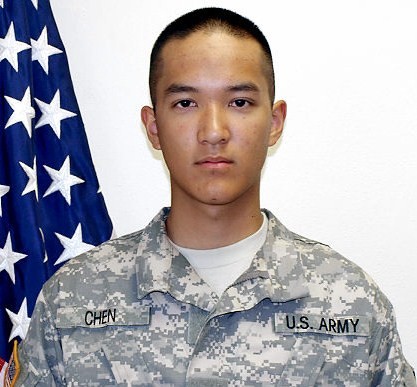
Pvt. Danny Chen was not hazed. He was harassed and abused by his platoon in Afghanistan. He took his own life in Oct. 2011

In April 1994, I was standing on a drop zone after the final jump in Airborne School. Now, I was a paratrooper. It was a proud moment for me. I was still a new Private, fresh out of Infantry school and ready for my first unit.

A man who had jumped into Normandy about 50 years prior carefully placed my jump wings on my uniform. He pushed the pins through my uniform top and admired his work. Then, he punched me in the chest, sending the pins into my skin. He shook my hand and welcomed me into the Airborne brotherhood.

Truth be told, that old guy was pretty spry. The punch hurt more than the pins, not that I could feel anything over the pride I was experiencing. The tradition of giving “blood wings”, more symbolic than painful, is now illegal in the Army. It is considered hazing and therefore bad.

What is Hazing

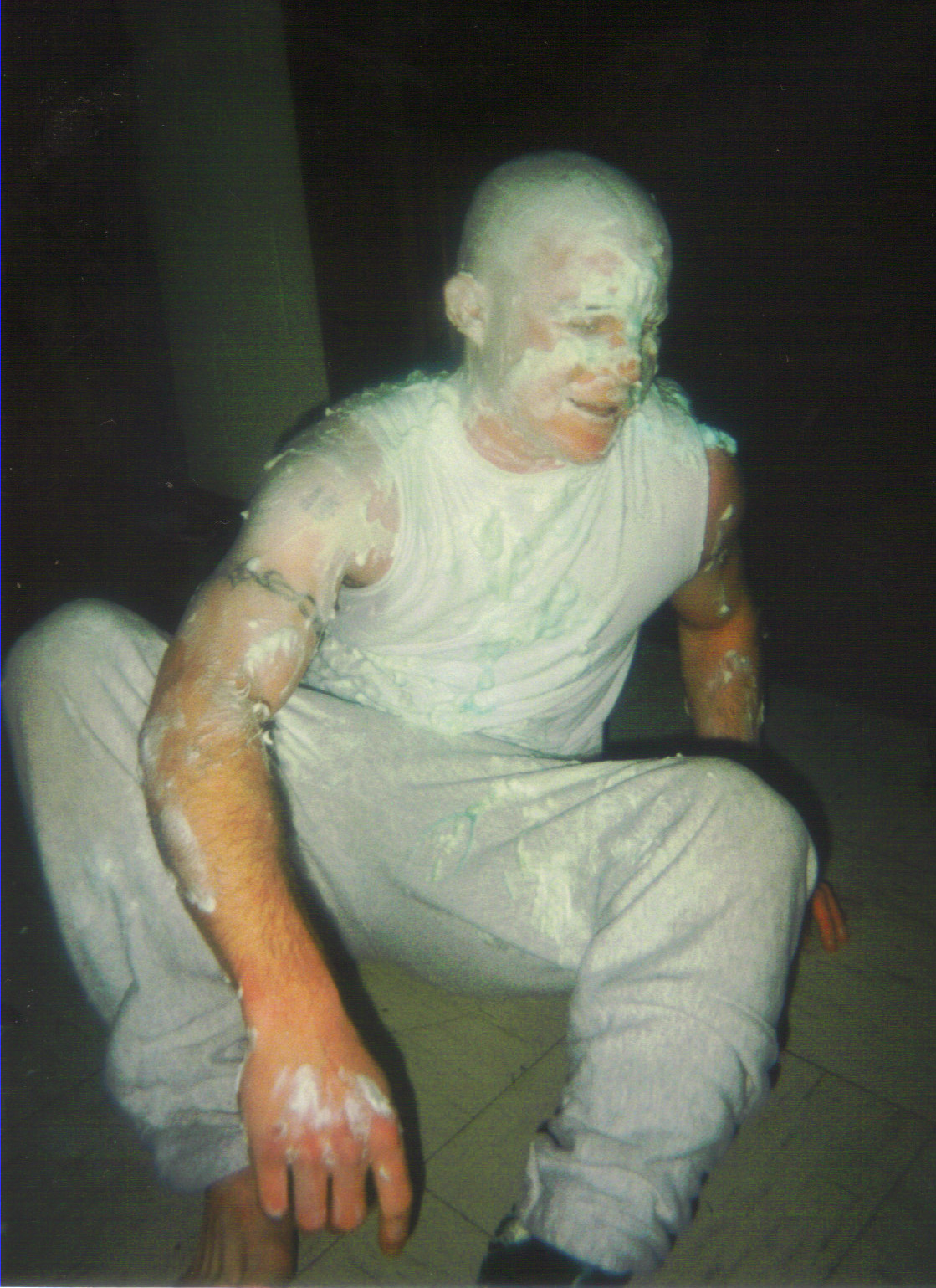
One Infantry platoon I was in had a different tradition of hazing. They would grab the new guy, tape him up, cover him in talcum powder and shaving cream and drag him to one end of the hall. By the latrine door would be a knife so he could cut himself free.

Every time the new soldier would be giggling while trying to get down the hall. As soon has he would get loose, someone would slap a beer in his hand, pat him on the back and welcome him into the platoon then clear the way so he could go take a shower.

It is childish and stupid, but it was part of the process of becoming one of us. As stupid as it sounds, it was a sign of respect. One guy never got “balled up” and he was never really part of the platoon. It is also important to note that it only happened to new privates. If it was your second or third duty station, it was understood that someone, somewhere else had got you. The best part of getting balled up is you get to do it to the next guy.

Hazing in many forms is a way of welcoming soldiers into the unit. On paper, hazing seems abusive and mean spirited, but it is in fact good natured and fun. Hazing is not abusive. I will say that again so there is no mistake, hazing is not abusive. When it becomes abuse, it is bullying. And there is a distinct difference.

The tradition of the gauntlet is one that appears abusive, but isn’t. After a promotion, the platoon forms two lines in order by rank. The newly promoted soldier walks between the lines to be congratulated. If the soldier outranks you, he gets a handshake, if you are equal or greater rank, he gets a punch in the arm. At one time it might have been worse, but it isn’t cool to punch your friends in the gut and you can expect an ass whupping if you sucker punch a guy you don’t get along with.

Again, it all comes down to respect. If you don’t like the guy, shake his hand and let him move on. The spirit of hazing is inclusive, it is one of those stupid things that bring units together. Messing with the new guys also lets you know what kind of man they are. If you can’t take being told to get chem light batteries, a can of squelch for the radio, a box of grid squares, an exhaust sample for the mechanics, find soft spots in the armor or find some T-R double E (tree) batteries how are you going to handle it when the bullets start flying?

Everyone should be smiling, if no laughing, through the whole “hazing” process. It should be a bonding moment. It should not, however, make the subject feel bad. If the soldier feels bad abut himself, the unit or the Army, someone screwed up big time.

What isn’t Hazing

Some things that are called hazing are really seen as “corrective action” by the platoon. The infamous “blanket party” is one of them. Mostly, this is done in a training environment like boot camp or basic training. It is a last resort when the actions of one negatively impact the collected and no other method has worked. A pop culture reference would be the scene from the movie Full Metal Jacket.

We had a guy like that in my basic training platoon. Private (Pvt.) Simons. No one liked him and he kept screwing up and we would pay for it. Infantry is one of those jobs in the Army that does its training in one place. So we were stuck with him from basic all the way through Infantry school. In the end, he made it through unscathed. There was never the discussion of hurting him. We didn’t like him, but he was still a member of the platoon. I think it also had to do with the fact he was just a dumb kid with an attitude and not a colossal failure. I don’t know of anyone who has participated in a blanket party. But once again, it isn’t hazing, it is desperate action by desperate men.

Outright abuse is also not hazing, it is abuse. What Pvt. Danny Chen went through in Afghanistan last fall prior to him taking his own life was not hazing. That was harassment, abuse and assault. What his fellow soldiers did to him was a violation of the Uniform Code of Military Justice (UCMJ) and the code of values that military members are supposed to uphold.

There is no reason a Sergeant should ever put his or her hands on a soldier. Unless that soldier is in the act of doing something that will put himself or others at risk, an NCO should have enough authority to make that solider stop what he is doing. Grabbing Chin and dragging him across the tent floor is wrong. No good leader would ever do that. Assaulting a soldier is never right and is not the way to exert your will.

There are some things that Chen was subjected to that were not abuse. It was just corrective action until someone cranked it up a notch. While seeming extreme to civilians, having a soldier low crawl across the ground is not abusive. If it is a punishment that fits the crime it is not a big deal. I have had to do it when I was a soldier. Crawling 100 meters like Chen allegedly had to do is excessive and under no circumstances should soldiers have thrown rocks at him.

My friend Jimmy and I make jokes about each other’s race all the time. It is because we both know the other is joking and it is based on a mutual respect. Infantrymen can cross the line when talking to each other. However, no one else can. Anyone that made a joke to Chen that did not have a mutual understanding was harassing that soldier. The difference is intent and it makes all the difference in the world.

What happened to Chen was wrong beyond words. In the end he took his own life in a Kandahar guard tower. His Sergeant failed him. A 19-year-old kid, fresh out of training and on his first deployment should have been protected. A brand new private needs to be taken under his team leader’s wing and taught how to be a soldier. If he made a mistake, he should have been guided back, not tortured. No soldier should ever feel alone on deployment.

Note the smile. This is hazing, not harassment. No soldiers or feelings were hurt when this picture was taken.

The people responsible should be punished and then removed from the Army. How can we trust someone to defend the nation when they won’t even defend one of their own?

Chen should still be alive today and by now he would have been promoted to E-2 or even E-3 by now. After getting his new rank placed on his chest he would have had to do some pushups and had some water dumped on him. Smiling, he would have gotten up and shook hands with the members of his platoon. Some mild hazing like many of us have gone through. He should never have been harassed.

Posted in Commentary | Tagged , , , , , , , , , | 6 Comments

U.S. Soldiers Murdering Civilians is an Anomaly in War

By Peter Sessum

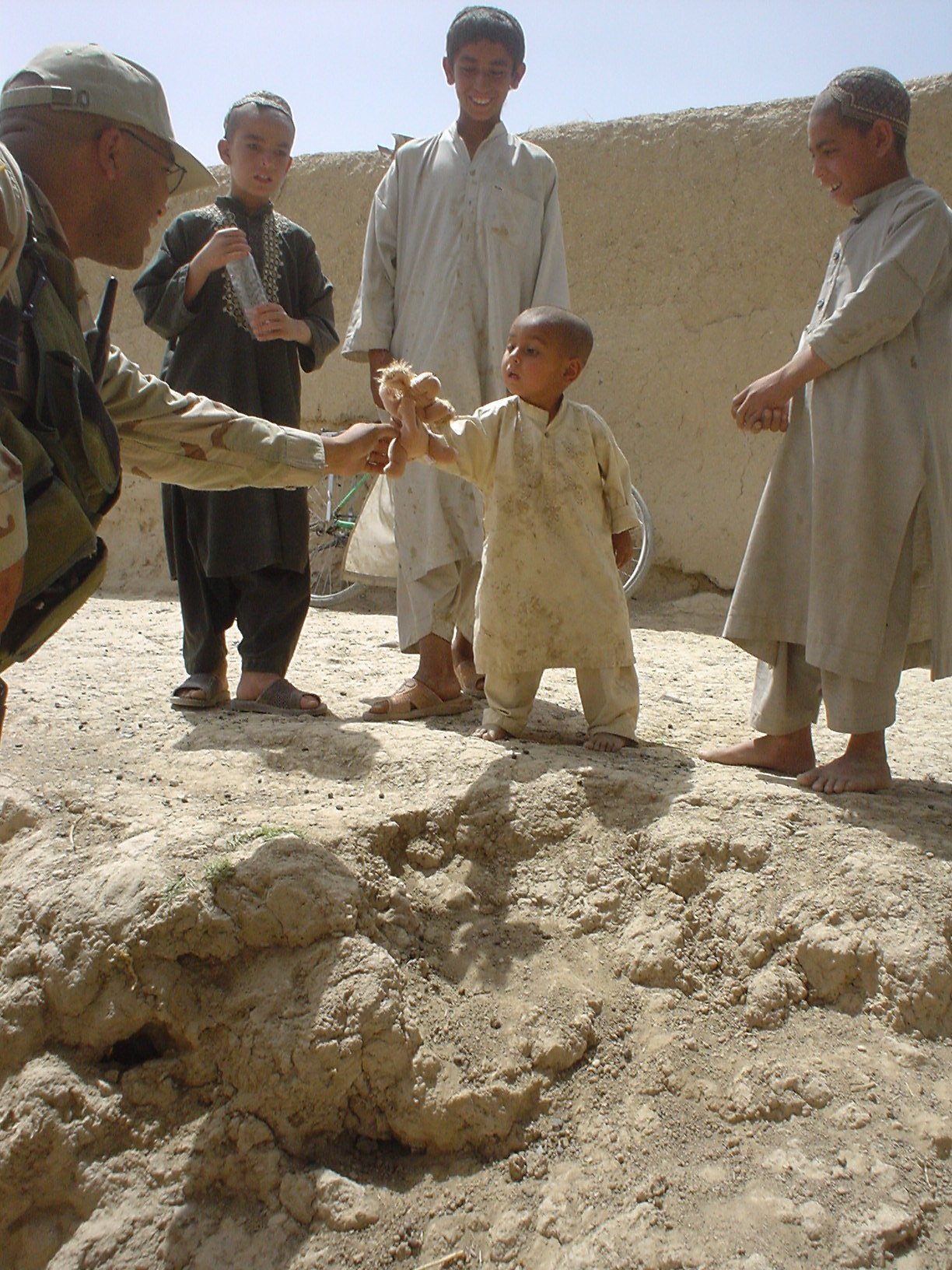
Peter Sessum "killing" a kid with kindness. Contrary to recent articles, passing out stuffed animals was routine, hurting civilians was not.

In 2010 in my mass media law class at the University of Washington a student stated matter of factly that soldiers are specifically trained to target children. I don’t really blame him, he is only going off of information he hears. I blame the people who say such things.

Like Chris Hedges in a recent article trying to pimp his new book. He says that murder is not an anomaly in war. Like many who write with an agenda, he puts a lot of information together to lead the reader to a specific conclusion.

The drone strikes, artillery bombardments and “the withering suppressing fire unleashed in villages from belt-fed machine guns” all paint a very specific picture. He says that it would not have made the news if an “American soldier had killed or wounded scores of civilians after the ignition of an improvised explosive device against his convoy.” The irony of this is that he says to single out the massacre of 17 civilians in Panjwai is to know nothing about combat. In fact, he is banking on the reader to know nothing about combat; otherwise you would think he was full of crap.

For example, “suppressive fire” is something very specific. By definition it is not used to kill but to have the enemy keep their heads down. Usually so friendly forces can maneuver safely. Suppressive fire used in an Afghan village would affect the local population too, they would duck under cover as well, thereby being safe. When shots are fired, people in warzones duck.

I would also like to ask Hedges how it would be my fault that someone initiated an IED on my convoy. Isn’t that the  bombers fault? Couldn’t he have waited until the next convoy? Wasn’t it his choice to detonate the IED when there were civilians around? Does Hedges side with a husband who says, “It is her fault I beat her” because I believe that people are responsible for their own actions.

Hedges also compares soldiers in Iraq and Afghanistan to the Serbs in Bosnia and death squads in El Salvador. If you think the three are pretty much the same thing, you should stop reading now.  Mainly because you are an idiot and aren’t going to like what I have to say anyway.

Genocide, culture and politics aside, there are a couple big reasons that Hedges is again using editing of information to lead the reader to a specific conclusion. He says that Salvadorian fighters fought for four years or longer and speaks of a 19-year-old who broke down after fighting for five years. The reader’s conclusion is that U.S. soldiers in Iraq and Afghanistan have been fighting for just as long, so they are all kill crazy too. The information needs to be deconstructed to get to the truth.

Anyone that had been fighting a war since they were 14-years-old would suffer incredible trauma. Any 14-year-old that had been fighting in a war for two weeks would be severely traumatized. It is one of the reasons why enlistment age is 18. Some would argue that even that is too young to see some of what soldiers see. There is no 19,20 or even 21-year-old American service member that has been fighting for five years straight.

There is one more piece of information that is not being considered, U.S. soldiers get to go home. That makes all the difference in the world. Even if the Serbs were only fighting one year tours, they were still stuck in Bosnia. Leaving the front line fighting to go live in a war torn country isn’t really getting away from it all.

When I step off a plane back home, I leave all that ugliness behind me. I get to go back to being the guy that picks his kid up from school. No one drops mortar rounds in my neighborhood, there is no sporadic gunfire in the distance and my kid can play in any field without the fear of landmines. The situation of the average American soldier cannot be compared to someone fighting in the Balkans in the ’90s or a Salvadorian death squad member.

It is articles like the one Hedges wrote that actually make things harder on our returning veterans. Being treated like we are all murderers does not help our readjustment into civilian life. A National Guard  or Reserve member might not be around people who understand what he or she went through and having to go back to the same job with everyone treating you like a baby killer is going to make things worse.

Hedges is engaging in irresponsible journalism and the people who mindlessly forward his article or post it to social media are not thinking about what they read. When dealing with a complex issue, people have to think about what they read. The irony of a journalist telling readers to not trust everything they read is not lost on me.

When reading about military issues don’t just trust someone who has an agenda, ask a vet. Get their insight; it is the best way to get more information. If nothing else, ask us here at the Dog Tag Chronicles, after all, it what we are here for.

Posted in Commentary | Tagged , , , , , , , , , , , | 1 Comment

In Afghanistan, What You Learn as a Parent Can Save Lives

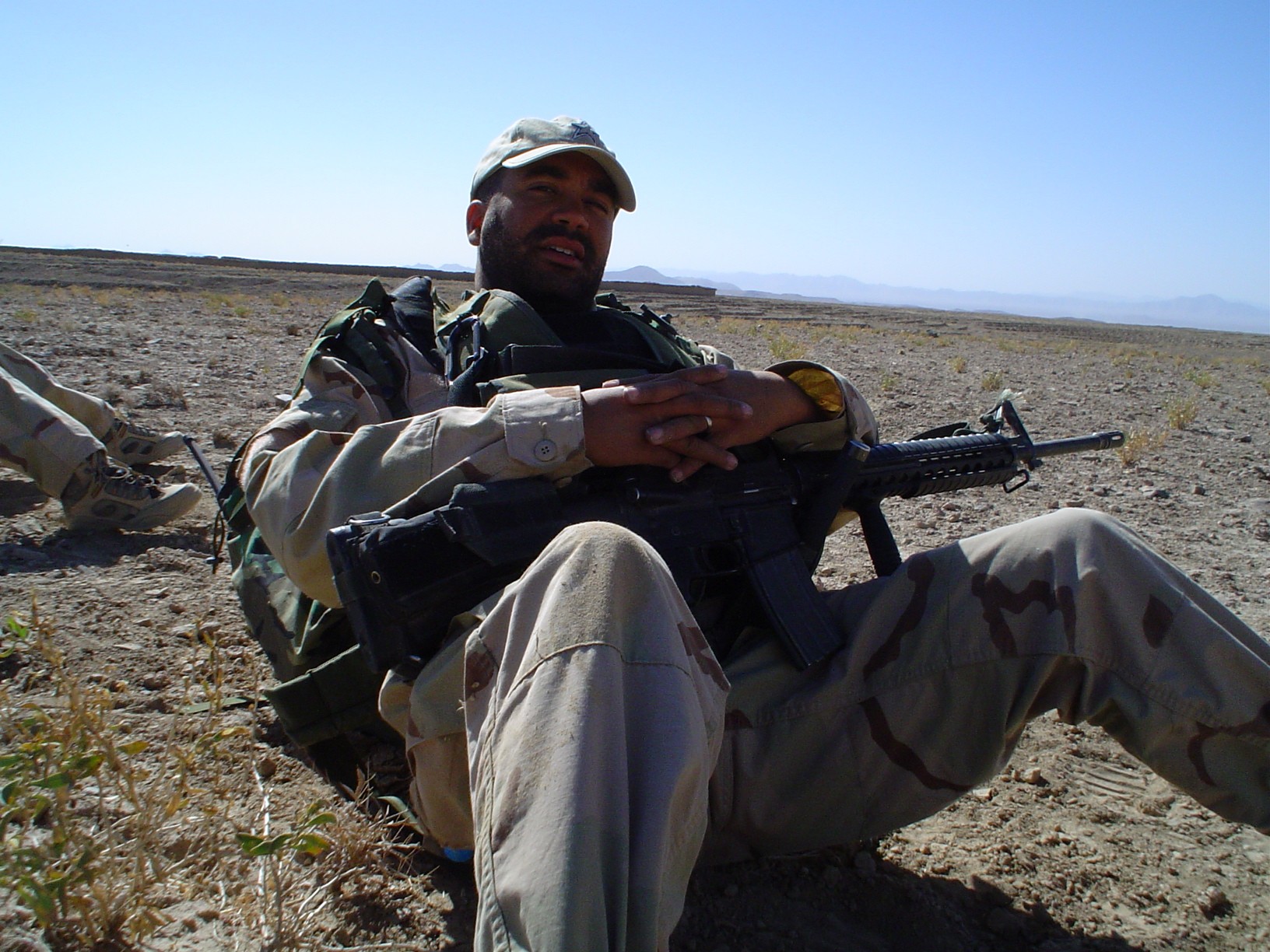
Post mission, waiting for the choppers. That line on the horizon that extends halfway across the picture is the wall to the village. Every time I look at this picture I think, “You are in the middle of nowhere, it is 120 degrees, the choppers are 20 minutes away and you have 75 pounds on your back. Take a load off trooper; you aren’t going to win the war today.

So there I was, on a chopper in Afghanistan, no shit.

Since I was wearing the headset to communicate with the pilot, I couldn’t sleep on the way out. A mistake I would not make again. “One minute,” the disembodied voice says into my headset and I dutifully pass on the message. The rotor noise to too loud to speak so we use hand and arm signals. Holding up one finger I signal the other passengers of the CH-47 Chinook helicopter.

Everyone repeats the motion all the way back with the last man copying the signal to confirm that the message made it all the way back. Smiling he holds up a middle finger causing a laugh through the chopper. It lightens the mood, which is exactly what this situation needs.

As the smiles fade I hold my thumb and forefinger close together in the international signal for, “a little bit” it means “30 seconds” to the collected. Now the adrenaline kicks in and I go through my last minute checks. Which way do I go once I exit the rear of the helicopter, who do I link up with, what are our actions on the ground, it all goes through my head as my thumb runs across the safety of my rifle in an instinctive move to verify it is on safe. Then the chopper flares and gently touches down.

First out the back are the off road motorcycles and the ATVs, they are going to chase down “squirters,” bad guys who literally run for the hills when they see the choppers. Next off are the Afghan Security Force (ASF), more or less a militia who are American trained and will be absorbed into the Afghan National Army when it is more established. Fresh faced, they are not their battle hardened fathers who chased the Russians out of the country, but trained by U.S. Special Forces they are not as skittish as most new recruits.

Everyone files out, as the first one on; I am the last out and mindful that the pilots don’t like to be on the ground long. Altitude is their friend and I don’t want to be still on board when they take off.

Hefting the seventy pound pack, I step out the back and link up with my battle buddy “Butters” before hoofing it to the village. It doesn’t take long for the choppers to lift up and be out of sight. They will circle a few miles away and come back when called. None of that is my concern now; I am on the ground, in the middle of nowhere, Afghanistan looking for one of the most dangerous men in the region.

Every mission was different, but that one sticks out in my mind. I was part of a two man PSYOP team attached to a Special Forces (SF) unit. Our mission was to use our portable loudspeaker, basically a bullhorn on crack, to address the entire village. Today’s message, come unarmed to the center of town and do not interfere with the soldiers.

That mission doesn’t stand out in my head because we were after a man who had daisy-chained four antitank mines together, thereby combining their explosive power into one detonation that took the lives of four American heroes a couple months before, men from this very unit. Neither the heat nor the helicopter ride was something I was unaccustomed to, this mission stood out in my mind because it was the day my daughter saved lives.

Approaching her fourth birthday she was 9,000 miles away and safely compartmentalized in my mind so I could focus on the task at hand. But it was lessons I had learned from her that paid off that day.

I had spent the previous six months running missions with a team whose main purpose was to build rapport and win “hearts and minds.” That day however, I would not be sipping tea as I talked to the village elders about the current state of their country or helping to set up a medical clinic for the day. Nor would I be handing out beanie babies to the kids that had been donated by people back home. That day was a cordon and search, Intel had it that there was a specific bad guy in town and we couldn’t wait to meet him.

It did not take long to surround the village. The motorized vehicles were coordinating with Apache attack helicopter to contain the area. The pilots would spot someone and radio to the ATVs who would chase them down. The men in the village were being contained in an open area in the center of town. Out of respect for the culture, the women would be held somewhere else.

My loudspeaker was set to broadcast with the touch of a button. After we broadcast a few times, we settled into the center of the village while the SF team cleared the buildings. I was happy to help control the villagers if for no other reason than to not have to walk about with my rucksack for a while.

My heavy pack finally resting on the ground I was watching the men of the village as they were placed against the wall while we ferreted out our man. Most had that patient indifference of people waiting for a minor inconvenience to be over so they can go back to their day. Like people waiting outside their building until the fire drill is over so they can go back to work.

All except for one guy, he looked like he would rather be anywhere but here. Somewhere in the back of my mind it conjured up a memory. I had seen this before, my training in psychological operations, the months of working closely with locals of the country and understanding the intricacies of the culture didn’t help me see what he was thinking. His actions mirrored those of a three year old standing in front of cheese.

Instantly, in my mind I was transported back to a day in the dairy aisle of our local supermarket with Anna. For some reason that kid loved to look at cheese, and as a gracious parent, I would let her. Like most times in this very spot she was not just looking at gouda, she had a plan. Too young to understand the fine art of being subtle, she would telegraph her intentions every time.

Her favorite game was to suddenly take off in a run; she would break away and run around the corner giggling the whole way. It was a private joke only she was in on. In her head, around the corner was safety and that is as far as she thought she needed to get. If she could just get out of sight, she would be home free. I highly doubt she thought of what she would do once that happened, but that was the game.

Even when I would warn her not to do it, bless her heart, she had to try.  If it is a bad idea, but still fun it just might be worth it. Clearly she is my daughter, regret is for the things you didn’t do, not the things you did.

I could see the look in her eyes as she estimated the distance to the corner of the aisle, and then gauged how far away I was, all while pretending to look at cheese. A child who couldn’t say the word “physics” was using it in her little head. She calculated her acceleration and top speed, factored in my reaction time, acceleration and top speed and determined how close she would have to be to the corner to get away.

Slowly she drifted a little to her right. That gave her more distance from me and less distance to the end of the aisle. I could swear she was recalculating speed and distance again trying to find the right equation that was favorable for her. Testing a theory I took two steps towards her. In an instant her entire demeanor changed. There is no way she could take off running and get anywhere before I would be upon her. Sweeping her up in my arms and ticking her to celebrate my victory.

Standing in a far away dusty land I could swear I was watching the same kind of situation unfold. Reading his eyes I could already see what he was thinking. Squatting in typical Afghan style he could easily explode up and be in motion before anyone nearby knew what was happening.

Surprise was his ally as he jumped up and took out the Afghan soldier nearest to him. He wouldn’t have to kill him, just knock him aside and take the gun from his hands. His next move would be to shoot me, then Butters, then some of the ASF.In that time one other guy from the group would grab my rifle or another AK-47 from another dead ASF soldier. They would use our weapons to make their escape.

I could see his plan clear as day, once you live in extraordinary circumstances long enough, they stop being extraordinary.  But I am not above admitting that my feelings were a little hurt that he had already planned my death. In his head he was going to kill me. Needless to say, this displeased me and I felt I had to take immediate action to protect my life and the life of others.

Snapping my fingers to get the attention of the ASF soldier I motioned him to move over a couple feet. As soon as he did, my would be killer’s entire demeanor changed. He recalculated the distance and realized that those extra few feet would give the ASF troop an extra half second of reaction time, which would be enough to fight him off. Just like that his plan was foiled.

All my time in country, all the study of the country and culture, working closely with locals and it was being a father to a precocious three-yea- old that saved my life. I couldn’t help but laugh as I warned everyone around to keep an eye on him.

A couple minutes later I went forward to talk to the team leaders. They had a man in custody that they thought was the bomber, but weren’t sure and asked me to be another set of eyes to verify of they had the right guy. As much as I like myself, it was flattering that men of this caliber were asking me what I thought. To me, this meant I had earned their respect. We compared pictures and recent information that gave us clues that this was indeed the guy.

As we walked back past the area the men were gathered one senior man asked, “Who goes with us?” They wanted to know who else was dirty.

Without hesitation I pointed out my guy. “That guy knows something,” I said, “I don’t know what, but he knows something.”

Sometimes it all comes down to a judgment call; every other adult male was lazily waiting for us to be done so we could leave their village. Most Afghans are even happy when a known Taliban is taken away. All they want to do is live without strife. It doesn’t matter who is in charge, Afghans, Americans, it could be green aliens as long as they will let them live in peace.

But the one guy who wants to get away more than anything is suspect. Afghans are a hard people, they do not scare easily. Blind fear would make you want to run, not plan our deaths. His inability to hide his intentions got him a free chopper ride which is more than most people can say.

When we walked out of that village I leaned on my pack, refusing to pick it up again. Butters offered to trade me packs. Without hesitation I said, “Fuck you, your pack is heavier than mine.” The choppers coming back in were a welcome sight. We had gotten into the village, secured our target and everyone went home with all their fingers and toes, all without firing a shot.

Not that we had a lot of downtime, not long after getting back it was announced that it was “Halo thirty” which, apparently, is half past “Halo o’clock.” We fired up the Xbox and grabbed the controllers. It would be four on four against the guys across the courtyard and this time we would take no prisoners.

Posted in So There I Was | Tagged , , , , , , , , , , | 3 Comments

Introduction to Army Leadership

By: Peter Sessum

Leadership in the Army is heavily discussed and written about. It always seems to be viewed from the perspective of the academic gentleman. Trust me, there are two things you don’t want in a firefight is academics and gentlemen.

In Field Manual (FM) 1, “The Army defines leadership as influencing people-by providing purpose, direction, and motivation-while operating to accomplish the mission and improving the organization.” I must admit, I still get a chuckle every time I read that. Mainly because that is the worst definition of leadership I have ever heard. Considering who published it, I am not surprised.

The Army quite literally has an FM or Army Regulation (AR) for everything. And details are exhaustive. The reason is because if the tiniest of loopholes is left, a private will drive a truck through it. Before anything is published in an Army document it is edited to death. In the case of Army leadership, it is written for Army officers by Army officers. In this case, a lot of wiggle room is wanted. After all, any standard that is set must be maintained and enforced.

The reason why the FM-1 definition of leadership is lacking is because it is more about management, not leadership. The person who thinks the two things are the same is not a leader. A manager can easily fulfill the Army definition of leadership. It is easy to influence people. Threatening to fire someone is a form of influence. People will stay late and work weekends if they think it will help them keep their job.

“Improving the organization” is so subjective. If you don’t like someone, fire them. Instant improvement right? There is no quantifiable measure for this improvement. Officers thrive on paperwork. Force everyone to write a report about daily activities and it can be said that the “leader” instituted a work tracking system. Put a big checkmark next to improved the organization. There is nothing that says it can’t be a toxic environment.

A real leader doesn’t influence people, he inspires them. An inspired worker will work past 5:00 because he lost track of time. If a worker is inspired, he will work harder and more efficiently because he wants the group to succeed. By those actions, the organization will be improved.

A manager will give the order to assault an objective, a leader will give the order to assault an objective and add “follow me” and that makes all the difference. Real leadership isn’t about giving speeches from horseback prior to going into battle. Real leadership is about inspiring the kind of loyalty in your men that they would follow you to Hell and back, not because they are ordered to but because they trust that you will bring them back.

Posted in Commentary, Military Leadership | Tagged , , , | 1 Comment

Do Not Make SSG Bales a Victim

By: Peter Sessum

Not a victim

There is one thing America loves, and that is a hero. We love winners. The winner gets to go to Disneyland, do you know where the loser goes? Nobody cares, they lost. If we can’t have a hero, then we need a victim. The last thing we need to do is turn Staff Sergeant (SSG) Bales into a victim.

There is no way his legal team is going to explain exactly what happened and why. No matter the crime, every U.S. citizen is entitled to a defense. Lacking the information of exactly what happened that night, we keep looking for a why. Looking at the articles by the New York Times, some pieces frame Bales as a helpless victim who has been constantly screwed over by the Big Army Machine. Articles speak of Bales being “denied a promotion to sergeant first class” which isn’t precise and his injuries have been well documented. One main theme that continues to come up is that he didn’t want to deploy in the first place. When put together, it paints a picture that is not accurate. One of SSG Bales as a victim. None of those things excuse the crimes that he is accused of.

He was passed over for promotion

In some civilian jobs being passed over promotion can be a career ender but the Army is different. One the enlisted side, the first few promotions are automatic. As long as a soldier meets the minimum time in service requirements, can pass the Army Physical Fitness Test (APFT) and does not get into trouble, promotion to Specialist (E-4) is assured. Past that, it is based on promotion points and number of slots available in the Army.

Every year a promotion board meets and looks over the records of all E-6 candidates that turned in a packet. Bales not being selected for promotion means he was not competitive as the other candidates. There are a number of factors that could impact that. Making E7 in 11 years is actually on the fast side. According to About.com, making E7 in 13.6 years is about average.

There will always be a need for an Infantry Sergeant First Class (E7) so patience is needed. The men who get screwed in the promotion deal are Special Forces soldiers. Not the people who work with Special Forces, but actual Special Forces soldiers in Special Forces Group (SFG). So few soldiers leave Special Forces, that there is a bottleneck on the upper promotions. There are rarely any open promotion slots for Special Forces that to get promoted, some choose to leave the group.

There have been reports of Bales having getting into trouble off duty. If anything about money problems, hit and run accidents or any other issue that could negatively reflect on his character to people who have never met him make it to his packet, Bales would not stand a very good chance of getting promoted.

He didn’t want to go

There have been reports in the media that SSG bales didn’t want to go on this deployment. The conclusion that we are supposed to reach is that the Army is an unforgiving machine that forces people to do things against their will.

Why this is stupid

No one wants to go! Deployments suck! Yes, we make the most of them and try to pass the time, but it sucks being 12 time zones away from your family. Afghanistan is freezing cold in the winter and ungodly hot in the summer. No one would subject themselves to that for fun. There are people who volunteer for deployments, but that is because the deployment is a means to an end.

If selected to go, most soldiers will go. When I got the call, I went. Not because I wanted to deploy so bad but because if anything happened to the person that took my place I would not have been able to deal with it. That does not mean I wanted to go. I don’t know of anyone who wants to leave their family, but for one reason or another, we all get on that plane. If everything else that is reported about SSG Bales is true, he could have gotten out of the deployment.

He has been deployed three times already

The thing that most bothers me about this being used to make Bales a victim is that many people have been deployed three or more times and they are not killing innocent civilians. Being in the military sucks. It isn’t easy, but if you do it for the right reasons it is very rewarding. The multiple deployment excuse is stupid because no one to his left or right went over the edge and started a killing spree. There is about 1,000 soldiers in his battalion and most of them would have deployed with him.

After the first deployment, a soldier should have some coping mechanisms in place to deal with the separation and hardships of being overseas. By the third deployment, a soldier should have a system in place to deal with the stress of the deployment. Bales is not the first person to deploy four times and he won’t be the last.

He is missing part of his foot

If this is true, then he could have gotten out of the Infantry. I know there is a civilian perception that military members are all highly regimented robots that are always training to go to war. Truth be told, we are just like the rest of the country. Some soldiers are hard workers, and some are the biggest slackers you have ever met. If you want to find a loophole in a rule, ask a grunt.

Infantrymen are expected to be able to carry large, heavy rucksacks a long distance. If ever there comes a time when he can’t do that, like missing part of his foot, he is removed from the Infantry. If the injury will not prevent military service and especially if it is combat related, Bales would have had the choice to not be medically discharged from the Army and could have retrained to do a different job. It would not matter if the foot injury was from a car accident or combat, there must be documentation somewhere. If SSG bales had pushed the issue, he could have found a way to use the injury to get out of the Infantry or the deployment.

He was supposed to be a recruiter

This is portrayed as another example of the big Army machine ruining lives. Orders change, it happens and it sucks. No one should have been surprised because when a unit gets on rotation to deploy, soldiers are usually put on stop-loss status. This means no transfers and some will not be allowed to get out of the Army at the end of their contract. In the Marines, everyone can be stop-lossed when it is put in effect, but in the Army it can be unit by unit. So not only should this not be a surprise for Bales, it should have been expected.

This would have been the time to milk the foot injury to get out of the deployment and on to recruiter duty. Even if the unit denied his request, he could have used the injury to get onto a job as rear detachment and take care of business back home or, once again, been retrained into a new job. Had Bales decided to reclass into a new job, he would have had to go to the school and that would have gotten him out of the unit and out of deployments for up to a year or longer.

He has a head injury

Again, this must be documented, but the Army is so worried about head injuries, that this could have been worked into getting out a deployment. Traumatic Brain Injury (TBI) can be difficult to diagnose. It isn’t like a broken arm where you can see where the break is. Sometimes it is just a matter of interpreting the symptoms. If a soldier had a documented case of TBI, no matter if it was from a bump on the head during off duty or combat related, it would be easy to milk that to get out of a deployment.

Infantrymen need to be able to shoot, if Bales couldn’t get a good shot grouping to zero his rifle or couldn’t hit targets at the range that might be cause for worry. How do you prove that someone isn’t forgetful? If he really didn’t want to deploy, he could have used a documented TBI to try and get out of the deployment.

Post Traumatic Stress Disorder (PTSD)

A PTSD diagnosis is a double edged sword. It can be the golden ticket out of a deployment or a pink slip out of the military. It is all a matter of situation and severity. For someone in a critical position with a high security clearance, any PTSD diagnosis will mean a medical discharge. However, someone with a severe case could stay in if they did not hold a position where they could directly impact national security. Guard the president and have PTSD and you are out, pump gas (yes, that is a job in the Army) and you can stay in.

And here is the kicker, it is reported that Bales had a $1.5 million judgment against him. If he went to his doc and said he was feeling really stressed from multiple deployments, head and foot injury and having to pay over $1 million, he might get out of the deployment. Especially if pulls the whole “my family might be better off without me” line. If he doesn’t say he is suicidal and says he doesn’t have a plan to take his own life when asked the doc might reach the conclusion that under more pressure, he might do harm to himself. It isn’t quite that cut and dried, but PTSD could have been used to try and get out of the deployment and go on those recruitment orders he already had.

Despite his problems, they deployed him anyway

So how does a guy with PTSD, half a foot and TBI get deployed? Prior to a deployment there is a process that the entire unit must go through. Part of that process is a medical screening. This would have been the time to make his medical problems clear. There would have to be documentation. So the answer is that either the documentation did not support Bales staying home or he did not give all the information. If he lied to be medically cleared, then he gets no sympathy for deploying. If he did not seek treatment, then the military cannot be blamed for not knowing the severity of his condition. There are far too many resources out there that soldiers really have no excuse for not using them.

SSG Bales is not a victim of the military system. There are things being reported that are normal for soldiers, like not wanting to deploy. There are things that are unfortunate, like being passed over for promotion. And there are things that he could have done to change his situation. One thing that is being  overlooked is that the Army is an all volunteer service. There is no such thing as an 11-year contract. Contracts are for as short as two years with the longest enlistment contract being six years. Not only did Bales have to volunteer for the Army, but he had to reenlist at least once to still be in. He did this to himself and nothing excuses going into a village and killing innocent civilians.

Posted in Commentary | Tagged , , , , , , | Leave a comment